Skip to content

Kopernik Annual Report 2025

A year of impact,
collaboration,
and community

Kopernik

The urgency of today's social and environmental challenges demands inclusive, actionable solutions. As climate impacts intensify, they are hitting hardest the people already facing inequality: women, Indigenous communities, and people with disabilities.

Kopernik's work in 2025 kept showing that innovation works best from local ecosystems, local knowledge, and local collaboration. This year, we strengthened coastal livelihoods, scaled farmer-focused technologies, supported equality movements, amplified climate action through music, and responded directly when disasters hit.

Collaboration remains central to our work. Partnerships with communities, artists, academics, civil society, and governments helped us co-create solutions to real environmental and social problems — building more resilient, equitable systems.

2025 was also a year of growing independence. Through the Next CEO Program, Kopernik continued preparing high-potential initiatives to stand on their own. We provided leadership, strategy, and support to sustain and scale their impact beyond any single grant cycle. This is how we measure success. Not by how long an initiative stays within Kopernik, but by how far it can go beyond it.

Our vision is a world where every individual, regardless of background or circumstance, can fully realize their potential and live a dignified life in harmony with the natural environment.

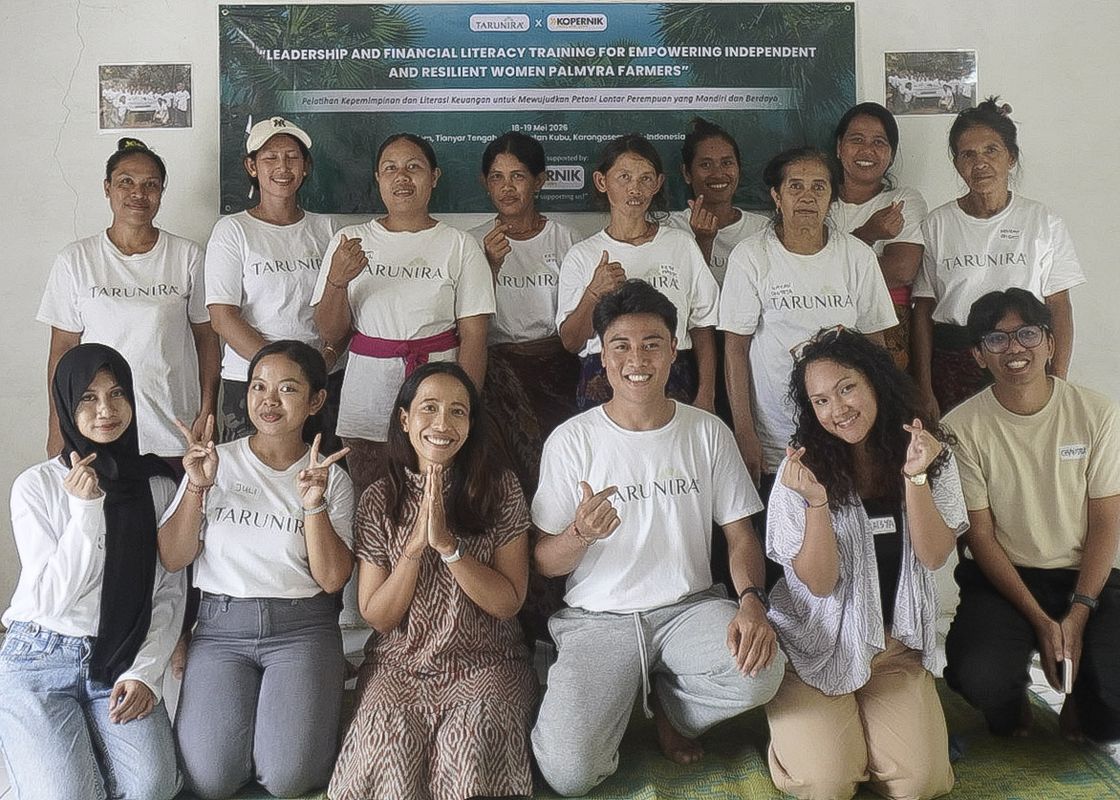
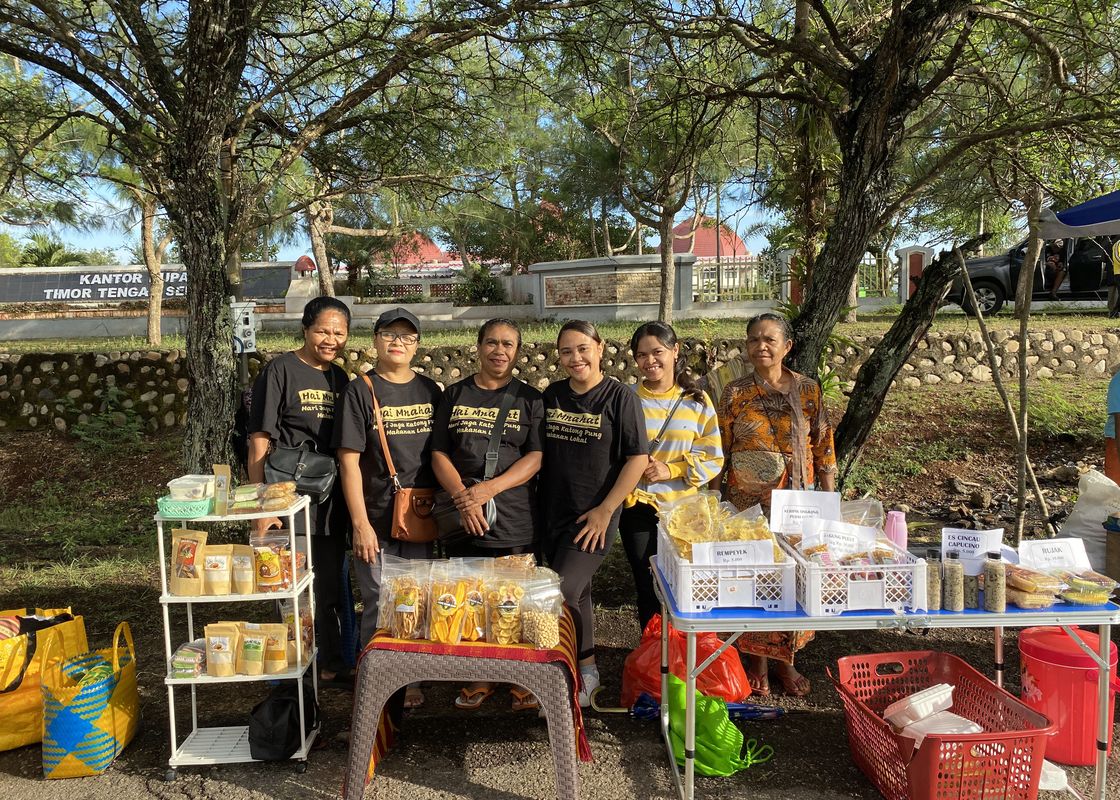
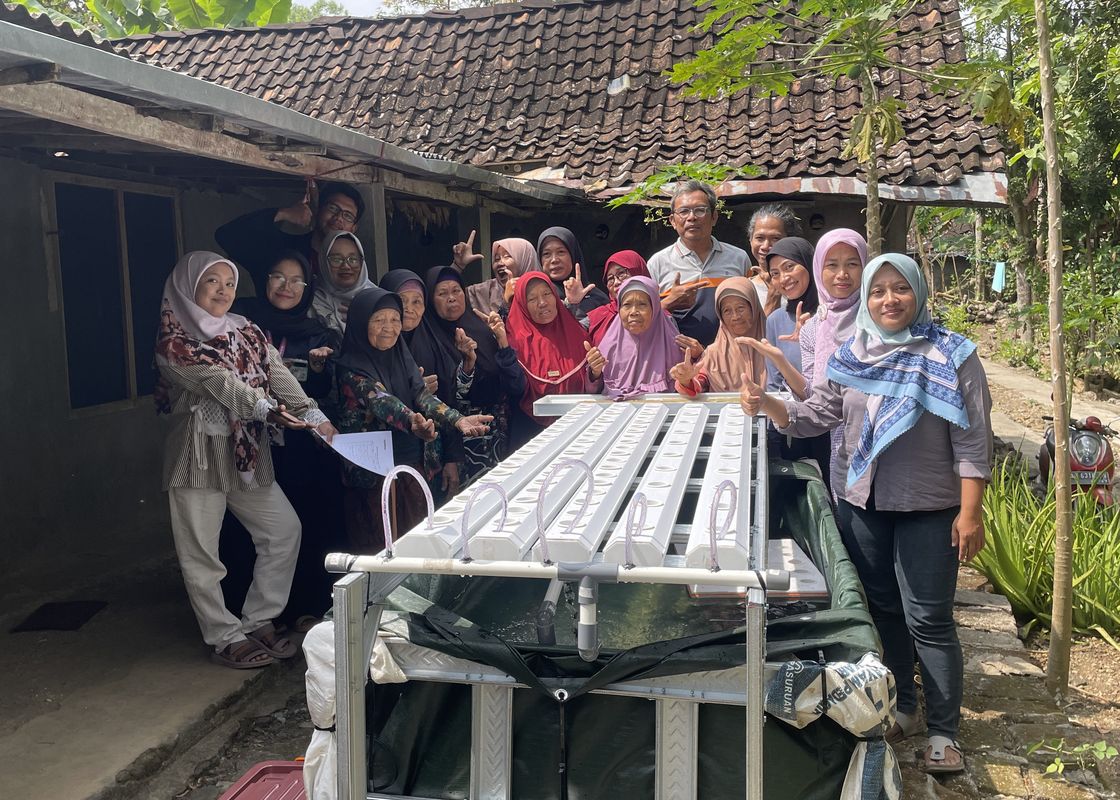
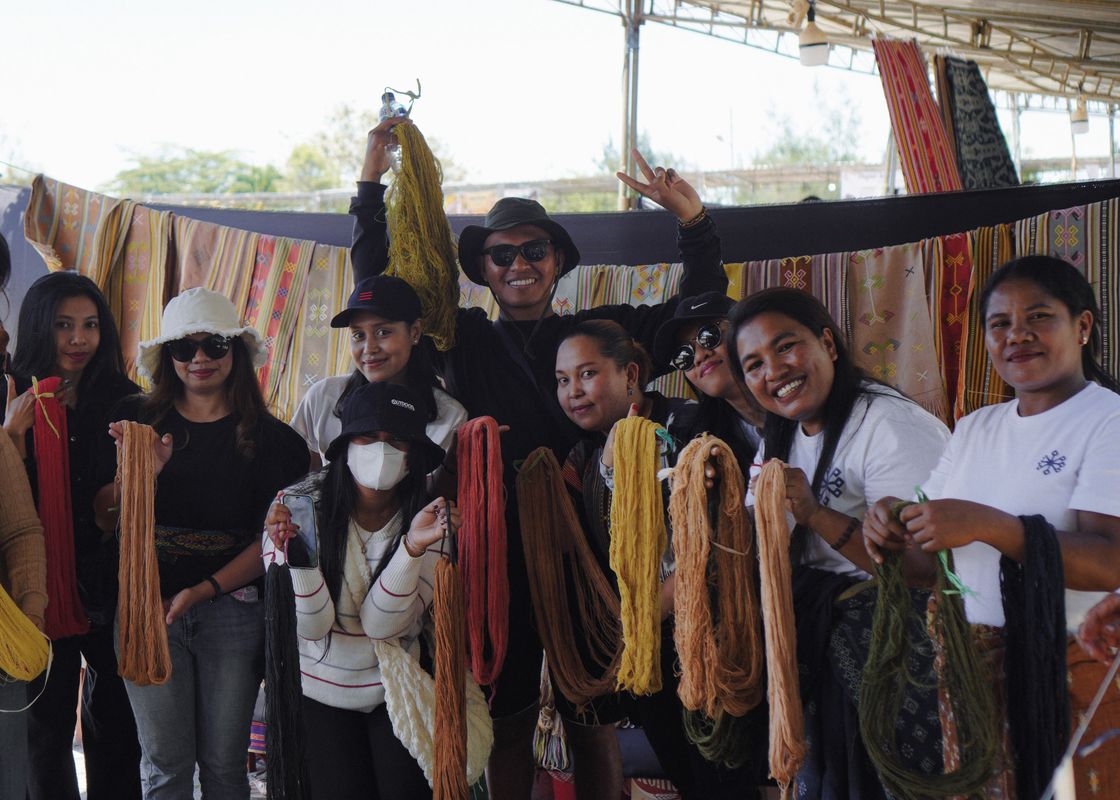
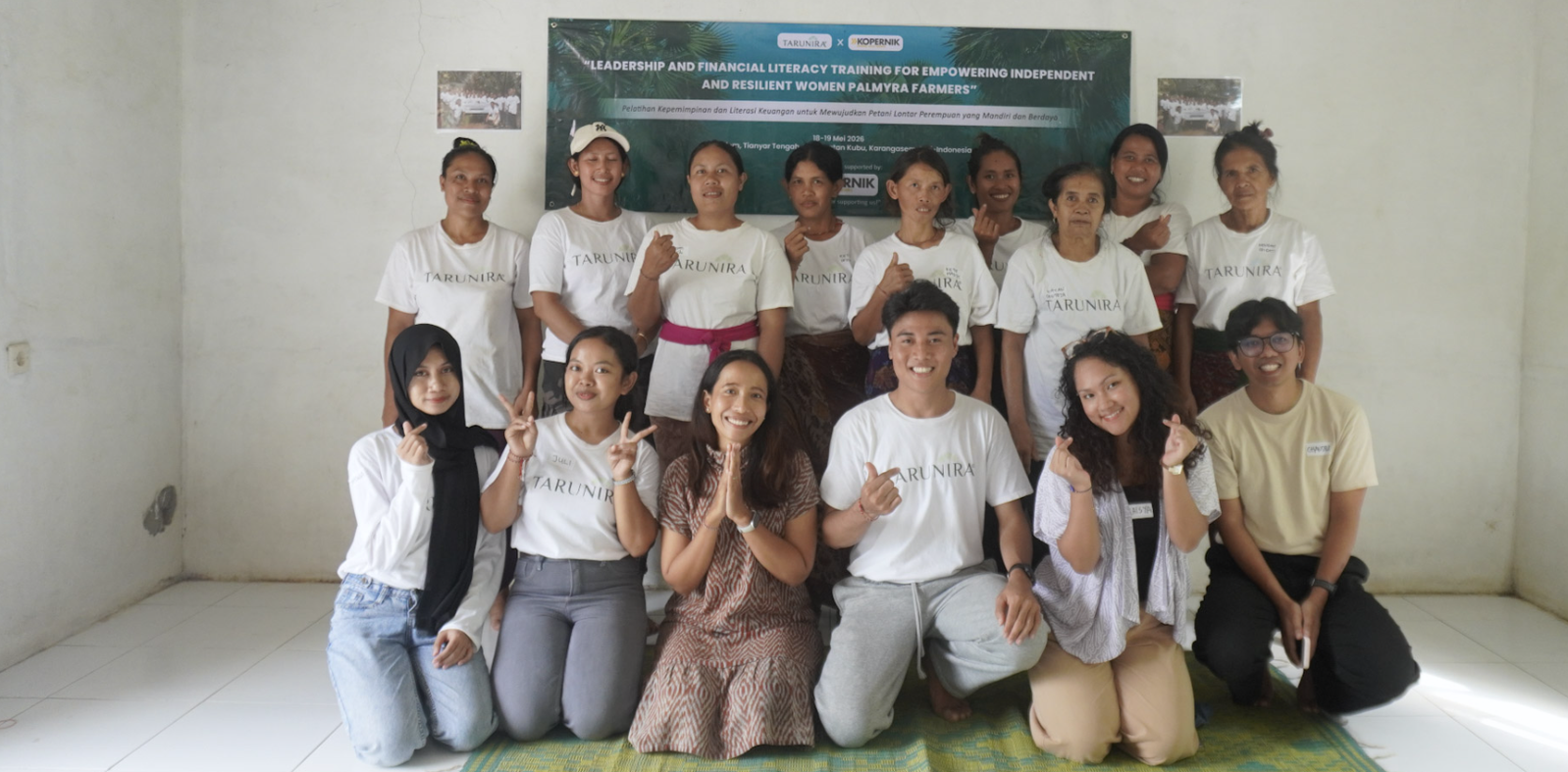
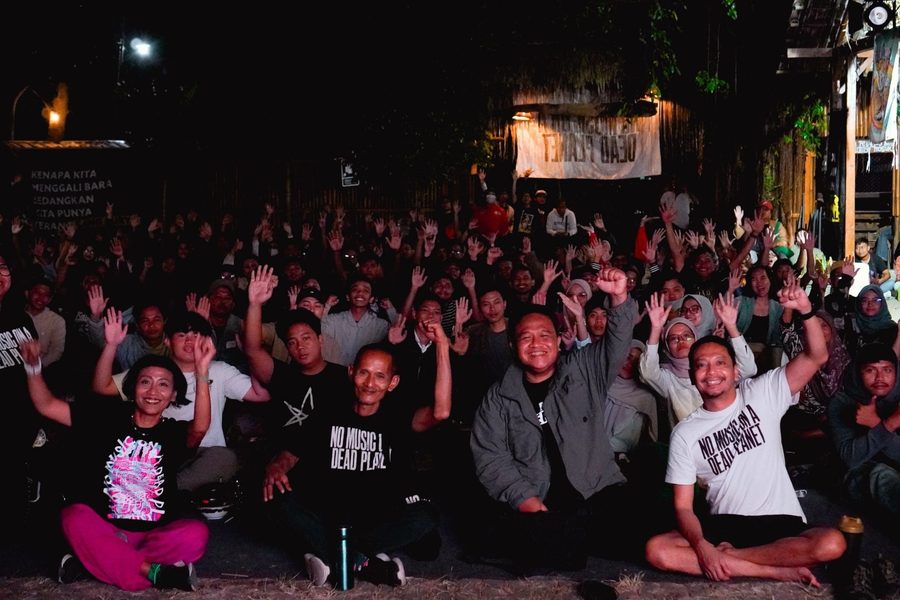
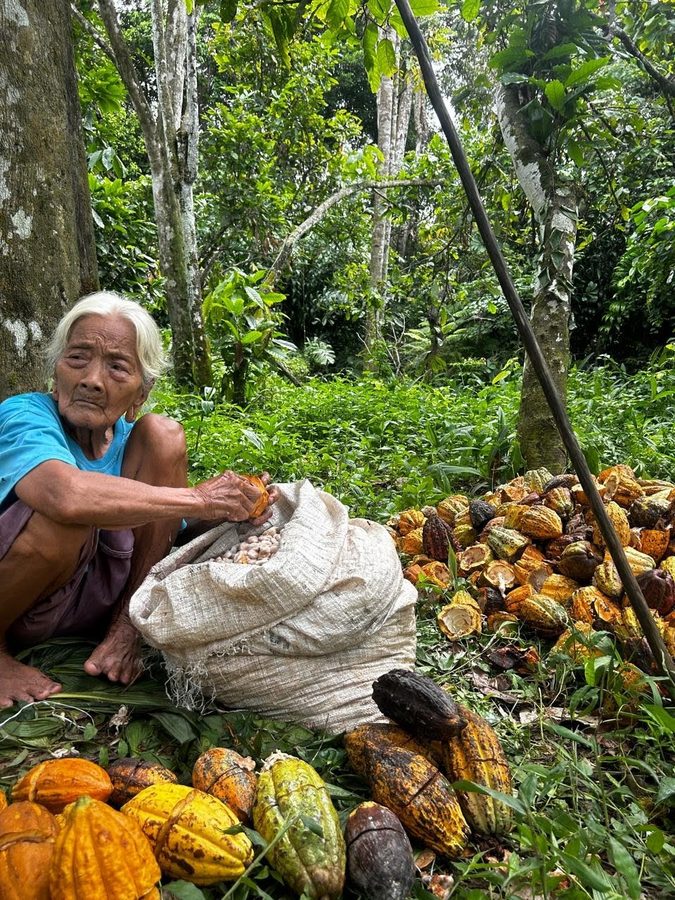
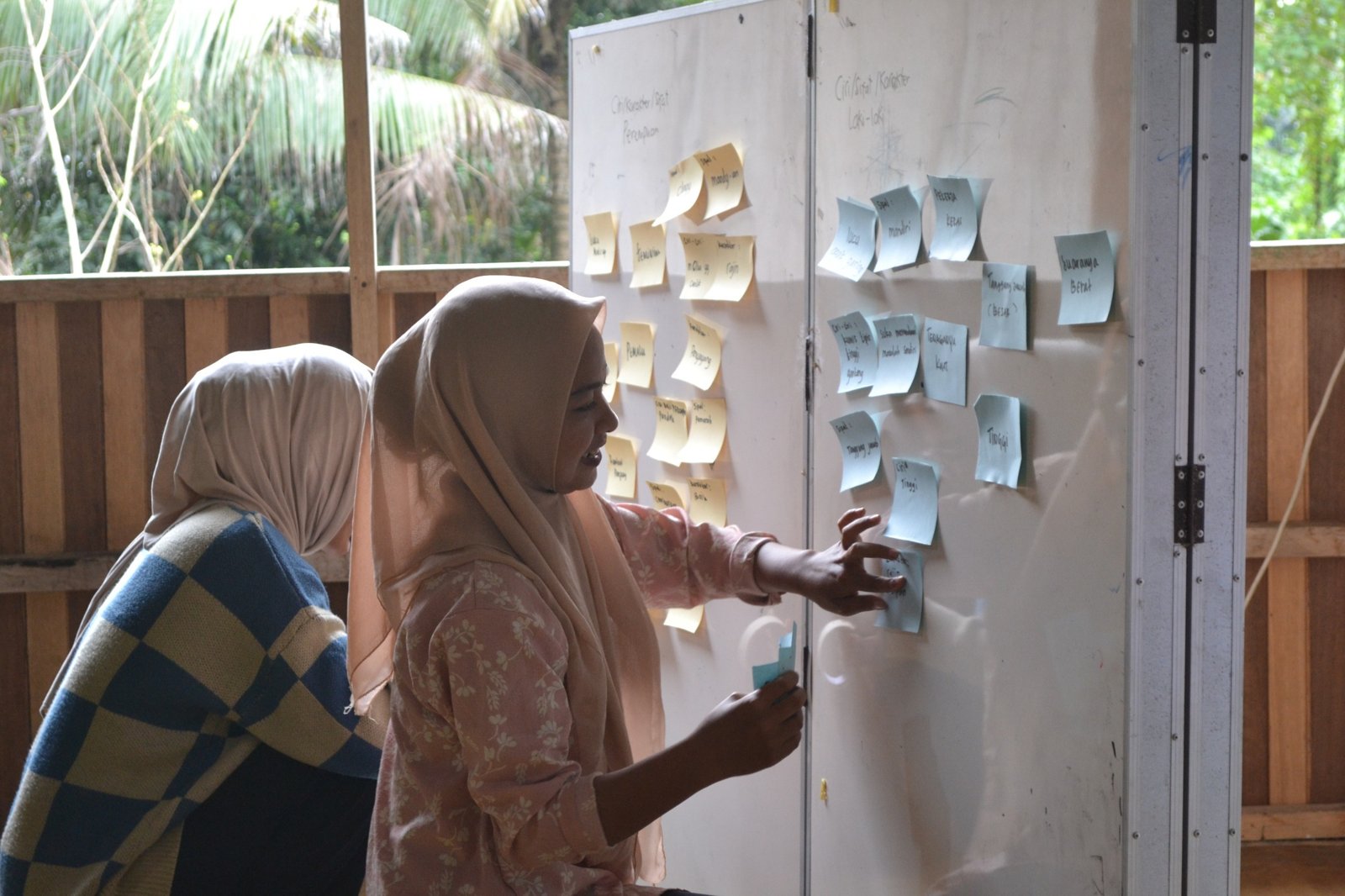
Women farmers gathered at a Kopernik training session Community members with locally produced goods at a market stall Community group beside newly installed drying equipment Artisans holding skeins of naturally dyed yarn

1

Our work in 2025

As an R&D lab, Kopernik finds what works by experimenting with potential solutions that address social and environmental challenges. We strive for collective impact by engaging partners from various sectors and providing advisory services to advance innovative products, services, and strategies that support underserved communities and advocate for social and environmental issues.

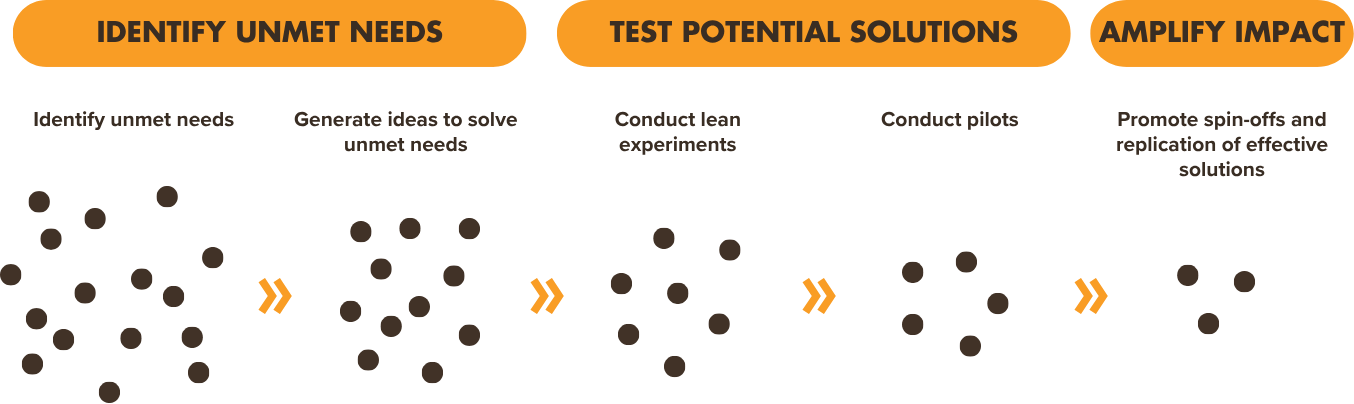
Our portfolio is diverse, with each initiative designed to address specific challenges while contributing to the Sustainable Development Goals (SDGs). Every project, whether large or small, supports these global goals. To achieve this, we structure our work around the 'innovation funnel', a systematic approach to identifying challenges, testing potential solutions, and promoting spin-offs and replication of effective solutions to amplify impact.

The innovation funnel

  1. Identify unmet needs

    Identify unmet needs

  2. Generate ideas to solve unmet needs

  3. Test potential solutions

    Conduct lean experiments

  4. Conduct pilots

  5. Amplify impact

    Promote spin-offs and replication of effective solutions

2

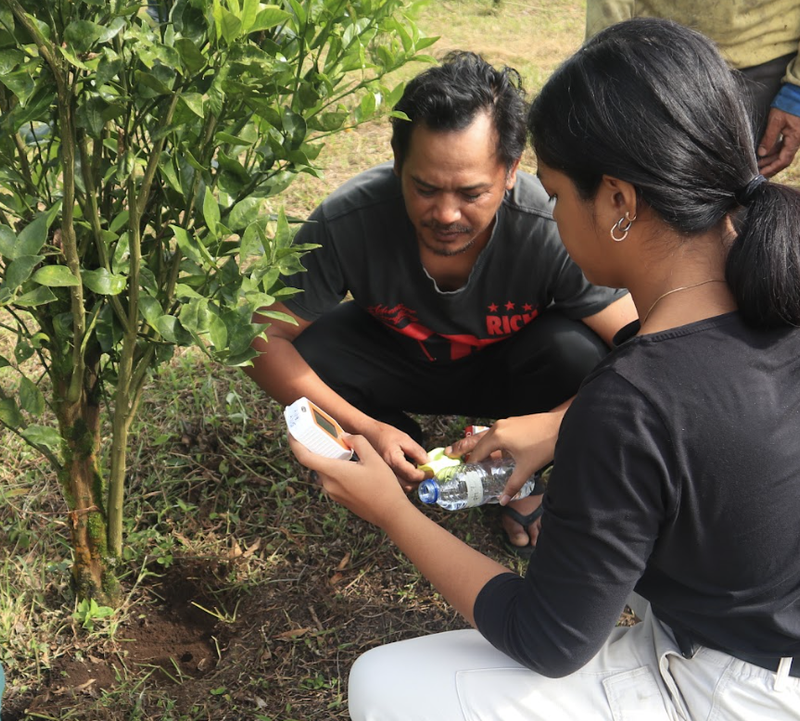
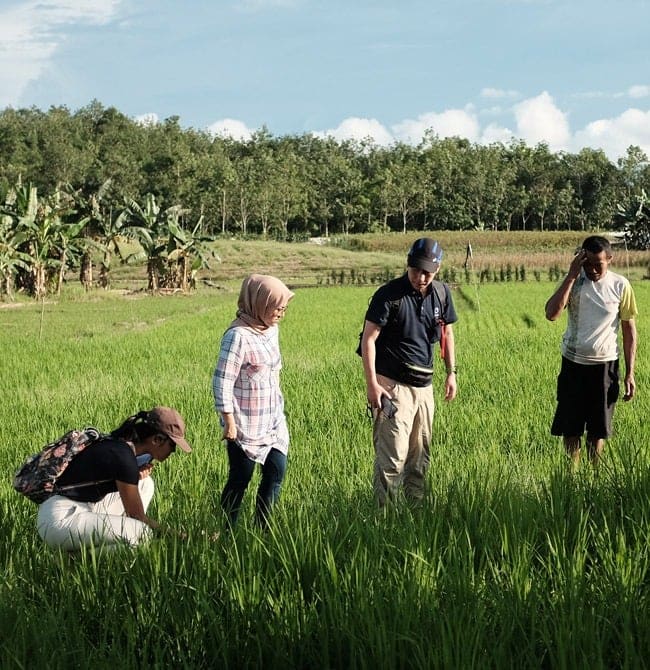
Two Kopernik researchers examining a device with a community member in a field

Identify unmet needs

We prioritize understanding challenges faced by underserved communities through in-depth unmet needs research. This process involves thorough exploration, observation, and active engagement with communities to identify, recognize, and understand specific challenges that may not be adequately addressed. Insights gleaned from our unmet needs research serve as the foundation for shaping the design of our prototypes and lean experiments.

Community members testing a water filtration prototype together

Test potential solutions

We design and conduct rapid, small-scale experiments to identify potential solutions, whether they are technology-driven or inspired by behavioral insights. Promising solutions then undergo pilot testing and implementation stages to refine their effectiveness and feasibility.

To measure impact, we conduct evaluations, assessing outcomes and determining the effectiveness of these solutions in addressing identified challenges.

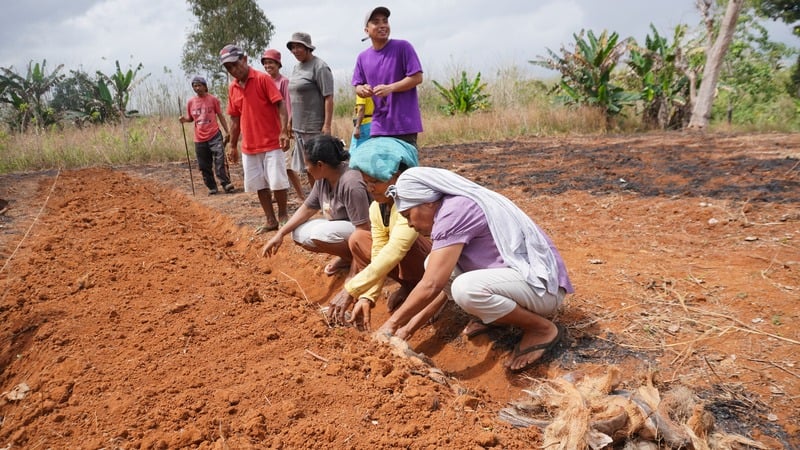
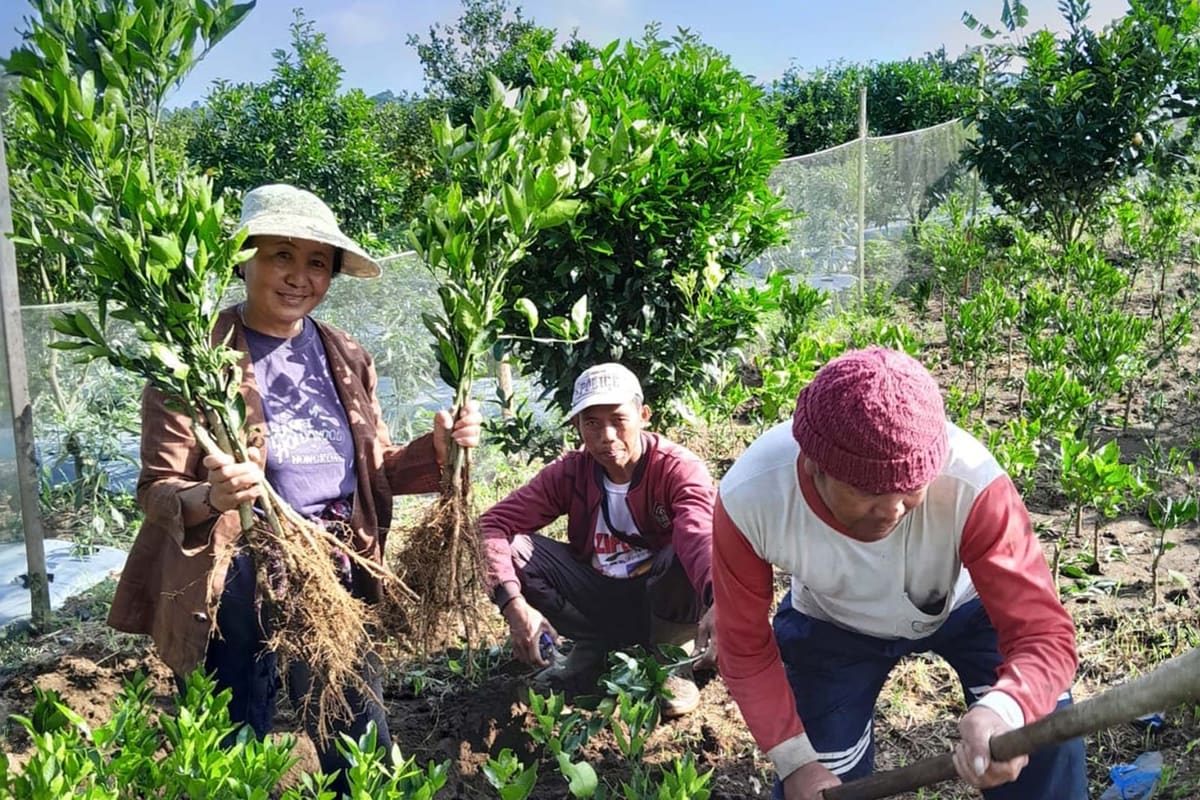
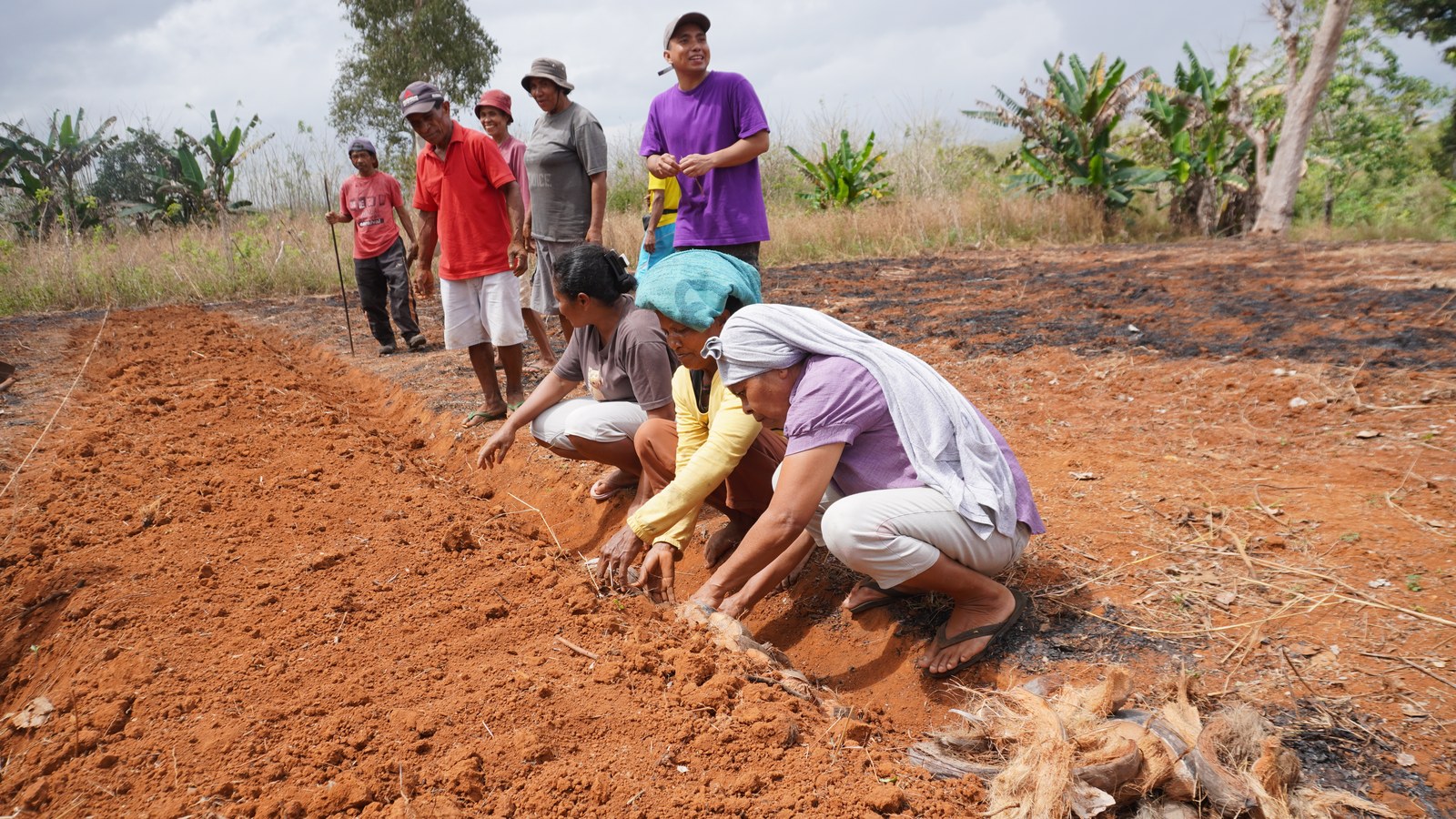
Farmers planting seedlings together on newly prepared land

Amplify impact

We share ideas, build partnerships, and encourage like-minded organizations committed to addressing social and environmental challenges to adopt proven solutions. We actively support the creation of spin-offs to expand and accelerate the adoption of proven solutions. Our goal is to inspire individuals, nonprofits, and social enterprises to implement these solutions, furthering our mission to address challenges faced by people and the planet with underserved communities.

3

Identify
unmet needs

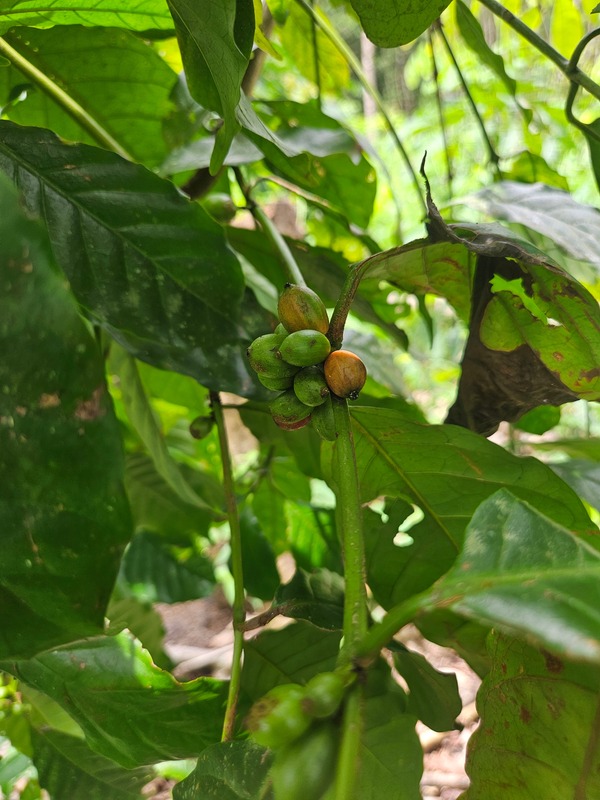
Coffee cherries ripening on a Liberica coffee plant

Value chain analysis of fisheries and coffee commodities in Ketapang, West Kalimantan

In Ketapang, West Kalimantan, deforestation has cost the region 340,000 hectares of wet primary forest since 2002 (Global Forest Watch). Much of this loss is driven by illegal logging, a livelihood many families depend on because no viable alternative has taken hold. The YIARI Nila-Kopi program, run by Yayasan IAR Indonesia (YIARI), supports 24 former loggers in three villages to transition into sustainable livelihoods: cage-based tilapia farming and Liberica coffee agroforestry.

Commissioned by YIARI, Kopernik conducted a value chain analysis of both commodities to assess whether these livelihoods can realistically compete with logging income.

The analysis combined field visits, stakeholder interviews, and focus group discussions to map input supply, production costs, distribution channels, and market access. The team then modeled three practice scenarios for each commodity, from baseline to ideal, identifying the highest-impact improvements at each stage.

Identify unmet needs 5

The findings were encouraging:

For tilapia farmers, consistent application of standard practices can substantially improve survival rates and lower unit costs. Additionally, accessing urban or premium markets where prices are roughly double the village rate can push monthly incomes toward the minimum wage in the medium term.

Beyond primary production, value-added processing offers an additional income pathway for both commodities. By-product processing requires relatively simple production steps and generates meaningful profit per unit, a practical next step once core farming practices are stable.

For coffee, a locally adapted variety, Liberica, stands out: lower input costs, better site tolerance, and higher profitability per kilogram than alternatives. With quality processing and intercropping for early income, Liberica can generate earnings above minimum wage from Year 5, with a payback period of four years.

Local buyers have already expressed interest and are willing to buy at premium prices and absorb logistics costs. The market is there. The path now is to build the farming practices and trust to reach it.

This project was implemented by Kopernik’s Advisory Services Team, commissioned by Yayasan IAR Indonesia (YIARI).

Identify unmet needs 6

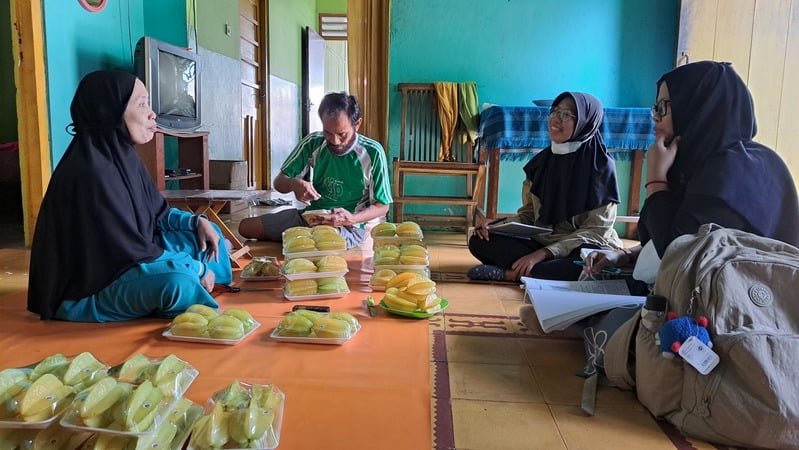
Researchers and community partners seated together over packaged fruit samples during fieldwork

Arc Linkage

Building durable responses to gender inequality in Indonesia

In partnership with Universitas Gadjah Mada (UGM) and the University of Melbourne, we are conducting Indonesia’s first longitudinal and comparative study on the long-term effectiveness of gender equality and women’s empowerment interventions, particularly in the context of external shocks such as the COVID-19 pandemic.

The goal is to inform future gender equality interventions, ensuring they are more resilient to external shocks and contribute to more sustainable and inclusive outcomes in the long term.

Identify unmet needs 7

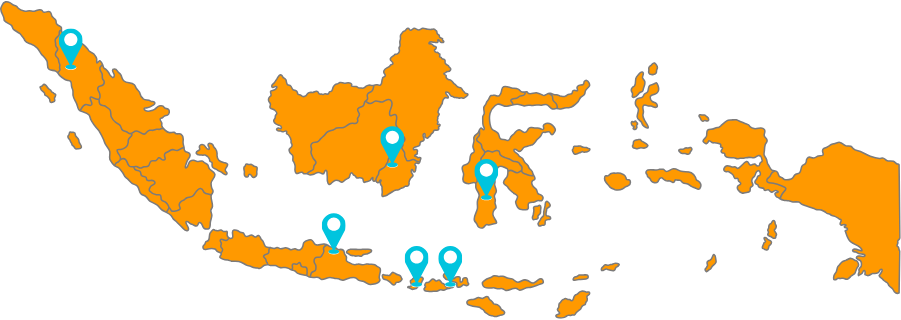
The research done by December 2025 built an evidence base across 10 research sites in 6 provinces in Indonesia:

In-depth interviews
300+
in-depth interviews
Life history interviews
100+
life history interviews
Focus group discussions
20+
FGDs with 10-15 participants each

2025 was the analysis and writing year. The team worked that material into a shared analytical account of why some women’s collective action endures and some does not.

Activities in 2025 included but were not limited to: analysing first-round data, drafting and revising the case studies, joint analysis workshops with UGM and University of Melbourne to compare analysis across sites, and presenting interim findings to CSO partners (intervention implementers) for inputs and validation.

Identify unmet needs 8

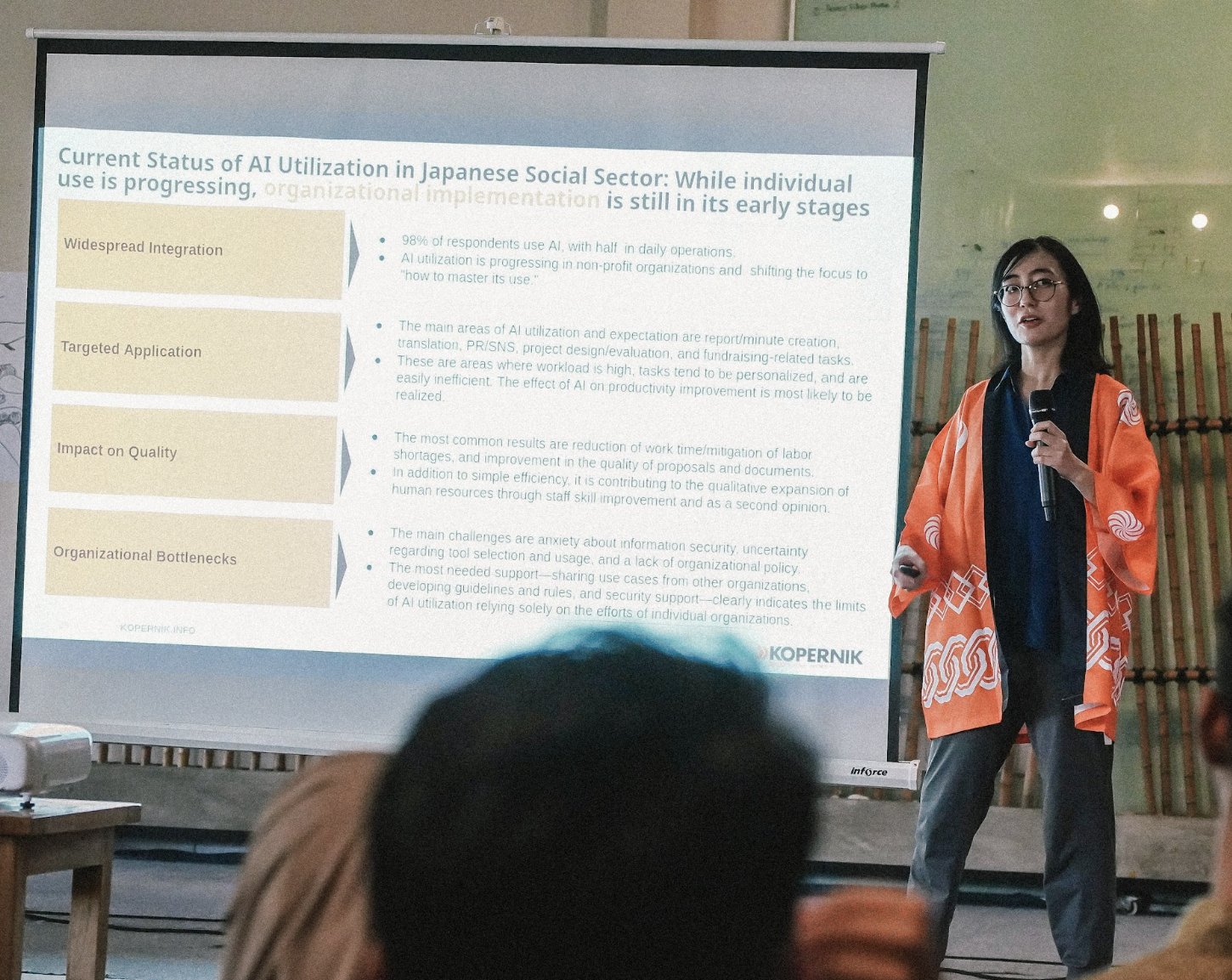
A Kopernik researcher presenting AI adoption research to an audience in Japan

AI usage research for organizations in Japan

International cooperation non-governmental organizations (NGOs) in Japan are being asked to do more as global challenges grow more complex, but many operate with a shortage of staff, low productivity, and a weak financial base. Administrative work crowds out time for their core mission and direct assistance.

From April 2025 to March 2026, Kopernik’s Japan Team ran a one-year project, supported by the Ministry of Foreign Affairs of Japan (MOFA), to help Japanese NGOs use artificial intelligence (AI) to reduce administrative overhead and strengthen the quality of their work.

Through desktop research, a survey of NGO practitioners, and expert interviews, the team mapped the barriers holding back AI adoption and showed how non-technical staff can build and manage their own workflow automations using natural language. The result is a practical roadmap for Japanese NGOs to adopt AI safely and effectively.

Identify unmet needs 9

This project delivered three core outputs:

Desktop Survey

The team surveyed the global and domestic AI landscape across four areas:

  • Current technology trends, including the rise of AI agents

  • Existing studies on AI adoption in the nonprofit sector in Japan and overseas

  • AI use in adjacent sectors such as local government

  • Interviews with AI specialists, alongside case studies of Japanese nonprofits already embedding AI into their operations.

Japan’s overall AI adoption rate stands at just 9.1% (Nomura Research Institute, 2025) and nonprofits are no exception, with most still at an exploratory stage. Interviews with AI specialists pointed to one consistent finding: the barrier is rarely the technology itself.

Relying on a handful of tech-savvy staff is not sustainable. To raise productivity organization-wide, leadership needs to set the tone through encouraging AI use, adopting enterprise-grade AI services, and setting clear internal guidelines. Blanket prohibition is not effective risk management; building organizational ‘guardrails’ for safe use is.

Identify unmet needs 10

This project delivered three core outputs:

Practitioner Survey

The project surveyed 102 practitioners in the international cooperation sector to understand the state of AI adoption among Japanese NGOs.

Text-based AI is already in use for:

Report drafting
88%
report drafting
Translation
77%
translation

While the main barriers to wider adoption are:

Data security concerns
47%
data security concerns
Absence of clear internal guidelines
32%
absence of clear internal guidelines

Most organizations remain at an exploratory stage.

When asked what would accelerate AI adoption fastest, practitioners ranked:

Peer case sharing
63%
peer case sharing
Security assistance
50%
security assistance
Technical consultation
44%
technical consultation
Funding
32%
funding

The bottleneck is not budget but access to practical knowledge, which is what the project’s 12 use cases were designed to address.

Identify unmet needs 11

This project delivered three core outputs:

Introduction of 12 practical use cases

Based on the insights from the survey, the project compiled and delivered 12 use cases, which all use free or low-cost tools, making them more likely to be replicated.

Three examples illustrate the range:

Invoice automation built by a non-programmer:

The research highlighted one NGO staff member who questioned why extensive manual data transcription was still required despite having digital data available. With no coding background, she used Microsoft Copilot and Power Apps to build an application that automates data extraction and stakeholder notifications with a single click.

This proved that NGOs can improve operations by using the staff they already have instead of relying on specialized IT hires.

Automated Timesheet Reporting from Google Calendar:

International cooperation NGOs working on government-funded projects are routinely required to document how many hours each staff member devoted to each project, a process that typically involved manually cross-referencing calendars and spreadsheets.

To solve this inefficiency, Gemini generated a Google Apps Script that automatically extracts appointment data from staff calendars and compiles the results into a shared spreadsheet via Zapier.

What previously required manual aggregation across multiple staff members can now be completed with an automated run, producing accurate per-project, per-staff hour reports that directly meet grant reporting requirements.

Interactive Project Mapping for Stakeholders:

To streamline the time-consuming process of activity reporting, another case demonstrated how AI can generate interactive maps from raw GPS data and field logs.

This allows NGOs to visualize their project locations and impact seamlessly, enhancing transparency for donors and supporters without requiring manual design work.

Identify unmet needs 12

For small NGOs, the challenge is adopting AI without overwhelming already stretched teams. The AI Ambassador model answers this directly: by concentrating technical groundwork in a few capable individuals, organizations can integrate AI meaningfully without asking every staff member to climb the same learning curve.

How we’ll apply these lessons in 2026

Kopernik will apply this model internally, designating AI Ambassadors to lead our own AI integration.

This means developing organizational guidelines for AI use, rolling out tools that have proven effective, and spreading practical know-how across the team so the benefits reach all staff, not just those with a technical background.

Beyond Kopernik, we will also share the knowledge and resources from this project to support other NGOs facing the same challenges.

This project is supported by the Ministry of Foreign Affairs of Japan (MOFA) and implemented by Kopernik’s Japan Team.

Identify unmet needs 13

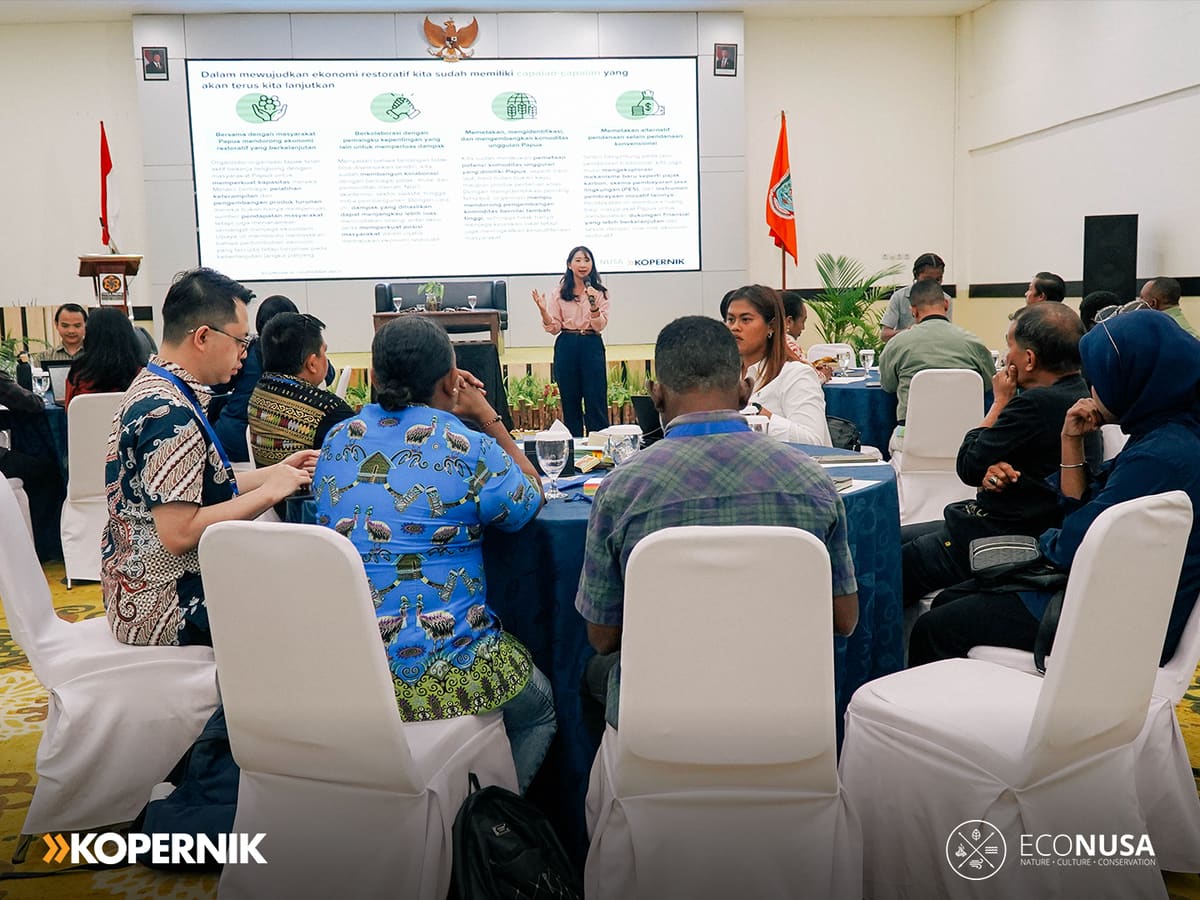
A Kopernik researcher presenting to grassroots partner organizations gathered around a table in Papua

Bio-restorative economy mapping in Papua

Papua’s economy is dominated by extractive industries. Mining and logging contribute significantly to regional GDP, yet they have driven deforestation, social displacement, and led to persistently low human development outcomes. A more restorative economic model is taking root across the region, but it remains undercounted and undersupported.

In partnership with EcoNusa, Kopernik conducted three-month research project interviewing 38 grassroots organizations across eight regions, documenting current activities, near-term aspirations, and the barriers standing in the way of scale, across seven key commodities: cacao, coffee, sago, copra, nutmeg, seaweed, and fisheries.

Identify unmet needs 14

The findings are striking. Restorative economic activities already:

Generate IDR 1.4 trillion annually

Engage over 10,000 people (90% of whom are Indigenous Papuans)

Protect 1.1 million hectares of land

Under ambitious assumptions, the full potential could reach IDR 65–130 trillion, potentially matching or exceeding the extractive economy, while engaging over 520,000 people and protecting up to 9.2 million hectares.

Identify unmet needs 15

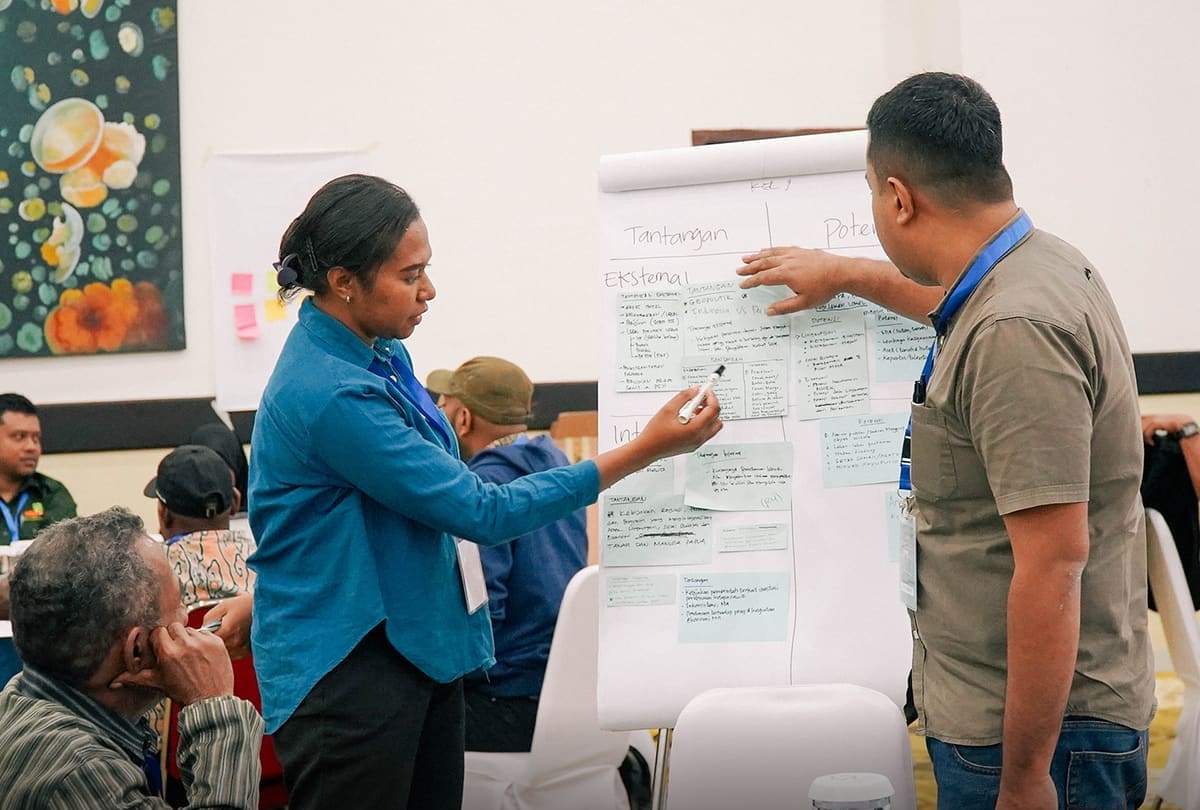
Kopernik and EcoNusa researchers working through a flipchart of challenges and opportunities with community participants

The research identified what it would take to get there.

Land rights are foundational: without formal recognition of customary land, Indigenous communities cannot fully participate in, or benefit from restorative economic initiatives.

Processing unlocks value: moving from raw to processed commodities can double income, but requires investment in technology, training, and market linkages.

Many organizations are already implementing restorative practices despite existing policy frameworks, not because of them; streamlining permitting and strengthening environmental monitoring are essential to scaling impact.

The research provides a compelling evidence base for redirecting investment and policy attention toward Papua’s restorative economy – one that generates prosperity without compromising the land, forests, and communities that sustain it.

This project is implemented by Kopernik’s Advisory Services Team in partnership with EcoNusa.

Identify unmet needs 16

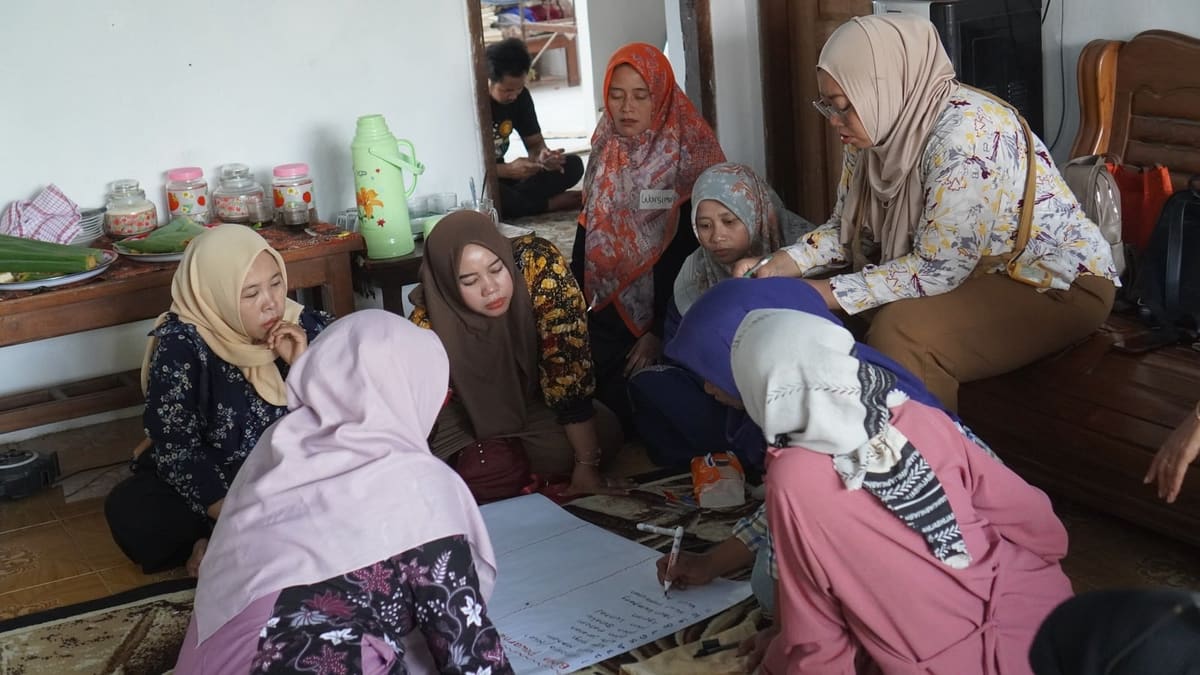
A group of women nonprofit workers seated on the floor of a home, filling in a worksheet together

Capacity building needs assessment of nonprofit organizations in Indonesia

Indonesia’s civil society sector is vast and growing – but many nonprofit organizations operate without access to relevant, affordable training and support. The Asian Venture Philanthropy Network (AVPN), a leading network of impact investors, philanthropists, and social purpose organizations across Asia-Pacific – is developing a platform to address this gap. To ensure it is grounded in real needs rather than assumptions, AVPN engaged Kopernik to lead its first phase: a mixed-methods needs assessment covering three sectors – climate, youth, and gender – across West, Central, and East Indonesia.

Identify unmet needs 17

Through a literature review of 18 studies, surveys of 38 nonprofit organizations (NPOs) across six regions, 16 in-depth interviews, and a mapping of 10 existing capacity building platforms, the same gaps surfaced consistently: leadership and succession planning, Monitoring Evaluation and Learning, system design, IT, and fundraising.

Crucially, these gaps are shaped more by where an organization operates than what issue it works on – Central and Eastern Indonesia face the most acute deficits, with only 25% of Eastern Indonesia NPOs having ever used a digital platform for capacity building. Just 42% of all respondents received any structured capacity building in the past five years.

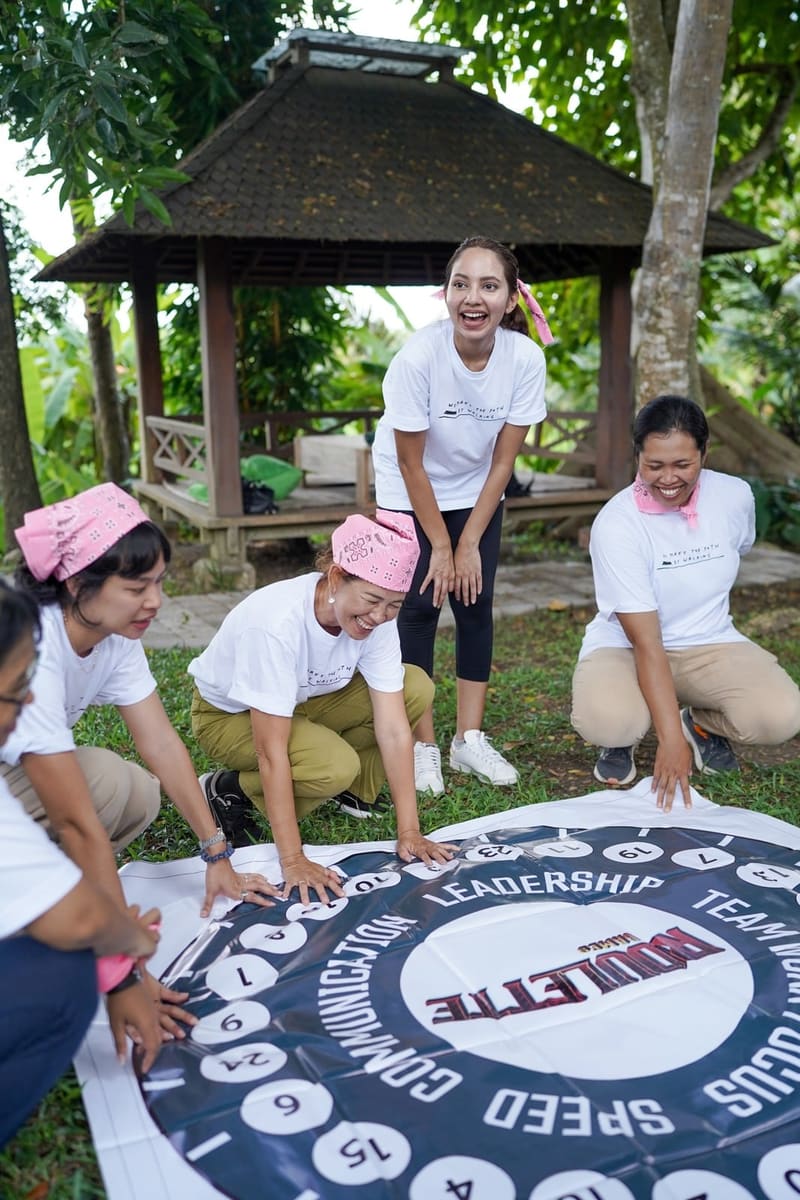
A group of nonprofit staff in white t-shirts and pink headscarves crouched over a large board game spread on the grass during a team training

Identify unmet needs 18

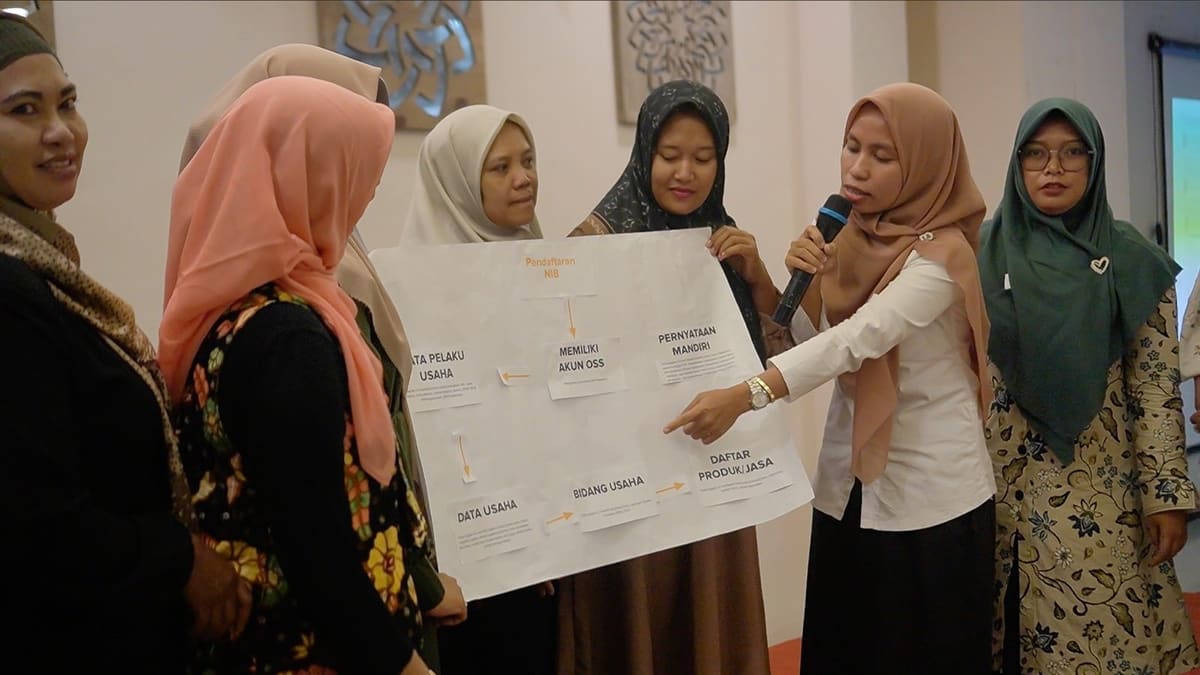
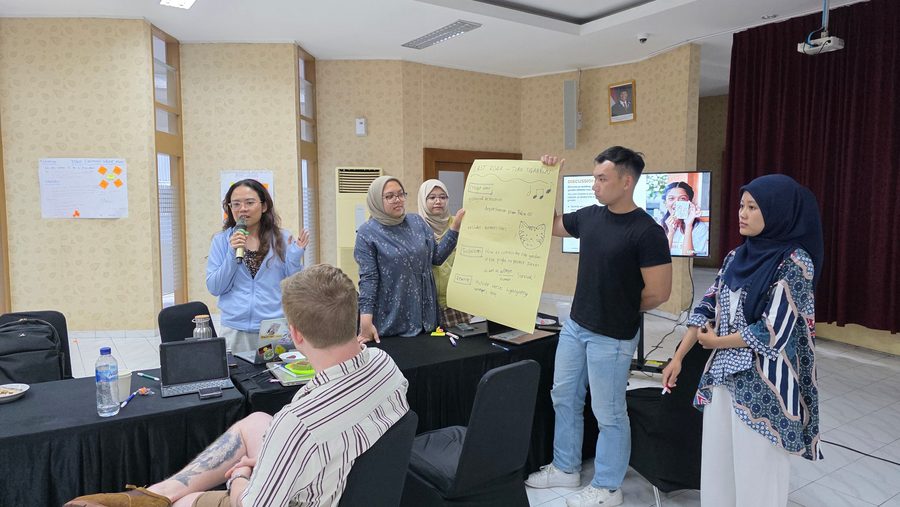
A participant with a microphone points to a hand-drawn process diagram on a flipchart while others look on

The research makes clear what an effective platform must do differently. It must account for geography over theme, direct early-stage organizations to foundational support before offering more advanced skills, and offer co-designed content over generic training packages. Format matters as much as content: short videos, flexible timing, and offline-compatible modules are what practitioners actually use. And without simple monitoring built in, there is no way to know whether the learning was actually applied.

Findings from this assessment will directly inform the design of AVPN’s capacity building platform, with the goal of building a more resilient and equitably supported civil society sector across Indonesia.

This project was initiated by AVPN and implemented by Kopernik’s Advisory Services Team.

Identify unmet needs 19

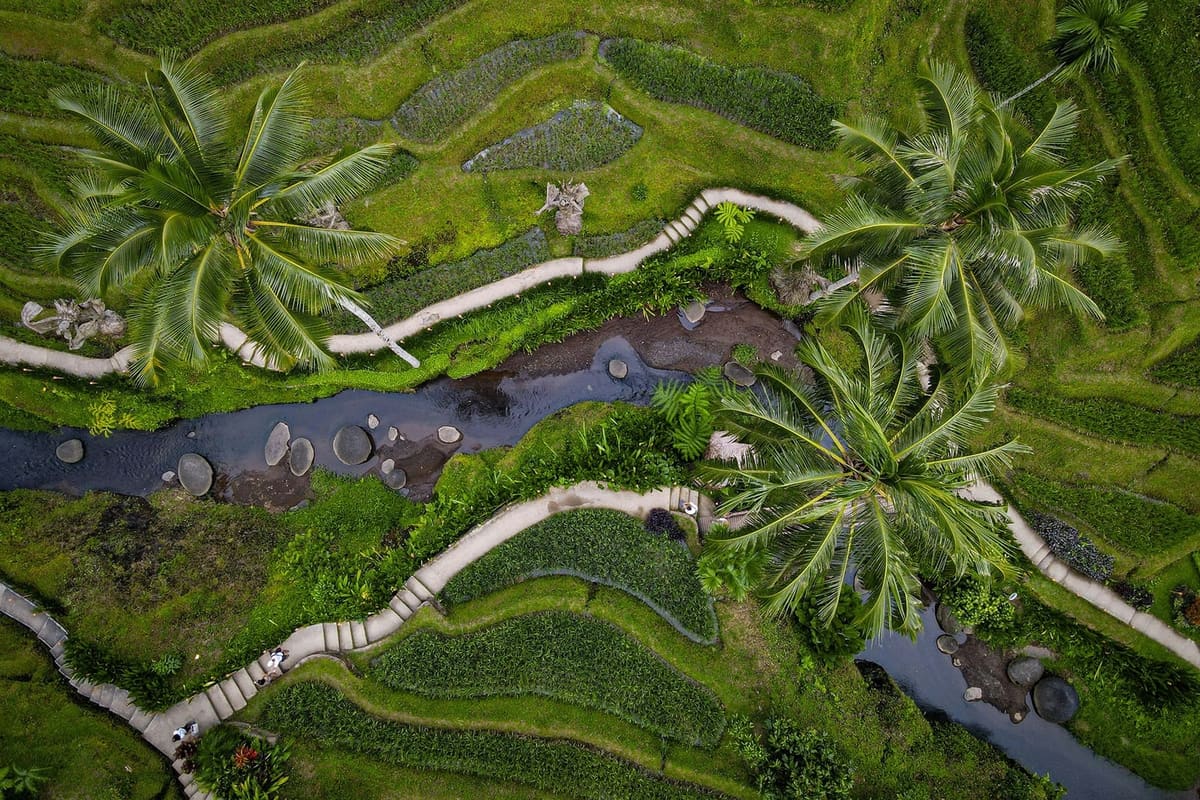
Terraced rice paddies and coconut palms in Bali, with a stream winding between them

Nature ID

Mapping digital infrastructure for Bali’s environment

Bali’s natural ecosystems – its watersheds, forests, and centuries-old irrigation networks – are under growing pressure from a tourism-dominated economy. Data about these ecosystems exists, but it is scattered across agencies, underutilized, and disconnected.

“Nature ID” is a digital public infrastructure framework designed to change that, connecting environmental data across citizens, businesses, and government to enable better decision-making and fairer economic incentives for conservation.

Working with the United Nations Development Programme (UNDP) in early 2025, Kopernik surveyed 44 Balinese practitioners to map the island’s most pressing environmental risks: waste management, land-use change, water scarcity, climate change, and deforestation.

Identify unmet needs 20

From the survey, Kopernik developed three priority use cases for Nature ID:

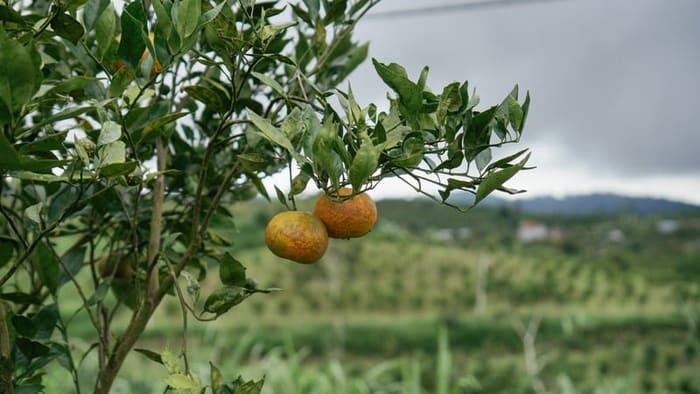
Ripe citrus fruit hanging on a tree above a plantation

Land-Use Management

GIS mapping and NTFP (Non-Timber Forest Products) traceability to prevent deforestation

Four people measuring crops by hand in a flooded rice paddy

Subak System

Digitizing traditional irrigation networks that leads to equitable water distribution

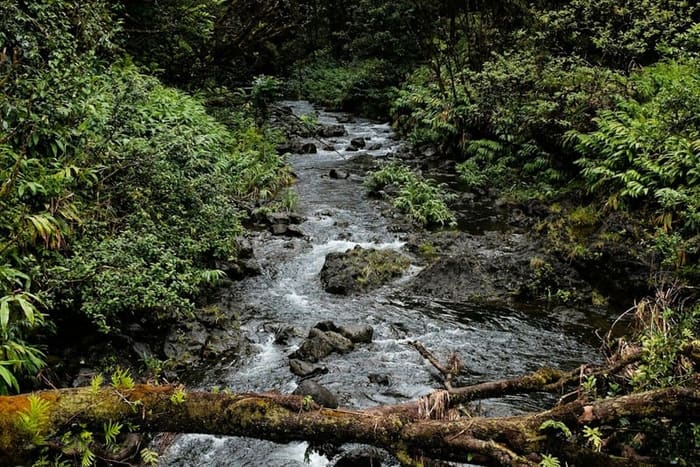
A rocky river running through dense green forest

Watersheds

Integrating GIS and sensor data to enable Payment for Environmental Services

All three were validated by subject-matter experts, and all three have potential applications beyond Bali, from Central Papua and Kalimantan to West Java and South Sumatra.

Identify unmet needs 21

A woman holding up young mangrove saplings while two colleagues work the soil in a coastal nursery

The research found that Nature ID’s greatest barriers are not technical – they are institutional and social. Data silos across agencies must be resolved first; governance questions around data ownership and access must precede any build.

In Bali, cultural framing proved equally important: aligning Nature ID with Tri Hita Karana, harmony among God, Nature, and People. is key to community buy-in. Economic incentives are also non-negotiable, and community-generated knowledge from participatory mapping must be treated as a core input.

Findings from this research provide a foundation for UNDP and partners to move toward implementation, with Bali as a potential model for nature-connected digital infrastructure across Indonesia.

This project was implemented by Kopernik’s Advisory Services Team and supported by UNDP.

Identify unmet needs 22

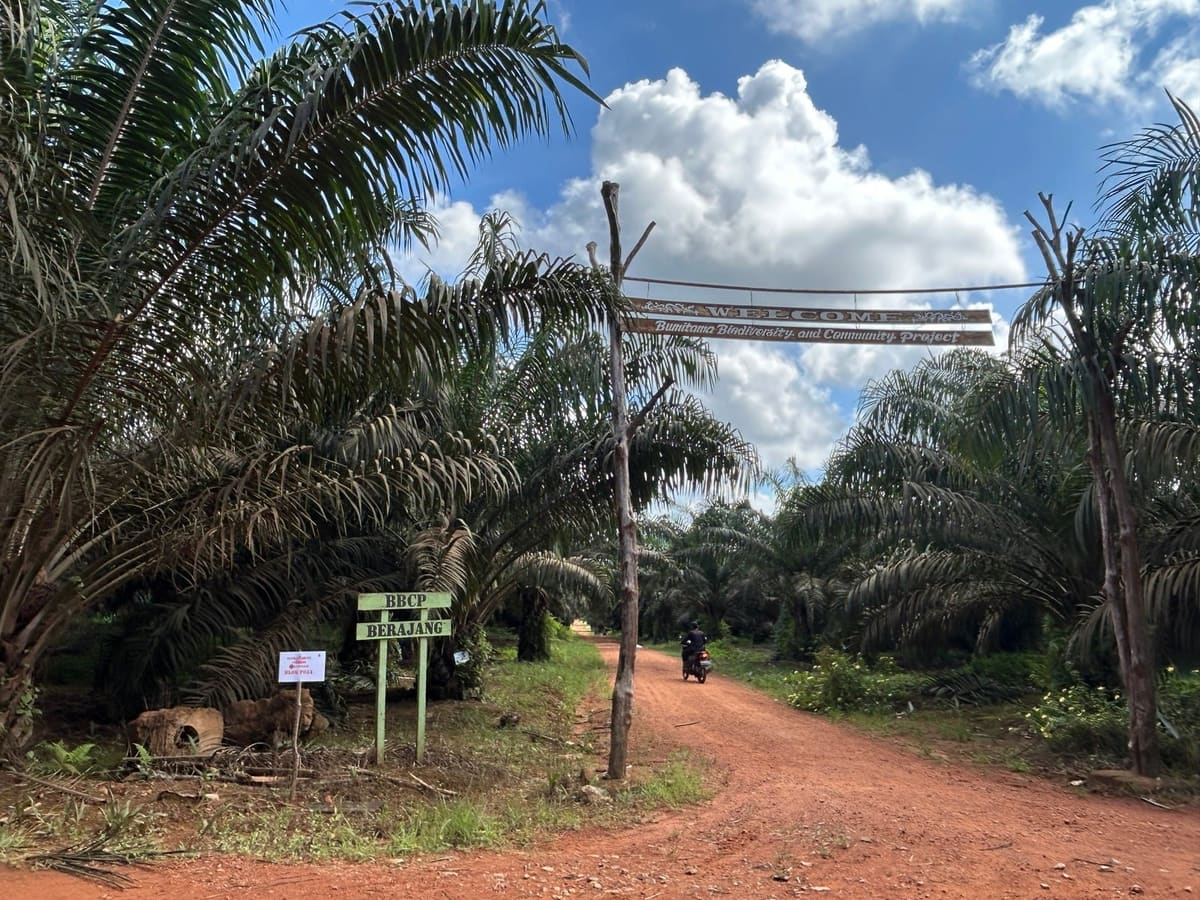
A welcome arch over a red dirt road running into an oil palm plantation in West Kalimantan

Evaluating landscape change in West Kalimantan

West Kalimantan’s forests and smallholder communities face the combined challenges of palm oil expansion, deforestation, and fragmented governance. To support more sustainable landscape management, IDH (Initiatief Duurzame Handel), an international organization that works to make agricultural supply chains more sustainable and inclusive, implemented a multi-stakeholder initiative across Ketapang and Kubu Raya for nearly a decade. Kopernik conducted the initiative’s final evaluation, assessing progress across governance, business practices, and community-level outcomes.

Identify unmet needs 23

Six people standing outside a West Kalimantan district office, framed by painted banners

Drawing on document reviews, stakeholder surveys, interviews, and field visits, the evaluation found that the initiative made its strongest progress in strengthening collaboration, promoting more sustainable palm oil production, and laying the foundations for long-term landscape management. More smallholder farmers were able to meet industry standards for selling their Fresh Fruit Bunches (FFB), formally register their oil palm plantations through Surat Tanda Daftar Budidaya (STDB) certification, and adopt agroforestry practices that diversify income while supporting healthier landscapes. The initiative also helped attract significant private investment to advance deforestation-free palm oil production.

The evaluation found encouraging signs that deforestation had declined across both districts during the implementation period, although these changes cannot be attributed to the initiative alone. It also highlighted lessons for future landscape programs: long-term success depends on the ability to adapt to changing conditions, sustained collaboration between government, businesses, and communities, flexible partnership models that encourage wider private sector participation, and stronger data systems that enable better coordination, learning, and lasting impact.

This project was implemented by Kopernik’s Advisory Services Team and supported by IDH.

Identify unmet needs 24

Test
potential
solutions

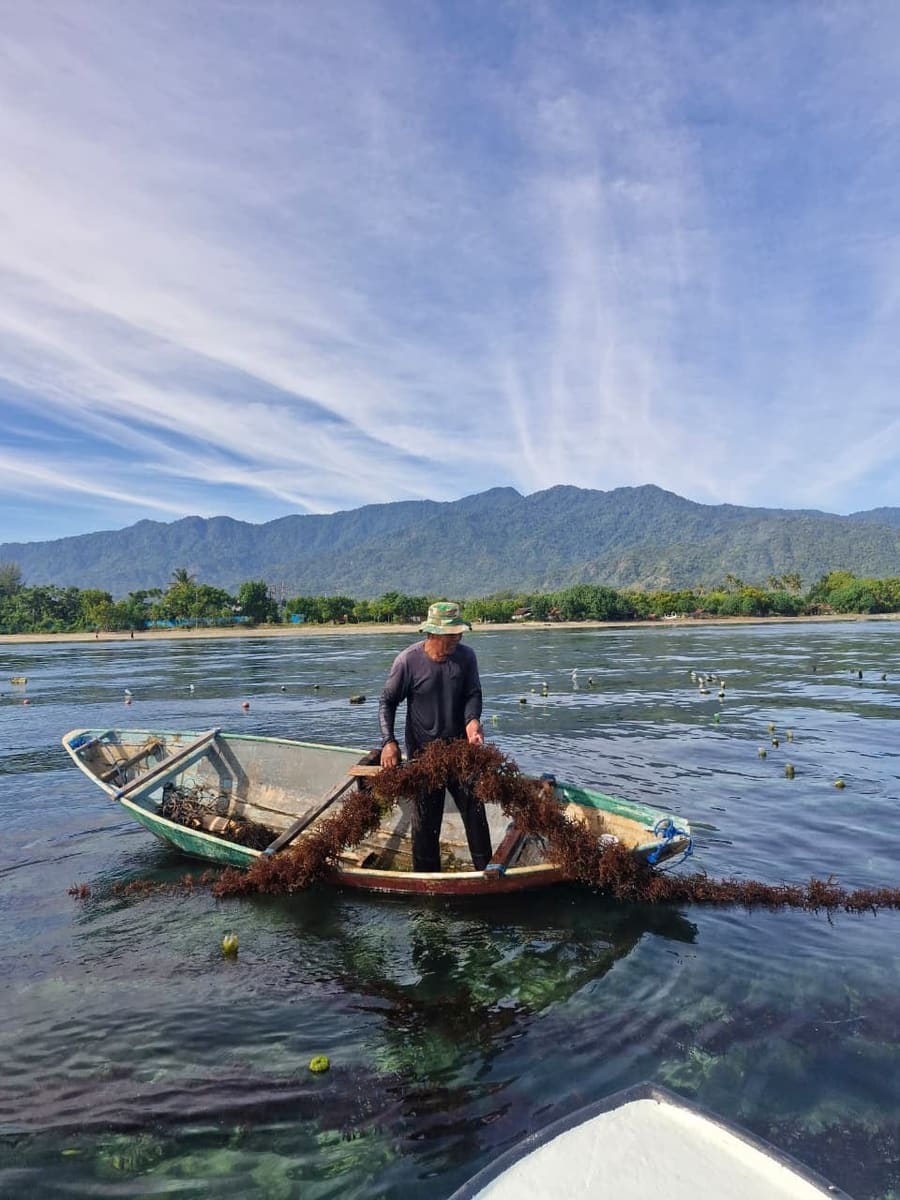
A seaweed farmer standing in a wooden boat holding a bundle of freshly pulled seaweed on the coast of Buleleng, Bali, with mountains behind

Community development through seaweed-based product innovation in Bali

Seaweed farmers in Buleleng, Bali, sell most of their harvest as low-value raw wet seaweed, leaving them exposed to market fluctuations and with little cushion when extreme weather or crop disease strikes. In partnership with BNP Paribas, Kopernik implemented an initiative focused on improving cultivation and post-harvest practices, and opening new income streams through value-added product innovation.

Test potential solutions 26

A group of seaweed farmers seated at tables during a training session in an open-sided wooden hall

Cultivation & Planting

The team developed expert-informed planting calendars and optimal planting location mapping to help farmers anticipate climate risks and improve production practices.

This gives farmers a more structured, science-based foundation for decisions that were previously made only by intuition.

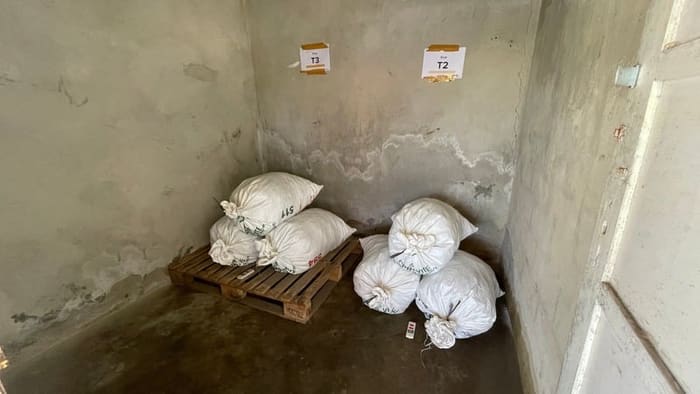
Bags of dried seaweed stored on the floor of a room while a shelf-life experiment runs

Storage Experimentation

A seaweed storage experiment was conducted to maintain harvest quality and extend shelf life.

Early results showed positive outcomes in controlling temperature and humidity, two of the most critical factors in preserving seaweed quality between harvest and sale

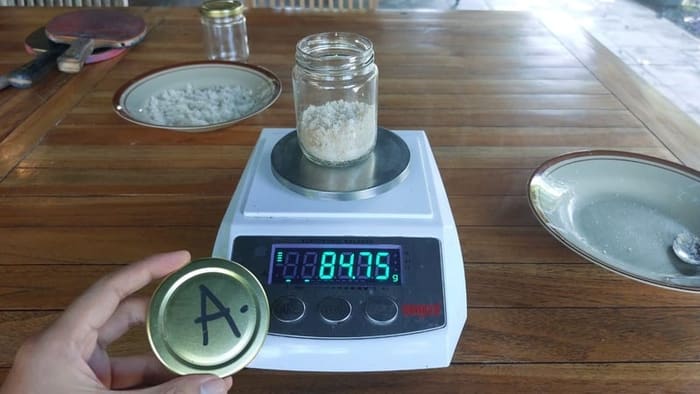
A glass jar of dried seaweed on a digital scale showing 843 grams

Value-Added Products

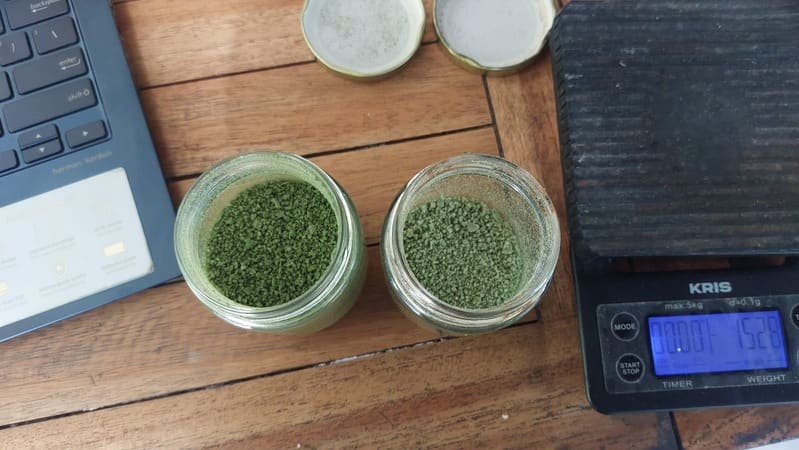
The program is developing four value-added products from local seaweed harvests, including seaweed salt, organic soap, furikake (a Japanese-style seasoning), and bio-stimulant fertilizers, to diversify community income streams and increase the economic value of each harvest.

All products are currently in the development phase.

Test potential solutions 27

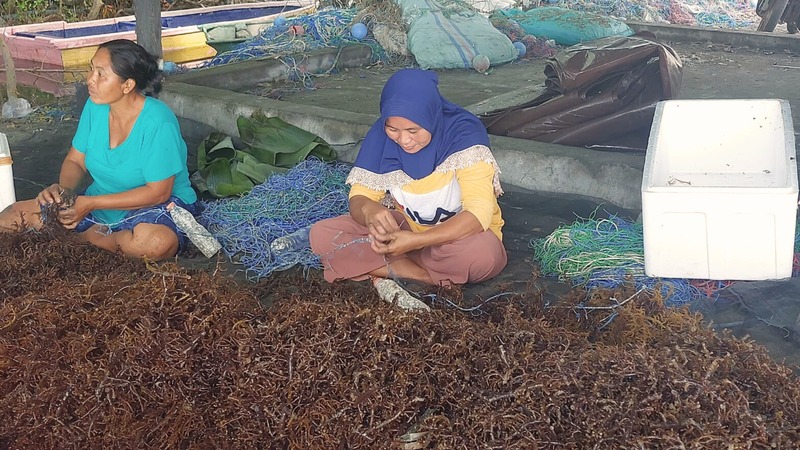
Two women in a boat sorting fresh seaweed beside a large pile of it on the shore
Two open glass jars of dried green seaweed on a wooden table

1,711

People engaged

60%

Women participants

4

Value-added products
in development

The project directly engaged 1,711 people, including 51 farmers.

Women make up approximately 60% of all direct participants.

This project is implemented by the Partnerships and Solutions Lab Teams, with support from BNP Paribas.

Test potential solutions 28

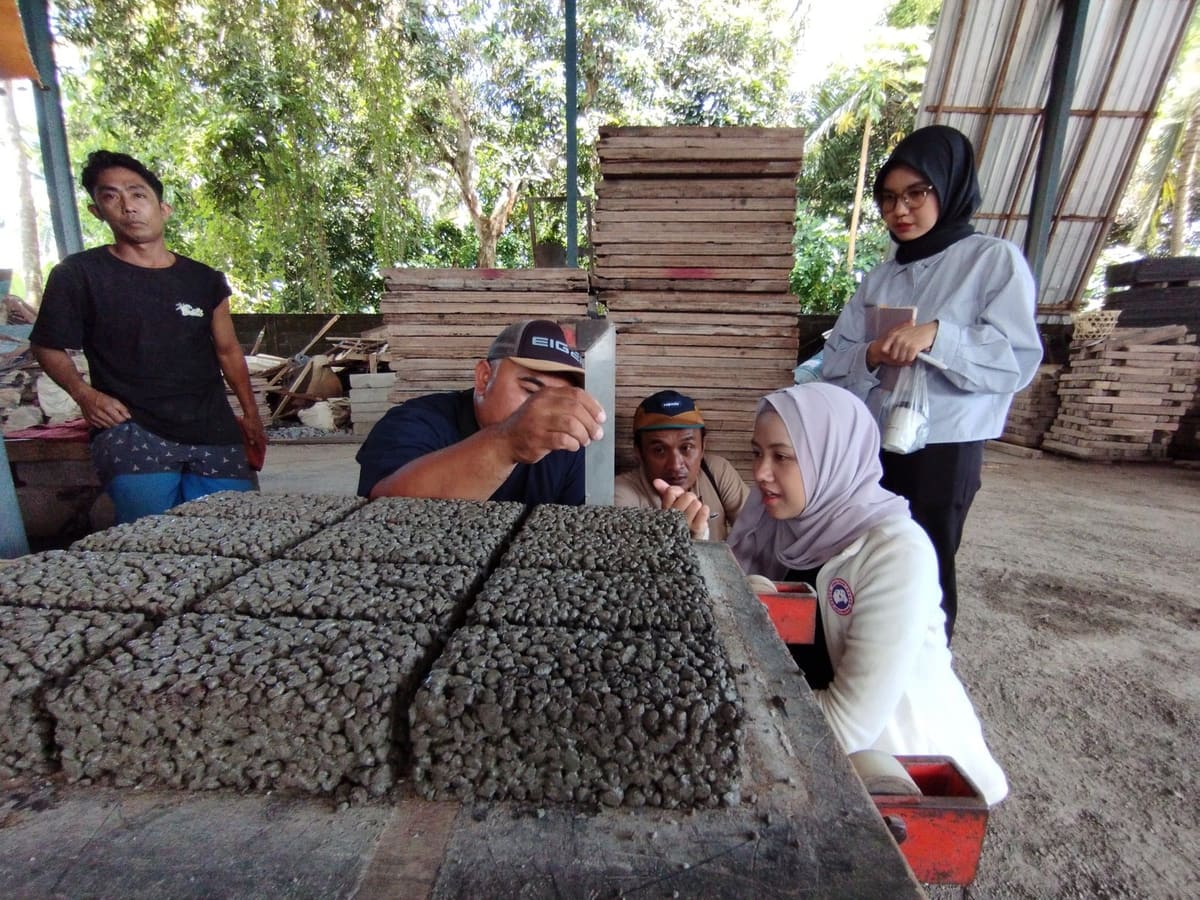
Workers laying and inspecting the permeable Poreblock paving surface at a trial site

Water balance action

Bali’s urban areas face an intensifying water crisis: rapid development has replaced permeable land with concrete and asphalt, disrupting the natural water cycle and reducing groundwater recharge. In many neighborhoods, rainwater that once absorbed into the soil now runs off into drains and out to sea, leaving communities increasingly dependent on groundwater that is being drawn down faster than it can recover.

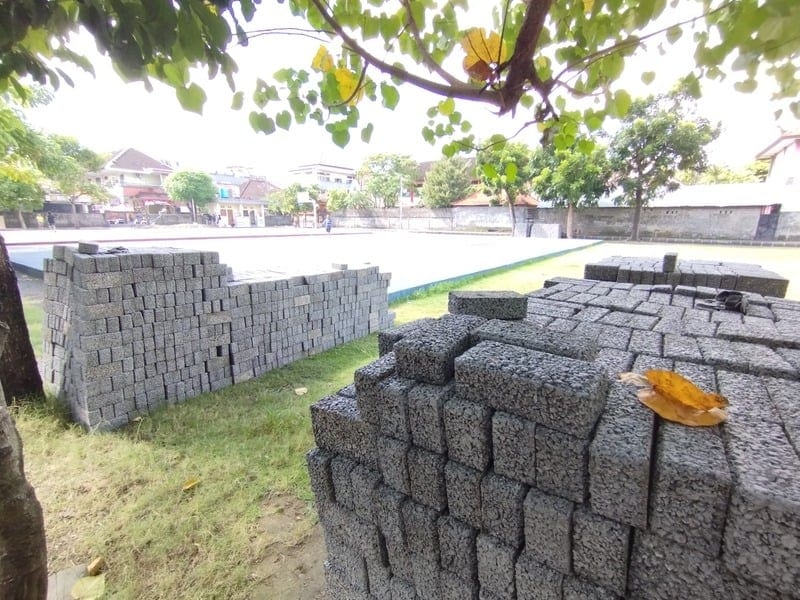
The Water Balance Action project, funded by Partnering for Green Growth and the Global Goals 2030 (P4G) and implemented in partnership with ReservoAir, is testing whether Poreblock – a permeable paving technology – can restore groundwater recharge in urban Bali. Poreblock replaces conventional paving with a surface that allows rainwater to pass through, slowing runoff and allowing it to percolate into the ground beneath. In 2025, the team installed 500m² of Poreblock across three sites: Pangsan, Desa Awan, and Desa Tegal Harum in Denpasar.

Test potential solutions 29

Stacks of grey permeable Poreblock bricks piled outdoors under trees at a trial site
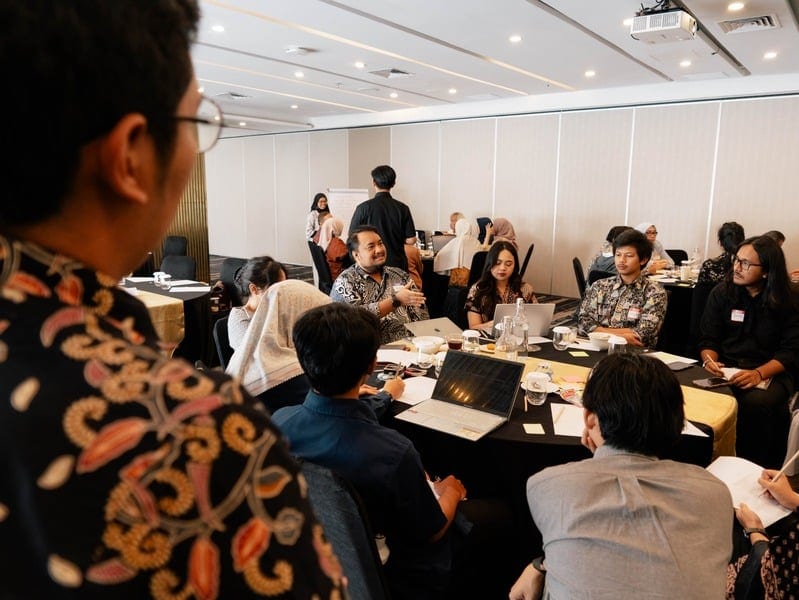
Representatives from government, universities and civil society seated around a table during a focus group meeting

500M2

of poreblock installed in three sites in Denpasar

20+ organizations

joined the April 2025 Focus Group Discussion

Alongside the physical installation, Kopernik and ReservoAir convened a multi-stakeholder Focus Group Discussion (FGD) in Jakarta in April 2025 to explore financing mechanisms needed to scale urban water conservation solutions. Representatives from Indonesia’s Ministry of Environment, Ministry of Public Works, the Bandung Institute of Technology (ITB), World Resources Institute (WRI), Indonesian Water Institute, and multiple civil society organizations – including Kota Kita, Mosaic, Rekonvasi Bhumi, and Ecoxystem – joined the discussion, reflecting strong institutional interest in making solutions like Poreblock scalable and accessible.

The project runs through 2027, with ongoing experimentation and a second installation phase underway.

This project is implemented by Kopernik’s Solutions Lab and Advisory Services Teams in partnership with ReservoAir, and is supported by P4G.

Test potential solutions 30

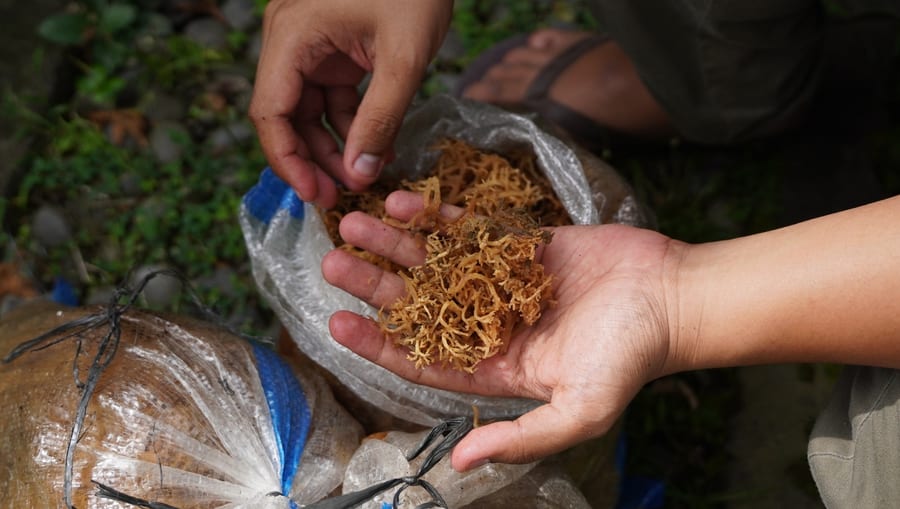
A farmer cupping a handful of dried brown seaweed above a plastic bag of the harvest

Building blue economy to empower Osi Island seaweed farmers

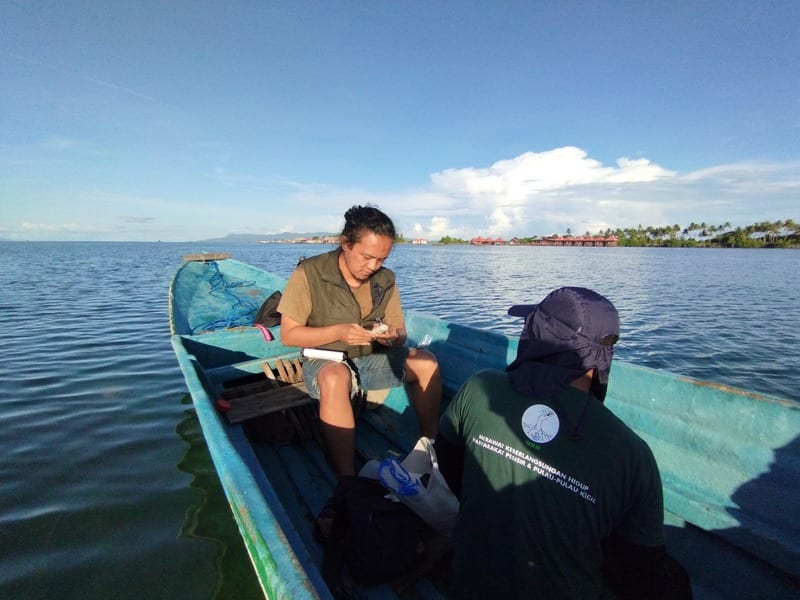
Seaweed farmers on Osi Island, Maluku face a convergence of pressures, including declining productivity, crop damage from turtles and dugongs, marine pollution from destructive fishing practices, and inadequate post-harvest handling. Together, these challenges reduce crop quality, increase disease vulnerability, and limit income stability.

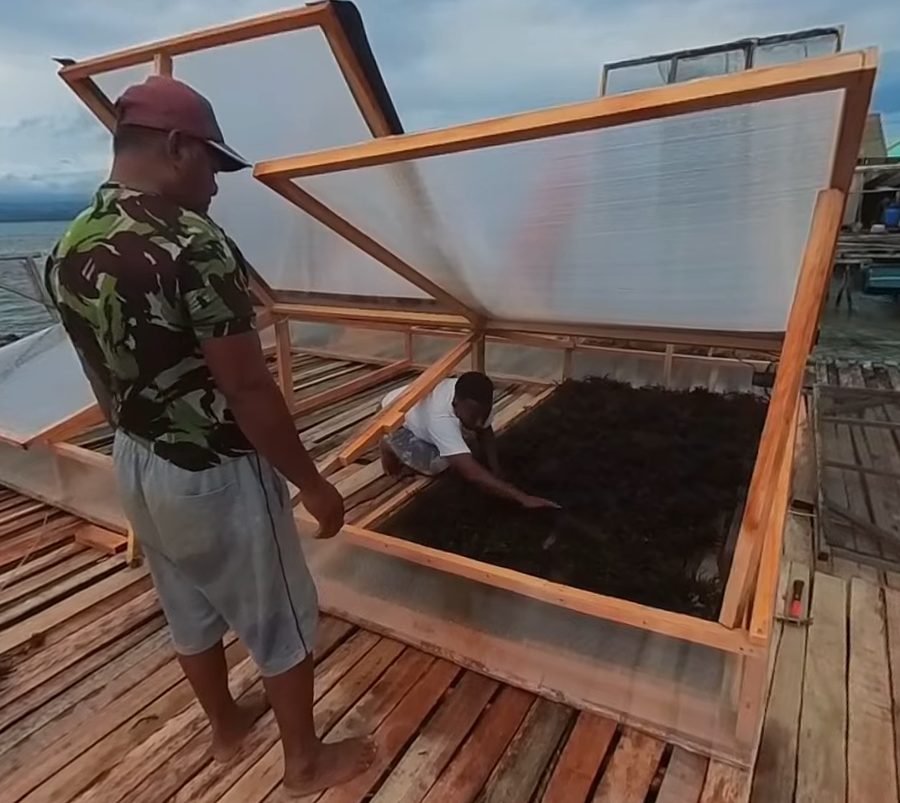
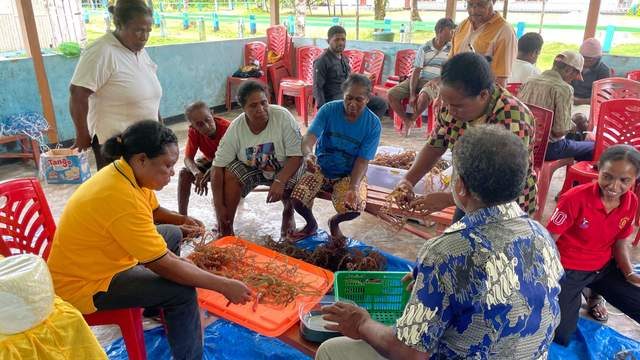
Through the OCEAN Grant, Kopernik worked alongside the Osi Island community to test a set of practical, context-appropriate solutions. These included IoT-supported solar drying houses, local seedling nursery cages to protect crops from predators and contamination, and seaweed moisture content loggers to ensure consistent drying quality. Alongside the technology, the project delivered training in Good Aquaculture Practices (GAPs), financial literacy, and waste management, and supported women’s groups to develop seaweed-based value-added products (VAP), building on existing local enterprise experience.

77

People supported

72%

Participant reported increased earnings

91%

Participant reported improved knowledge of product diversification

Test potential solutions 31

Two people in a small wooden boat on the water off Osi Island, one of them holding a mobile phone

77 people were directly supported, with 72% reporting increased earnings and 91% demonstrating improved knowledge of product diversification. The IoT supported solar dryer achieved a 62.5% faster drying rate than traditional methods. 79% of women participants are now involved in VAP production, and 71% of youth participants are actively participating in environmental initiatives. The team also collected 139.5 kg of waste so that it didn’t enter the marine environment.

The project also surfaced important lessons for future work. Co-designing solutions with the community from the outset, particularly the solar dryer, significantly increased local ownership and operational fit. Environmental risks, including suspected potassium cyanide contamination from nearby fishing activity, caused setbacks that underline the need for seedling stock reserves and site diversification as standard risk mitigation. In remote areas like Osi Island, procuring electronic components carries higher costs and longer lead times; and must be budgeted for accordingly.

This project is supported by the OCEAN Grant and implemented by Kopernik’s Advisory Services Team and Solutions Lab Team.

Test potential solutions 32

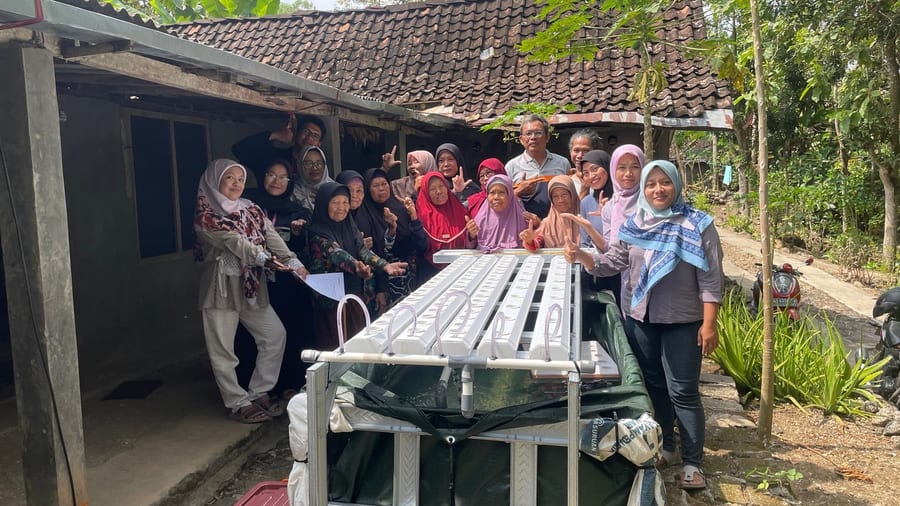
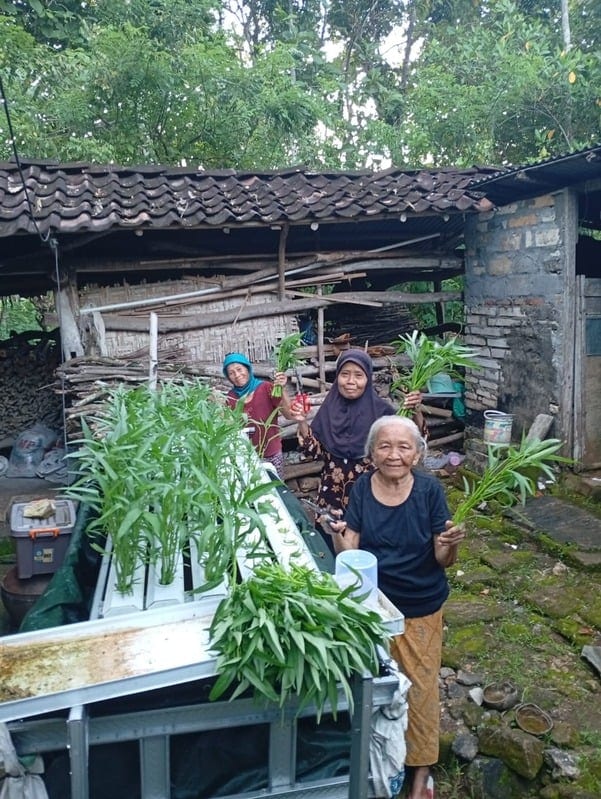
A group of women and men standing behind a row of white aquaponic planting troughs outside a village house

Enhancing food security for the elderly with accessible aquaponic systems in Yogyakarta

In 2025, Kopernik developed and tested an accessible aquaponic system for older community members in Teguhan Village, Gunungkidul.

Design began with user interviews: six elderly women were first interviewed to map their daily activities and constraints, then three were identified as host households. In-depth interviews and anthropometric measurements ensured that heights and reach distances matched each individual’s range of motion, so that the system was easy and safe to use. Maintenance procedures, including measuring cups and a feed calculator, were co-developed with the women and their support group.

Test potential solutions 33

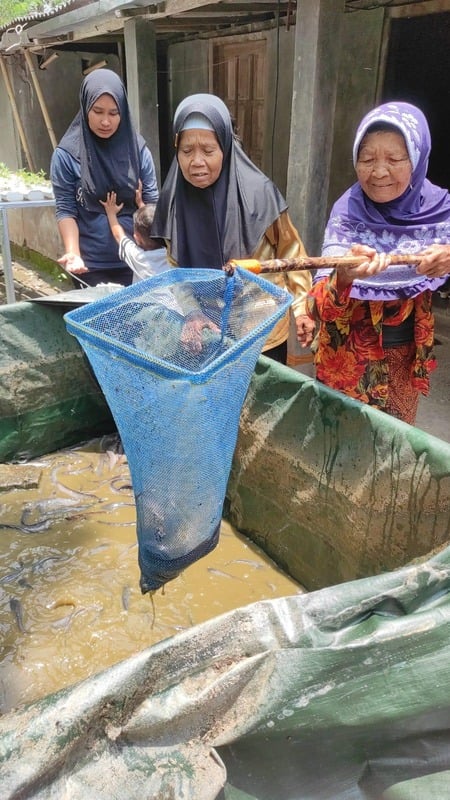
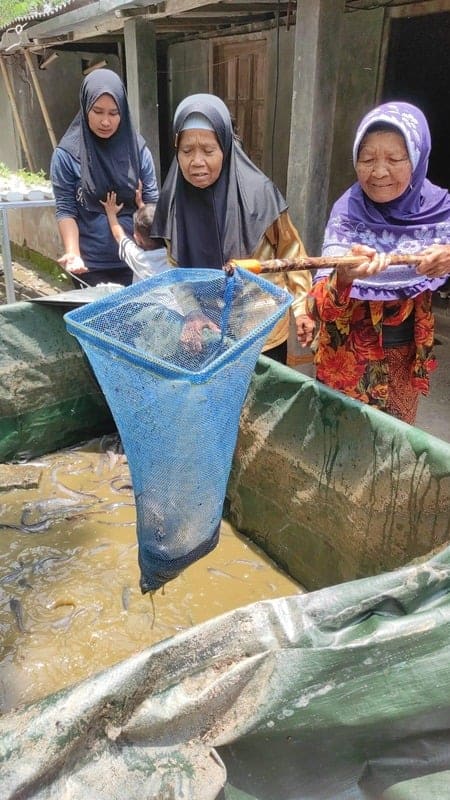
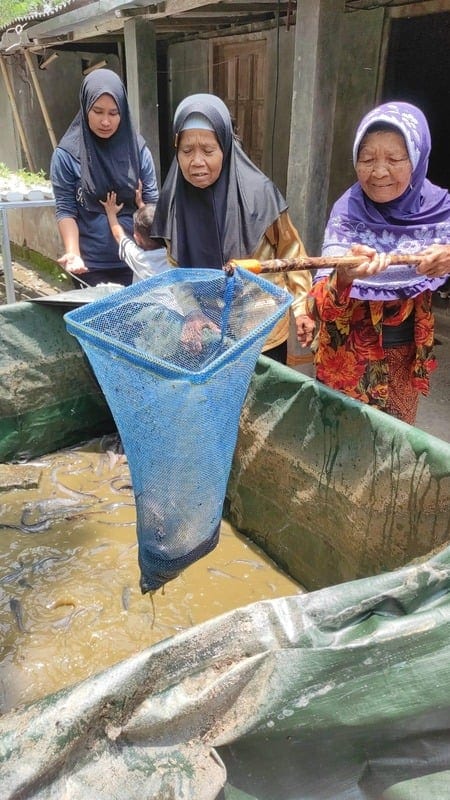
Three elderly women in headscarves lifting a blue net full of freshly harvested water spinach
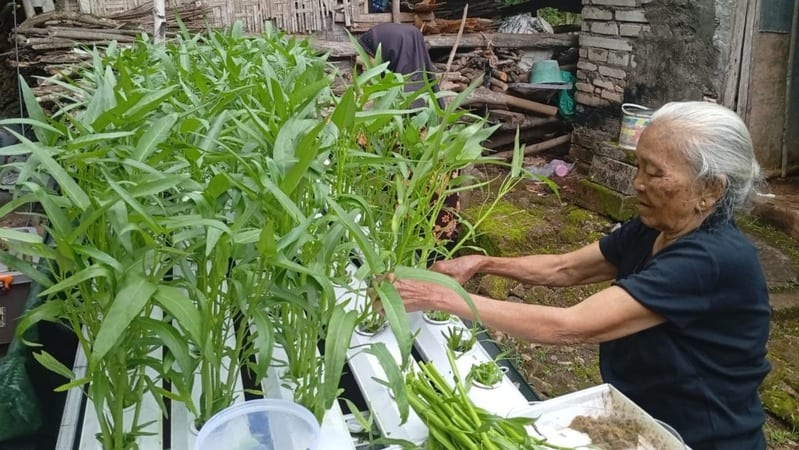
An elderly woman in a garden reaching towards tall water spinach growing beside a house

3 elderly women

Co-maintain the aquaponic system

5 months

of pilot testing in Teguhan Village, Gunungkidul

The system became a hub of daily life, and brought something less expected: a steady flow of younger people into the women’s routines. Yayasan ERAT and Bina Keluarga Lansia (BKL) sends volunteers to drain the pump, the one task none of the three can manage without assistance, and to check water quality weekly. An agriculture expert from a neighboring village helps with the harvest. Every Tuesday, the pond is where different generations meet. We did not design the intergenerational mixing as its own intervention. Yet it ended up being one of the most meaningful outcomes of the design.

Shared harvest spread the surplus across neighbors, making the system feel like something the whole community had a stake in, not something only the three women were doing alone.

Test potential solutions 34

“The absolute best part is harvest time. It brings us so much joy to see everyone gather at the facility; it has truly become a lively new place for us to meet, interact, and share the results of our hard work.”

– Elderly woman in Teguhan Village.

This project is implemented by Kopernik’s Solutions Lab Team in collaboration with Yayasan ERAT Indonesia, and is supported by the Packard Foundation.

Three elderly women in headscarves standing and sitting beside a row of water spinach growing in a trough, outside a tiled-roof house

Test potential solutions 35

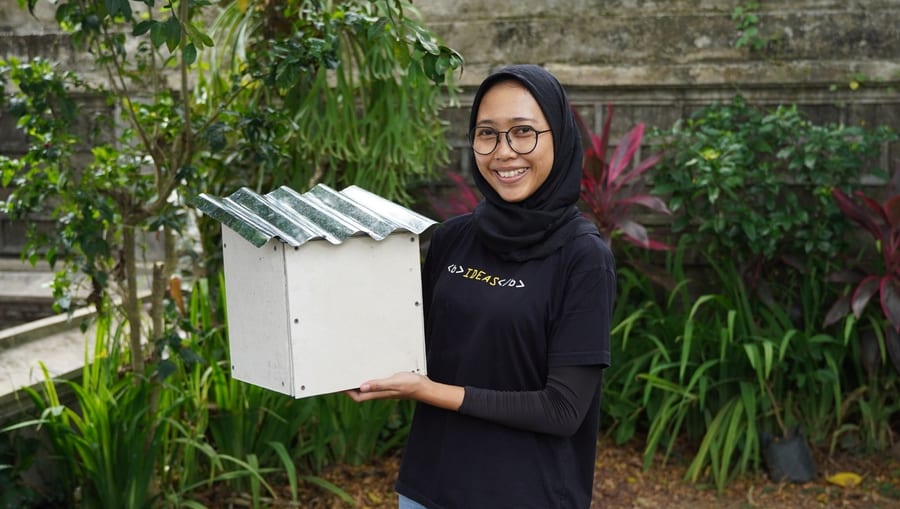
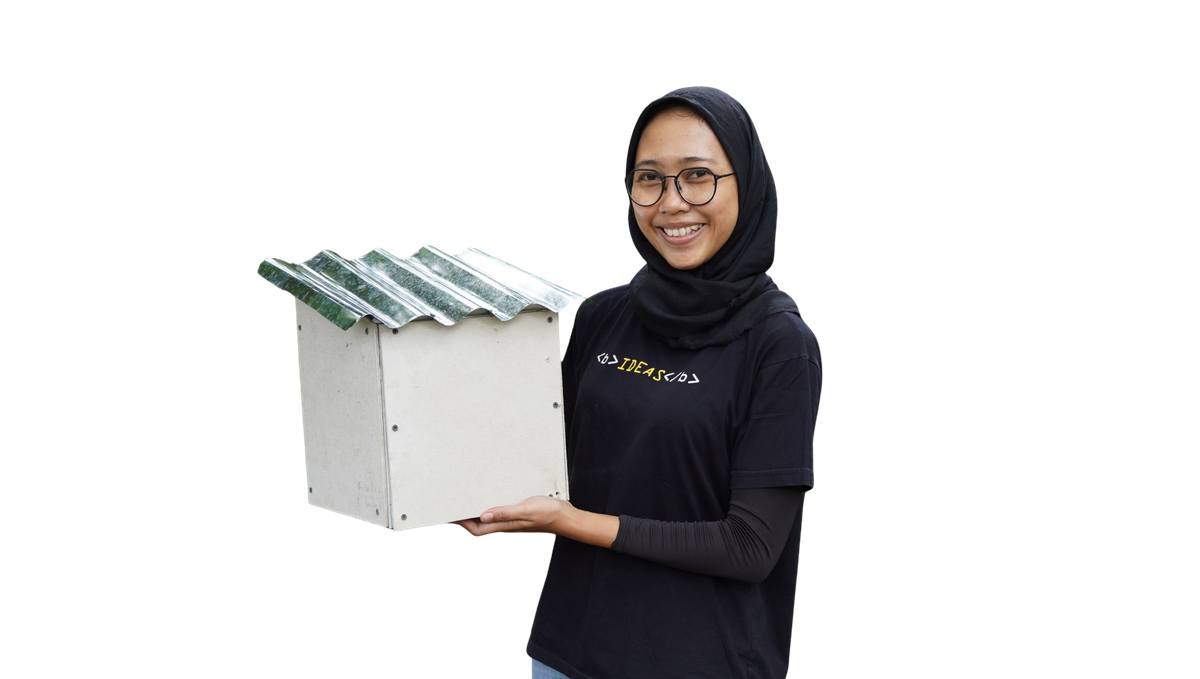
A smiling researcher in a black hijab holding a small white and metal prototype box with a corrugated translucent roof

Salt Cooling Coating
Enhancing urban heat resilience with affordable passive cooling solutions

In densely packed, low-income urban neighborhoods, heat stress is intensifying, yet industrial reflective coatings that can reduce indoor heat remain far out of reach for most households. Kopernik conducted in-house research to explore a more accessible alternative: Salt Cooling Coating (SCC), which uses the endothermic dissolution of Potassium Chloride (KCl) to produce a cooling effect on surfaces.

Test potential solutions 36

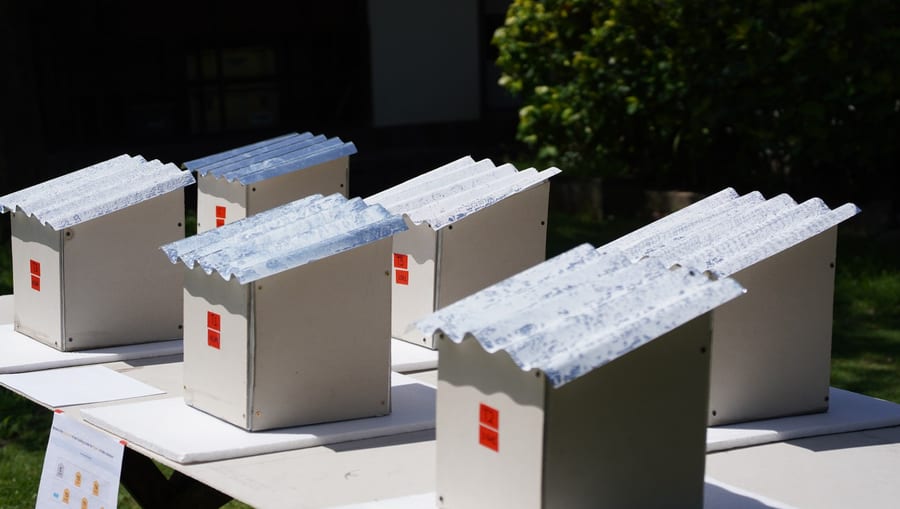
Rows of small white metal test boxes with corrugated translucent roofs sitting on a table in bright sunlight

Laboratory tests showed promise, achieving a 14°C drop in water temperature. However, real-world trials told a different story. Once dry, the coating lost its cooling effect entirely and performed worse than both the control and a competing cooling solution. The hygroscopic nature of the salt, which performs differently depending on humidity and surface conditions, proved more complex to manage outside a controlled environment.

Further research is needed to better understand the physical characteristics and environmental dynamics at play before SCC can be developed into a functional, deployable solution. The experiment has laid important groundwork for that next stage.

This experiment is conducted by Kopernik’s Solutions Lab Team.

Test potential solutions 37

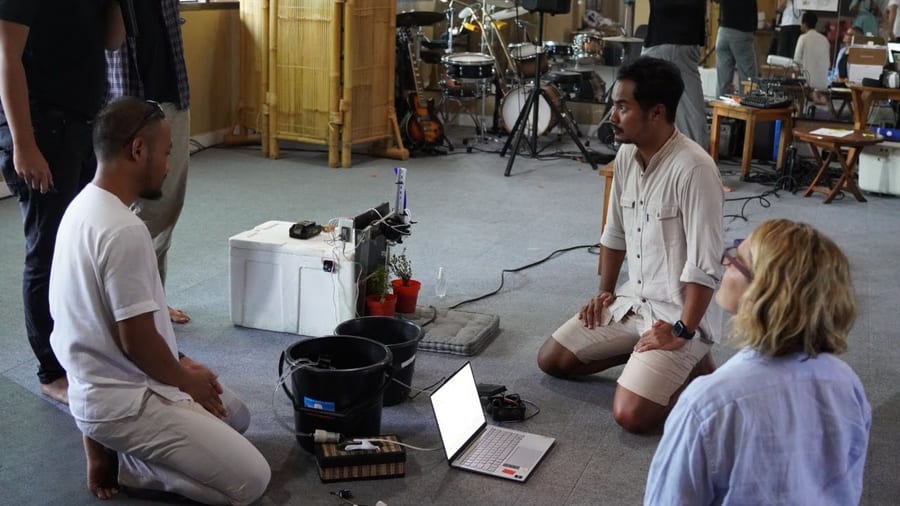
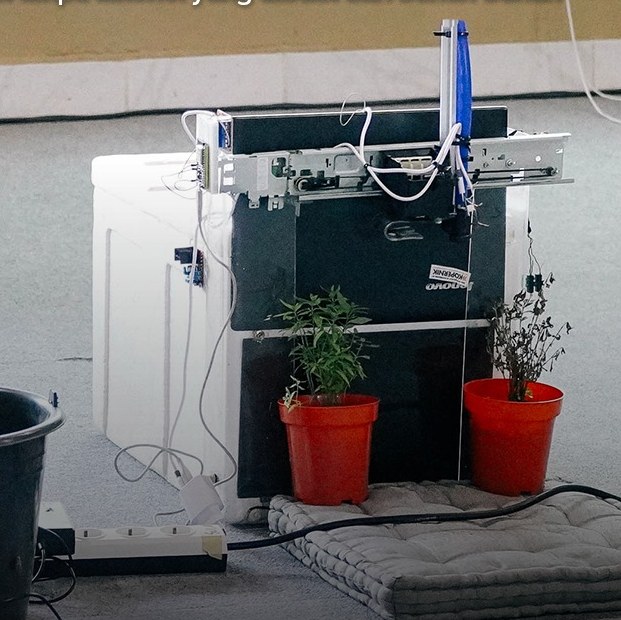
A man in a white t-shirt kneeling on a carpeted floor beside black plant pots, a laptop and a small electronics rig on a white cooler

Bauhaus micro-experiment
Upcycling e-waste into agri-tech solutions

Farmers today face compounding pressures, including pesticide use that far exceeds safe thresholds and causes widespread water contamination and inefficient irrigation that strains limited freshwater resources. At the same time, electronic waste continues to accumulate, with only a negligible fraction ever repurposed. These two pressures, one on agriculture, one on waste point to an opportunity.

Test potential solutions 38

The Solutions Lab Team conducted a micro-experiment to explore whether functional e-waste can be repurposed into affordable precision farming tools, addressing both problems simultaneously. Three innovations are being tested:

A black equipment cabinet with red potted plants, wiring and a laptop on the floor beside it

Plant Health AI Scout

for IoT-based disease detection and targeted pesticide application.

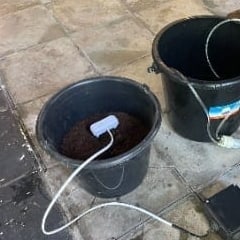
Two black plant pots on a concrete floor, each with a white sensor cable running into the soil

Soil Water Sensor

for automated, precise irrigation.

A white irrigation pipe with small drip emitters running across a patch of grass

Auto-Pilot Agritech Hub

for real-time agricultural automation.

Together, these tools aim to reduce resource overuse, shorten farmer response times, and give discarded electronics a second life.

The current phase focuses on establishing structural concepts and performance metrics to assess the effectiveness of each solution and quantify e-waste reduction. Through this circular-economy approach, the experiment lays the groundwork for safer, more data-driven, and resource-efficient farming communities.

This experiment is conducted by Kopernik’s Solutions Lab Team.

Test potential solutions 39

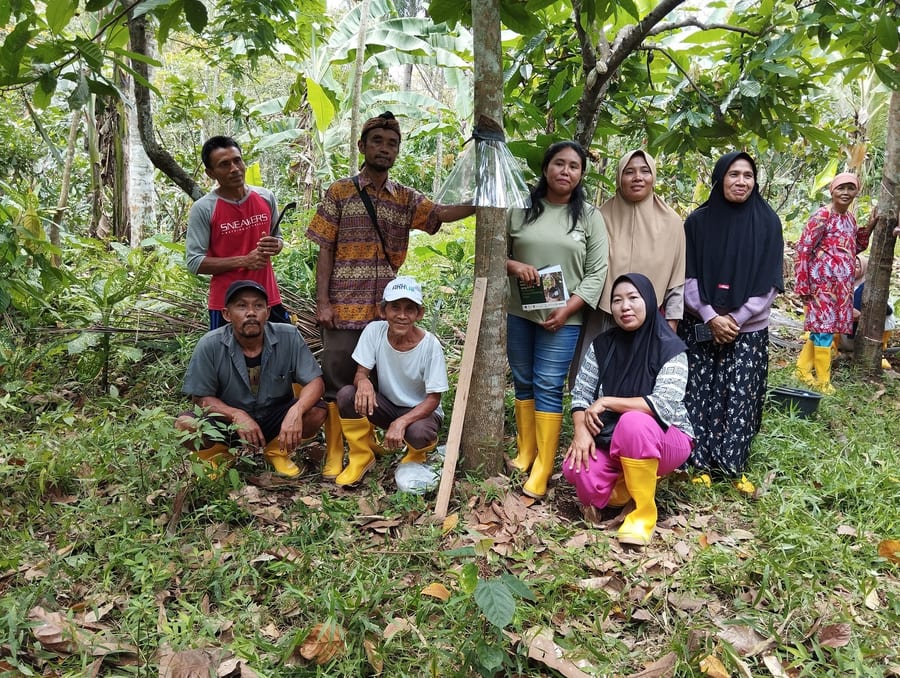
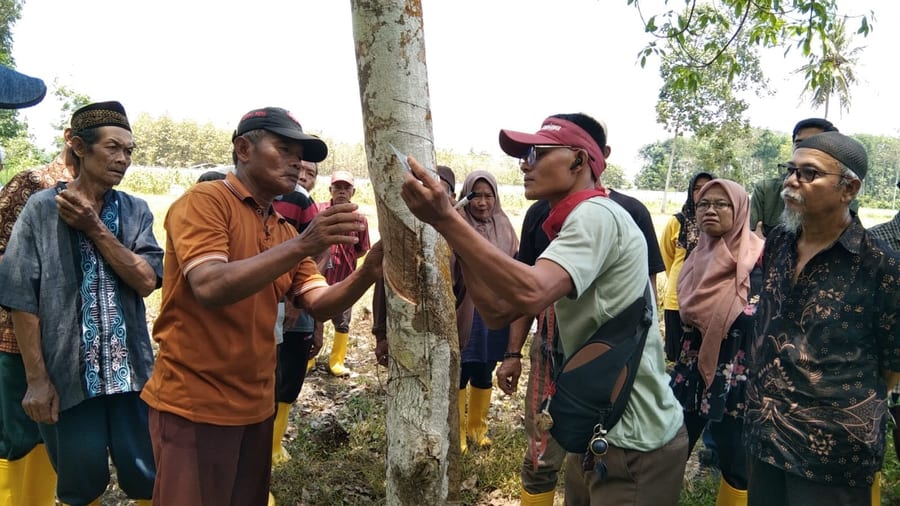
A group of rubber farmers, men and women in yellow rubber boots, standing and crouching among rubber trees

Sustainable rubber farming training and yield intervention in Lampung

Rubber farming in Lampung is a livelihood highly dependent on the weather. When it rains, which it does often, latex washes away, tapping stops, cutting off income. Farmers also contend with pest and disease pressure, inconsistent tapping techniques that reduce yield over time, and limited income diversification, leaving many exposed when rubber prices fall. These are the challenges faced by 2,000 farmers Kopernik works with across nine villages in Lampung Tengah and Pesawaran.

In collaboration with Olam Agri, Kopernik introduced Good Agricultural Practices (GAP) training and two targeted yield interventions to address these challenges.

Test potential solutions 40

16

Training sessions delivered

202

Monitoring visits completed

The foundation of the program is a structured GAP training covering four pillars:

  • Pest and disease control,
  • Optimal tapping techniques,
  • Rubber rain guard use, and
  • Intercropping for livelihood diversification.

16 training sessions were delivered across Lampung Tengah and Pesawaran from June 2025, with 202 follow-up monitoring visits completed to track practice improvement and knowledge retention.

The program is on track to reach all 2,000 target farmers.

Rubber farmers gathered in a plantation around a man demonstrating a technique on a rubber tree trunk

Test potential solutions 41

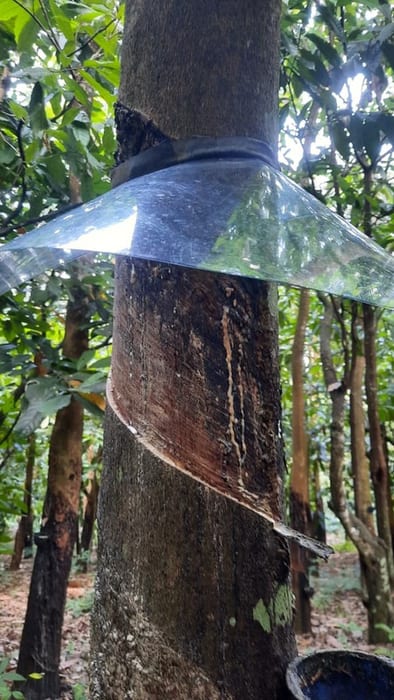
A translucent plastic rain guard fitted around the trunk of a rubber tree

Rubber Rain Guard

The first experiment targeted the rain problem directly. 23 farmers each received ten rain guards to install on their trees during the rainy season (December 2025 to February 2026). The guards allow tapping to continue on rainy days as trees are fitted with rain guards saving 27% more latex on average compared to trees without guards.

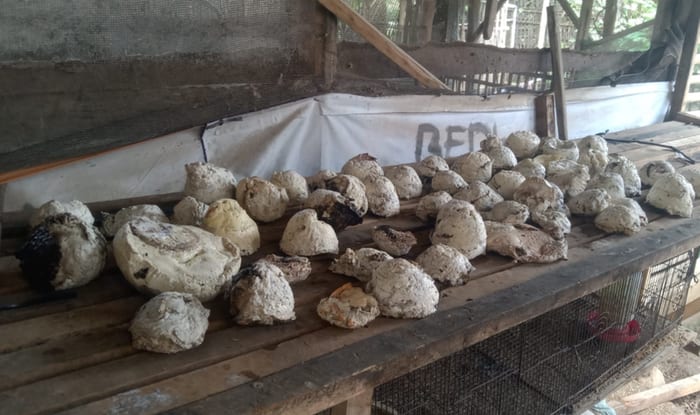
Pale dried rubber lumps arranged on a mesh drying rack beneath a tarpaulin

Dry Rack

The second experiment targeted yield quality. Two farmers tried an air-drying rack to increase the Dry Rubber Content (DRC) of their harvest. After five days, DRC increased by 20–30%, raising market value and generating an estimated additional IDR 14,000 per 100 kg of wet latex.

This project is implemented by Kopernik’s Advisory Services Team in collaboration with Olam Agri and is supported by the Deutsche Gesellschaft für Internationale Zusammenarbeit (GIZ) SAFE partnership.

Test potential solutions 42

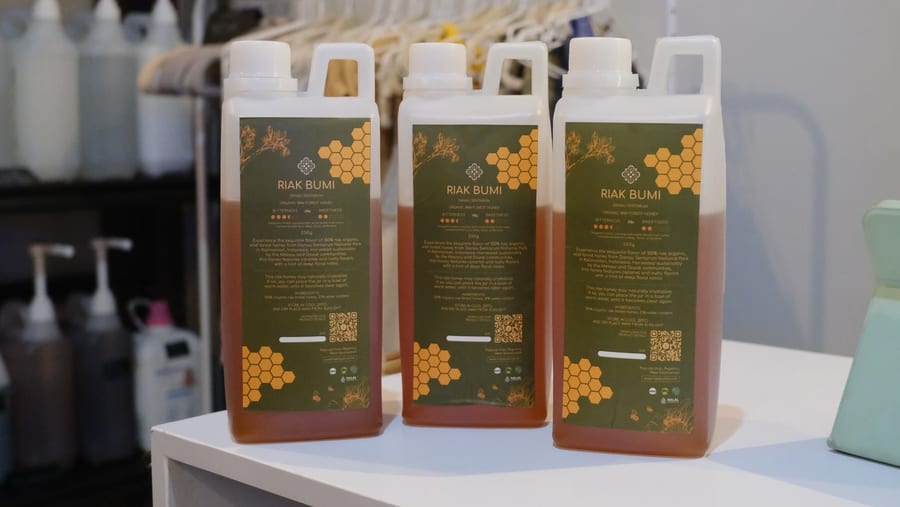
Three bottles of RAK BUMI forest honey standing on a white table

Developing community entrepreneurship of non-timber forest products in Kapuas Hulu and the surrounding Danau Sentarum National Park area

Deep in the forests of Kapuas Hulu, West Kalimantan, the communities surrounding Danau Sentarum National Park manage one of the world’s most biodiverse ecosystems. Their relationship with the forest is both practical and cultural,and it is under pressure. When sustainable livelihoods cannot compete economically with extractive options, forests lose.

Test potential solutions 43

The Keidanren Nature Conservation Fund (KNCF) initiative, together with Kopernik, builds on this premise by supporting Riak Bumi, a local organization that has been working with forest communities in Kapuas Hulu for many years, to develop two livelihood streams that create tangible incentives to protect the forest: forest honey and illipe nut products.

Building on the initiative’s first year groundwork, the second year took these products to market.

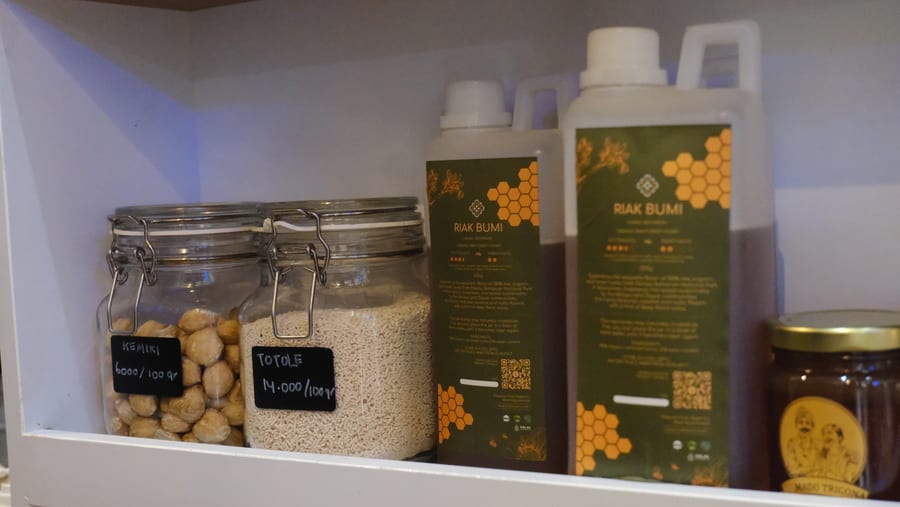
A bottle of Riak Bumi Danau Sentarum organic raw forest honey with a green label

Honey

Developed an online marketing strategy and training for Riak Bumi on how to sell across digital platforms including Tokopedia, Shopee, and TikTok Shop, setting up operational storefronts and running digital marketing training.

A hand holding freshly opened illipe nuts above a woven basket

Illipe Nuts

Identified value-added product opportunities, sourced external trainers, and conducted production workshops with local communities, including hands-on sessions on making soap bars and scented candles, costing, and packaging.

Test potential solutions 44

Community members received training in the 6Ps marketing mix, basic financial management, and sustainable waste practices. Two field visits to Danau Sentarum ensured the learning was grounded in the community’s actual context.

By the end of year two, Riak Bumi had an established online presence for its honey products, and community members had produced initial illipe nut soap bar prototypes with production cost calculations completed and packaging concepts developed.

This project is implemented by Kopernik’s Advisory Services Team in collaboration with Riak Bumi, and is supported by the Keidanren Nature Conservation Fund (KNCF).

Glass jars of illipe nuts and rice grains beside two labelled bottles of Riak Bumi forest honey on a white shelf

Test potential solutions 45

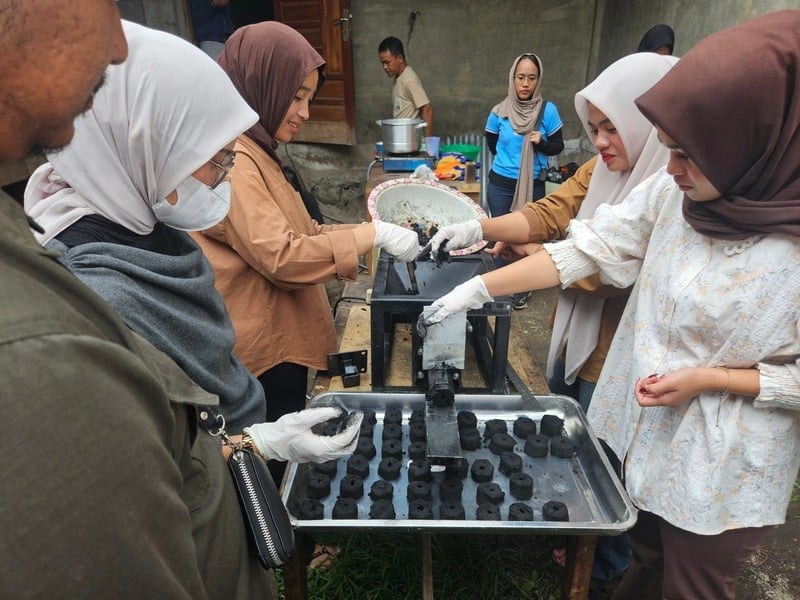
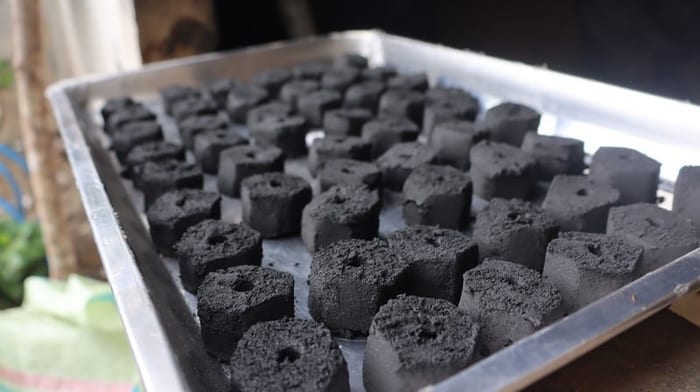
Women in headscarves and gloves pressing coffee husk briquettes on a metal press, a tray of finished briquettes in the foreground

Pre-feasibility study on waste-to-energy from coffee husk to increase value and energy efficiency in coffee production in Aceh

Indonesia is one of the world’s largest coffee producers,and one of the least efficient in its use of processing by-products. In Bener Meriah, Aceh, coffee husks are typically discarded after processing.

In 2025, Kopernik partnered with World Resources Institute (WRI) Indonesia to explore how coffee processing waste could be transformed into a local energy source.

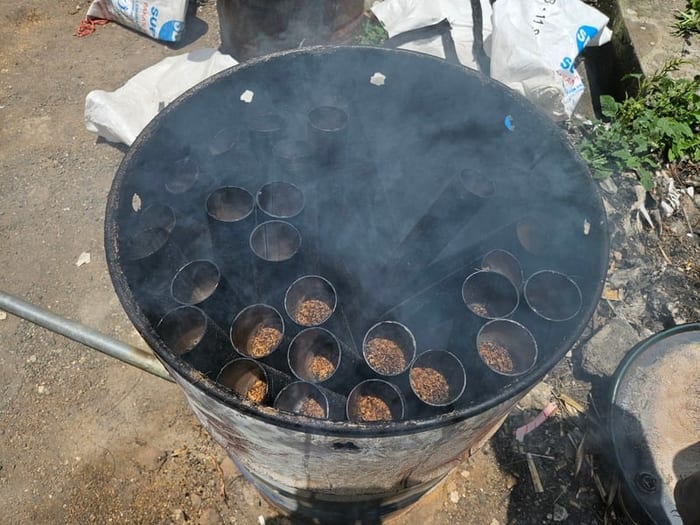
Through fieldwork, stakeholder interviews, and small-scale technology trials in Bener Meriah, the team assessed a range of waste-to-energy approaches. Coffee-husk briquette char emerged as the most practical option - a low-cost, low-complexity technology that could reduce waste and provide supplementary energy to smallholder coffee processors.

Test potential solutions 46

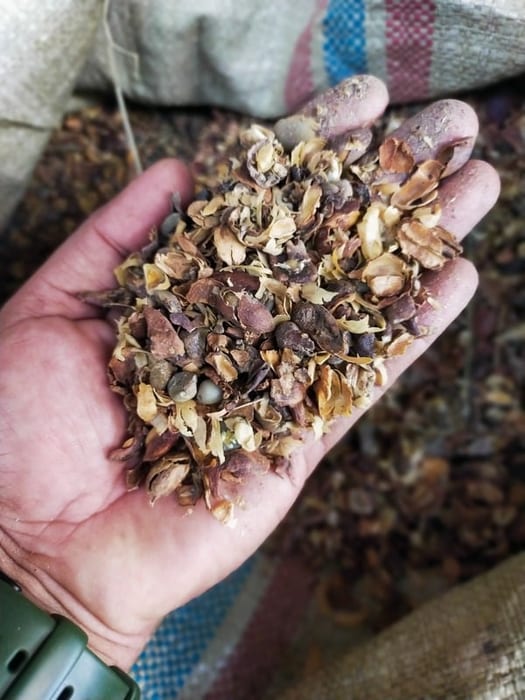
A hand full of dried coffee husks and parchment
Coffee husk briquettes standing in rings inside a smoking metal drum
A tray of finished cylindrical briquette-char briquettes cooling

“The briquettes reduce the use of LPG (Liquefied Petroleum Gas), burn cleanly without smoke, last longer, and utilize coffee husk waste effectively.”

– Coffee Farmer, Bener Meriah

The study offered early insights into how waste-to-energy could complement existing coffee value chains rather than disrupt them. Rather than replacing current practices, briquette char production fits naturally into post-harvest workflows, and could create a secondary income stream for coffee farming households. The project remains at pre-feasibility stage; next steps will focus on refining the production process and assessing market demand for the output.

This project is implemented by Kopernik’s Solutions Lab Team in partnership with World Resources Institute (WRI) Indonesia and Koperasi Bahtera.

Test potential solutions 47

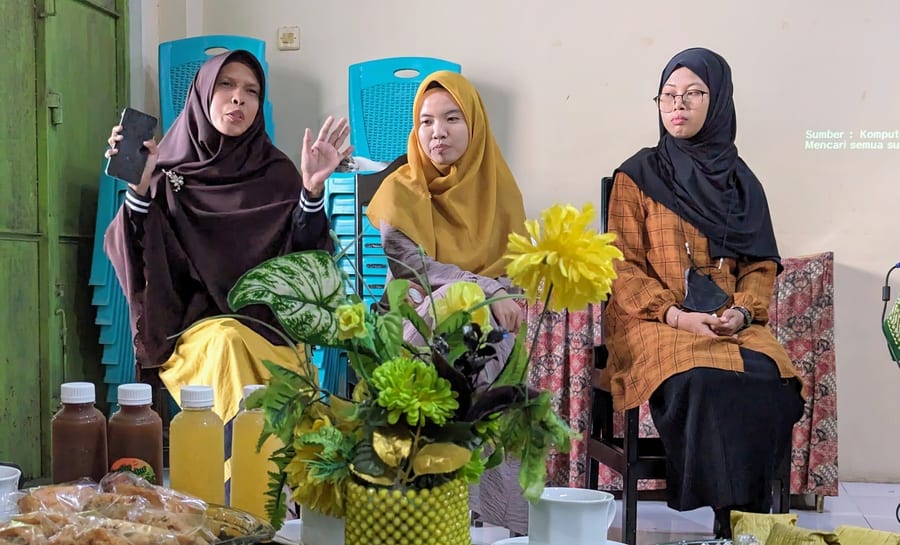
Three women entrepreneurs seated behind a table of honey bottles and packaged goods in Palu

Feasibility study of a financial scheme to support micro and small social businesses in Palu

In partnership with the Sasakawa Peace Foundation, Kopernik conducted a feasibility study to identify and assess financial mechanisms that could support micro and small social businesses in Palu, Central Sulawesi, with a focus on enterprises led by, or serving women and people with disabilities.

Focus on women and people with disabilities

The study prioritized financial mechanisms serving the most excluded entrepreneurs in Palu

Test potential solutions 48

Palu has faced significant economic disruption since the 2018 earthquake and tsunami, and many social enterprises in the city operate without reliable access to formal financing. The study examined the landscape of available funding: grants, impact investment, blended finance, and solidarity economy mechanisms, and estimated the scale of financing that could realistically be mobilized to support inclusive businesses.

Under a conservative scenario, the study found that between IDR 483 billion and IDR 1.023 trillion in annual funding is potentially available, representing a significant opportunity to strengthen social enterprises that serve marginalized communities. The findings provide a practical roadmap for funders, social enterprises, and local governments looking to build more inclusive economic ecosystems in post-disaster Palu.

This project is implemented by Kopernik’s Advisory Services Team and is supported by the Sasakawa Peace Foundation.

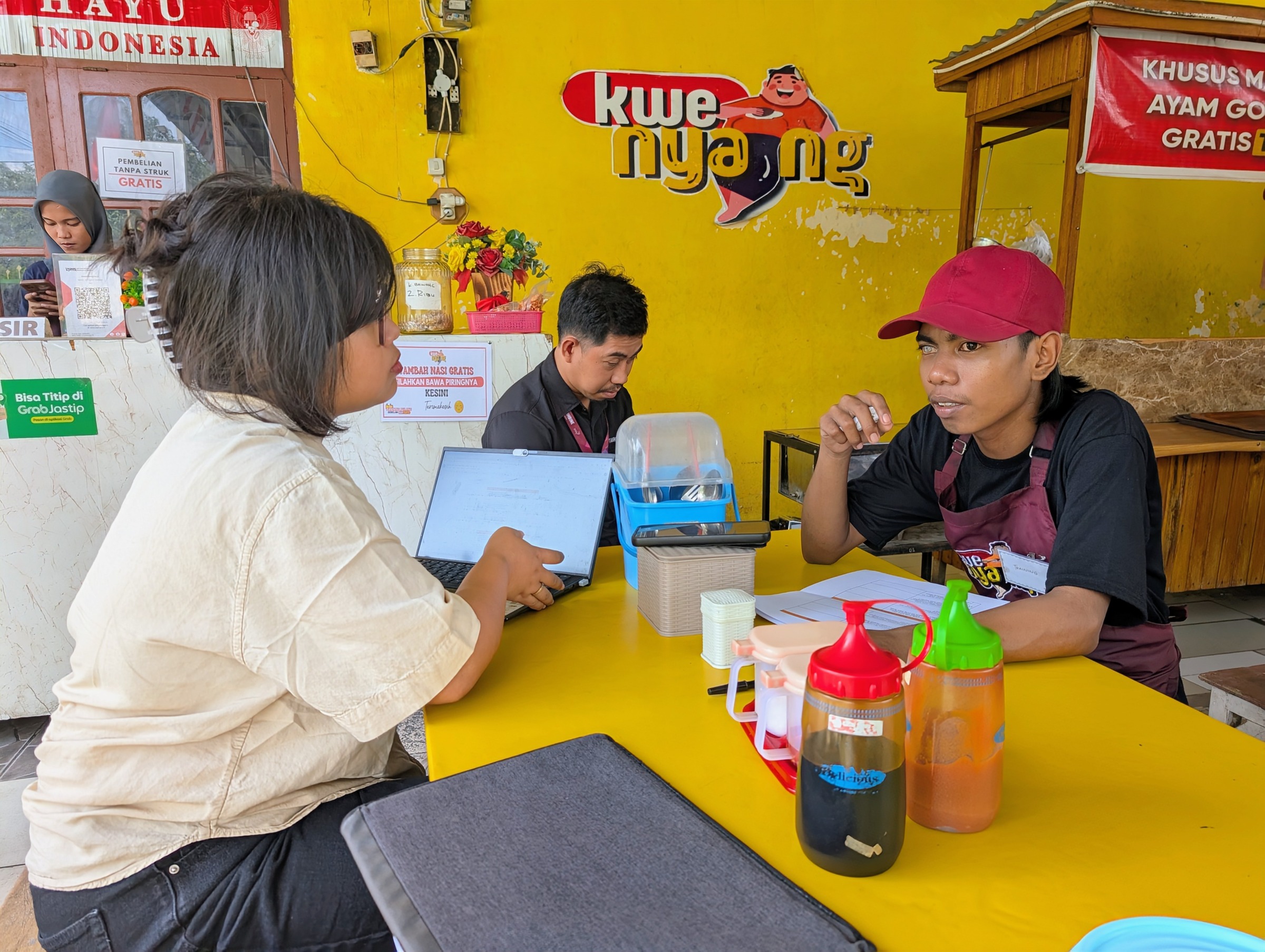
A researcher with a laptop interviewing a warung owner in a red cap across a yellow table, with a colleague working behind them

Test potential solutions 49

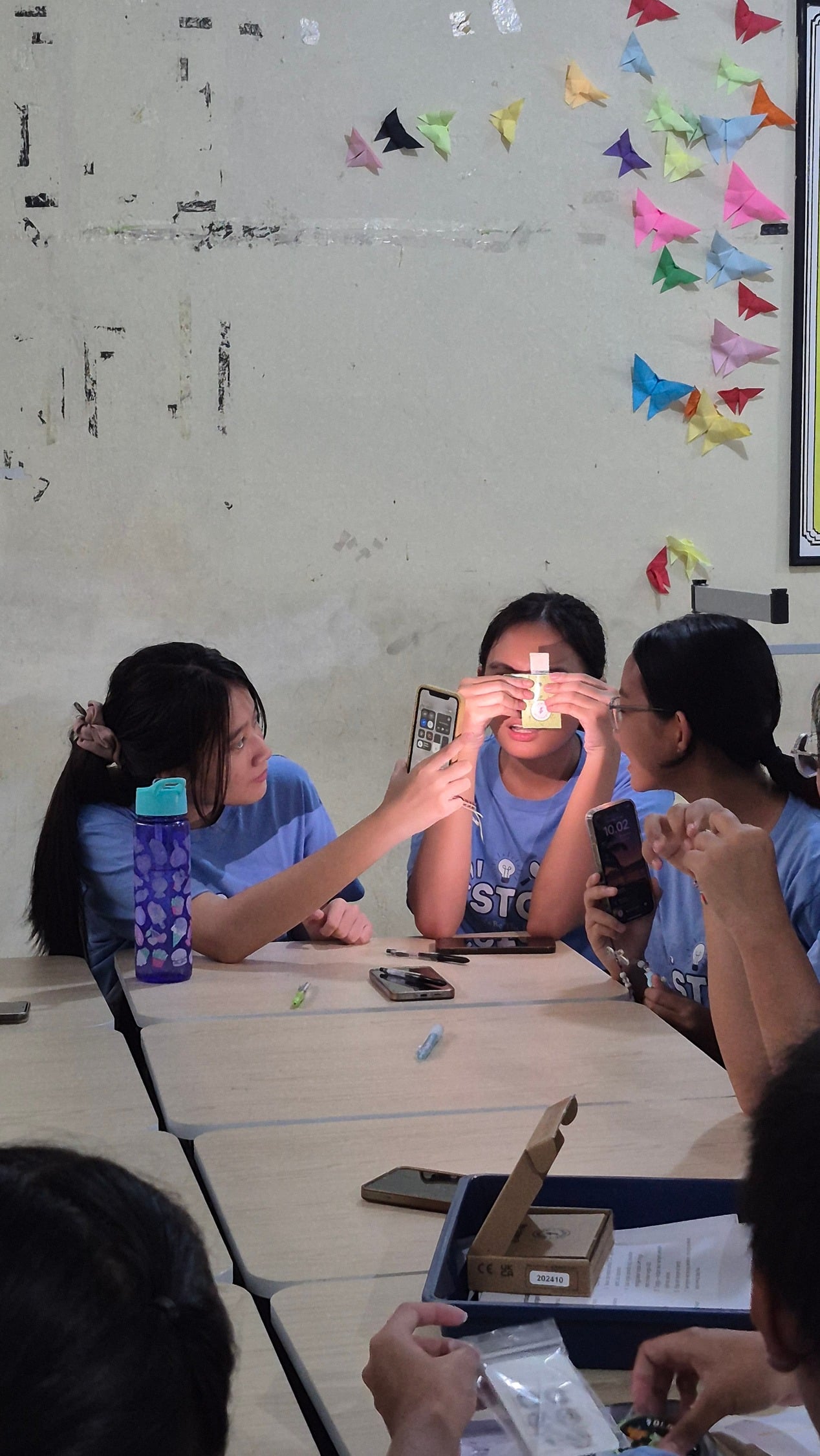
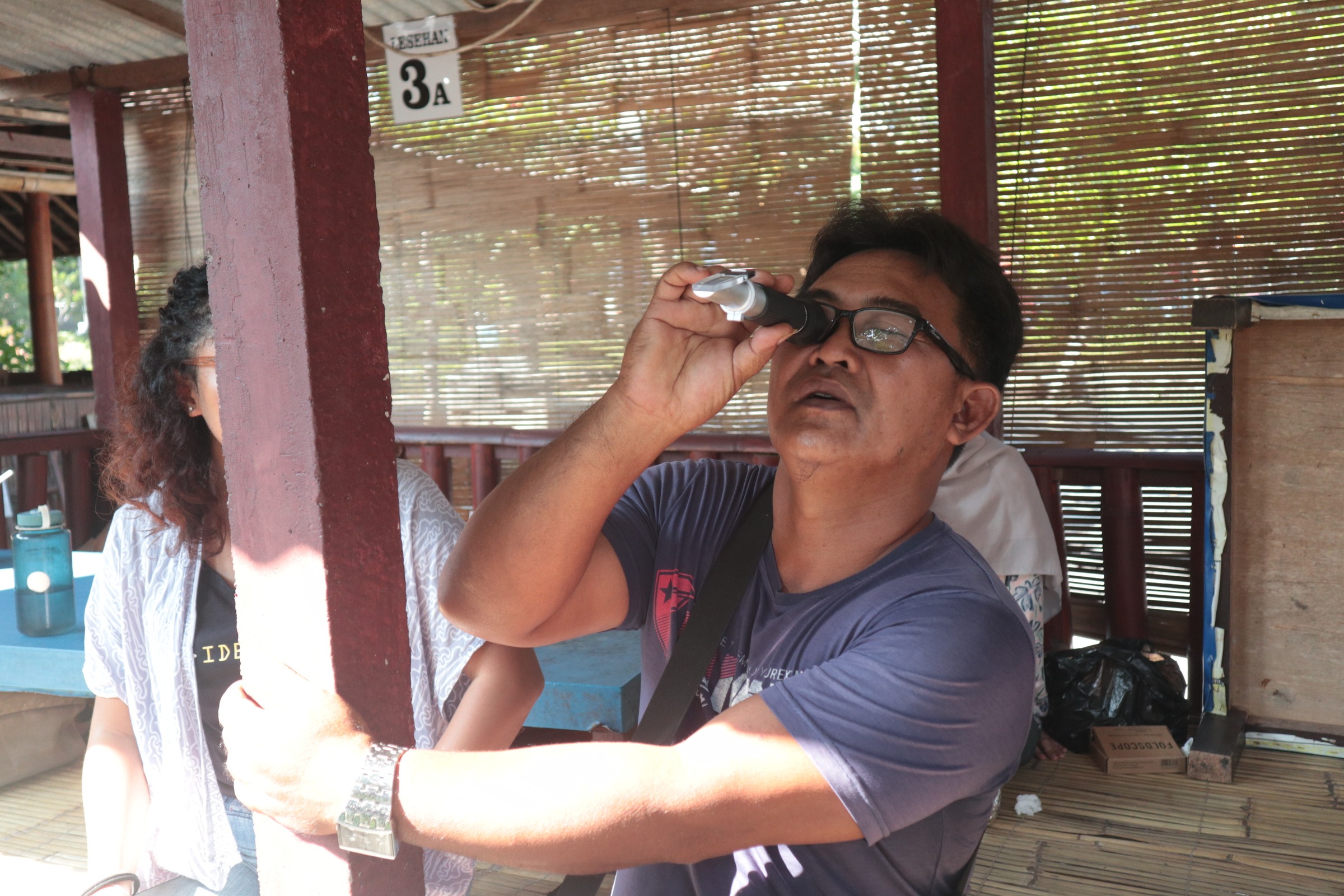
Three students in matching blue shirts gathered around a table, one holding a paper Foldscope microscope to her eyes while another lights it with a phone

Science Kit Sandbox Experiment

Most farmers in villages make important decisions, such as what to apply to the soil, whether water quality is safe, based on observation alone. Scientific tools to measure these things precisely exist, but they sit in university labs and government offices, not in the hands of the people who really need them.

Standard instruments are designed for trained specialists: complex to calibrate, hard to interpret, and impractical in field conditions. The result is that data-informed farming remains the preserve of large-scale agribusiness, while smallholders and students learn without measuring the environment around them.

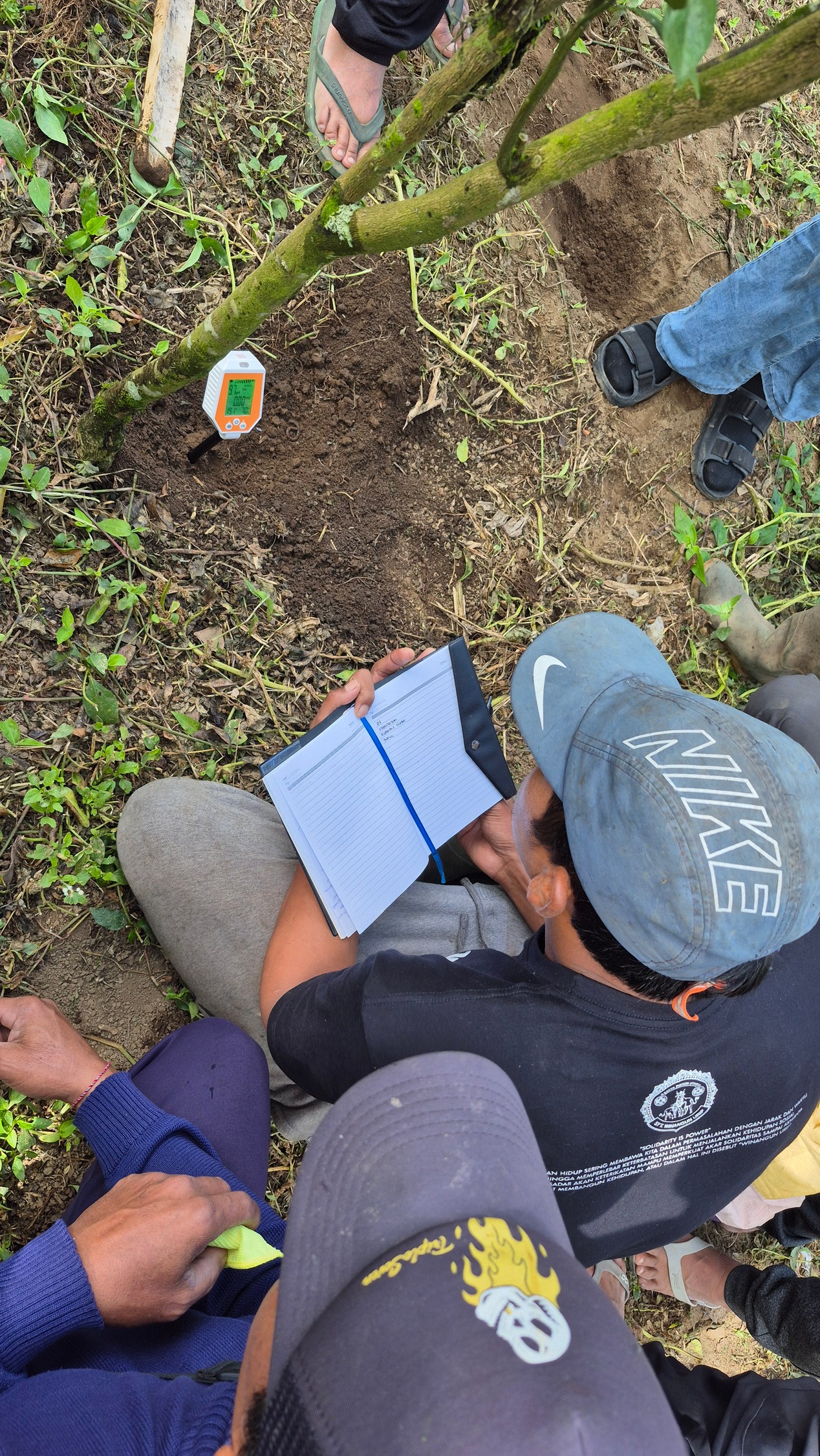
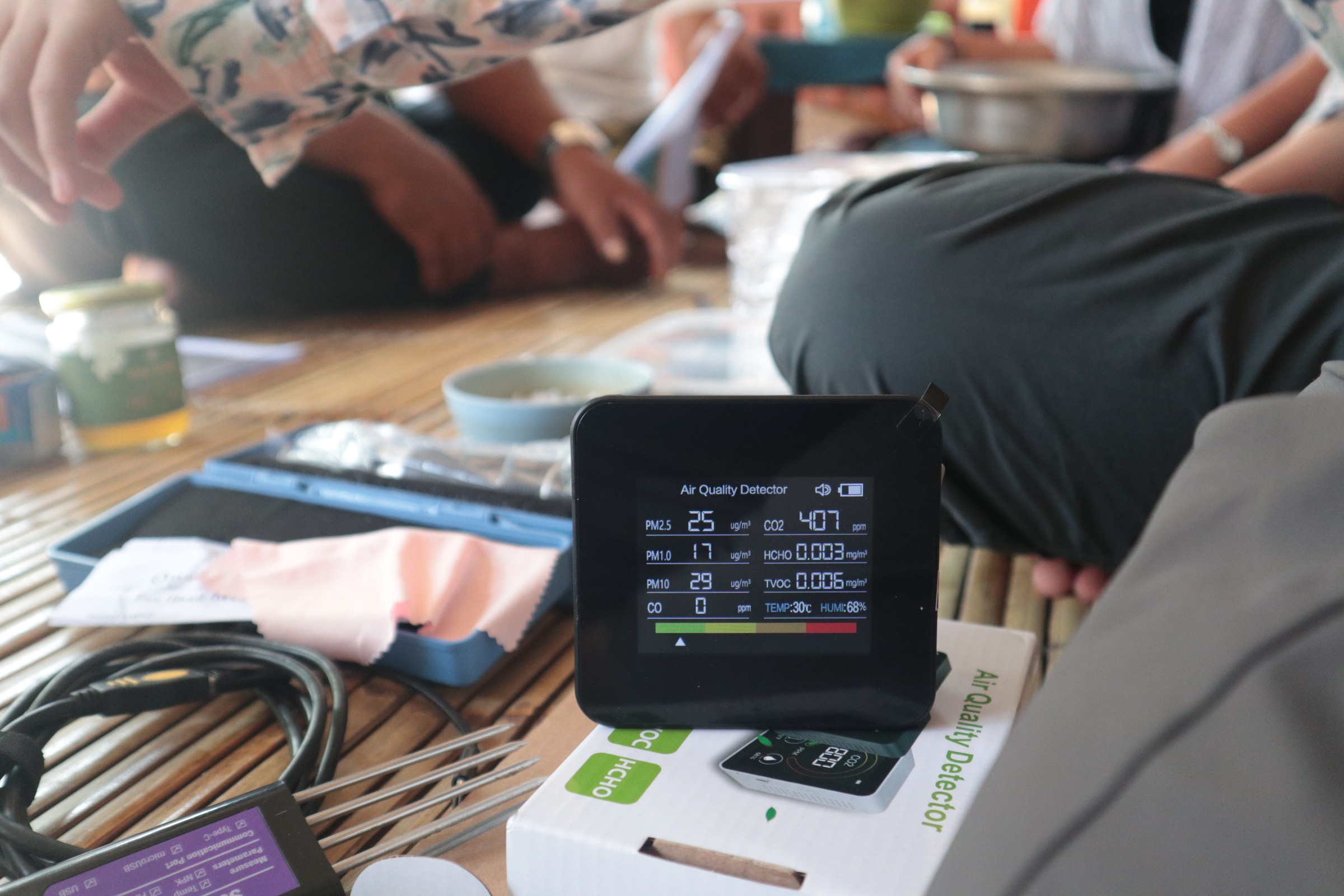
In Bali, Kopernik’s Science Kit Sandbox Experiment tested whether affordable scientific tools that are put directly in the hands of students, smallholder farmers, and seaweed farmers could shift how people understand and respond to their immediate environment.

Test potential solutions 50

Building on a 2023 collaboration with SpudnikLab, a Singapore-based startup, during which Kopernik adapted its digital literacy toolkit for farmers and artisans across Bali, this experiment extended the same principle to environmental science. Kopernik kicked off the experiment in early April 2025, working with SpudnikLab to design use cases for each tool and each user group before testing began.

Over seven months, the team tested three technologies. Each tool was tested across distinct user groups to assess accessibility, relevance, and behavior change potential.

A man looking through a Foldscope pocket microscope

Mini Microscope

Farmers recording a soil sensor reading in the field

4-in-1 Soil Sensor

An air quality detector displaying PM2.5, CO2 and other readings

Air Quality Sensor

Test potential solutions 51

The findings were encouraging:

Increase in soil health knowledge among farmers
44%
Increase in soil health knowledge among farmers
Of farmers reported confidence in using the tools
80%
Of farmers reported confidence in using the tools

Soil health knowledge among participating farmers increased by 44%, a meaningful shift in understanding the conditions that determine crop productivity and resilience. 80% of farmers reported confidence in using the tools independently after training, without ongoing support from the project team. This suggests that, with the right design and facilitation, scientific monitoring tools can move from project-owned equipment to community-owned practice.

This project is implemented by Kopernik’s Solutions Lab Team in partnership with SpudnikLab.

Test potential solutions 52

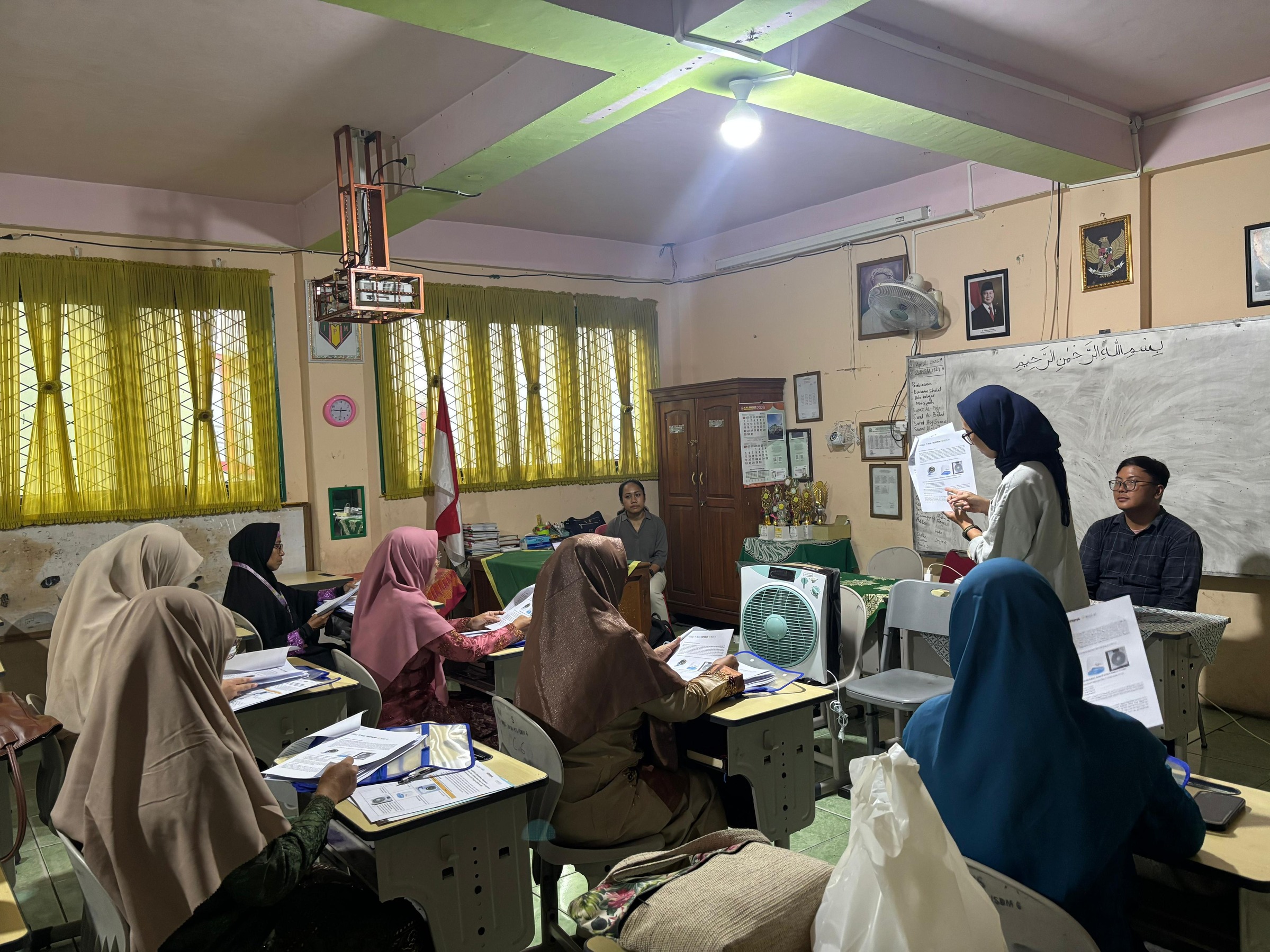
Pupils in headscarves at desks in a Palembang primary school classroom as a teacher holds up a worksheet beside a boxed air purifier

Heal Haze

Climate change adaptation to smoke haze for improved child health in Southeast Asia

Air pollution claims seven million lives each year, 650,000 of them children, and one-third of these preventable deaths occur in Southeast Asia (UNEP. World Environment Situation Room - Air. United Nations Environment Programme, 2022). As climate change fuels more frequent and intense wildfires, smoke haze has become an increasingly serious public health threat, particularly for children. Palembang, South Sumatra, is among the regions most affected by Indonesia’s recurring forest fires. During the 2019 haze crisis, PM2.5 concentrations reached a hazardous level of 921, forcing schools to close and disrupting children’s education and wellbeing.

Test potential solutions 53

Through the HEAL-HAZE (Climate Change Adaptation to Smoke Haze for Improved Child Health in Southeast Asia) initiative, Kopernik is testing a practical, school-based solution to help protect children from smoke haze. Working in elementary schools across Palembang, the project evaluates whether low-cost, do-it-yourself air purifiers made from locally sourced materials can improve indoor air quality in classrooms during periods of severe haze. By generating evidence on the effectiveness of this affordable intervention, the project aims to identify a scalable solution that can help schools better protect children’s health during future wildfire seasons.

This project is initiated by HEAL-HAZE and implemented by Kopernik’s Solutions Lab Team.

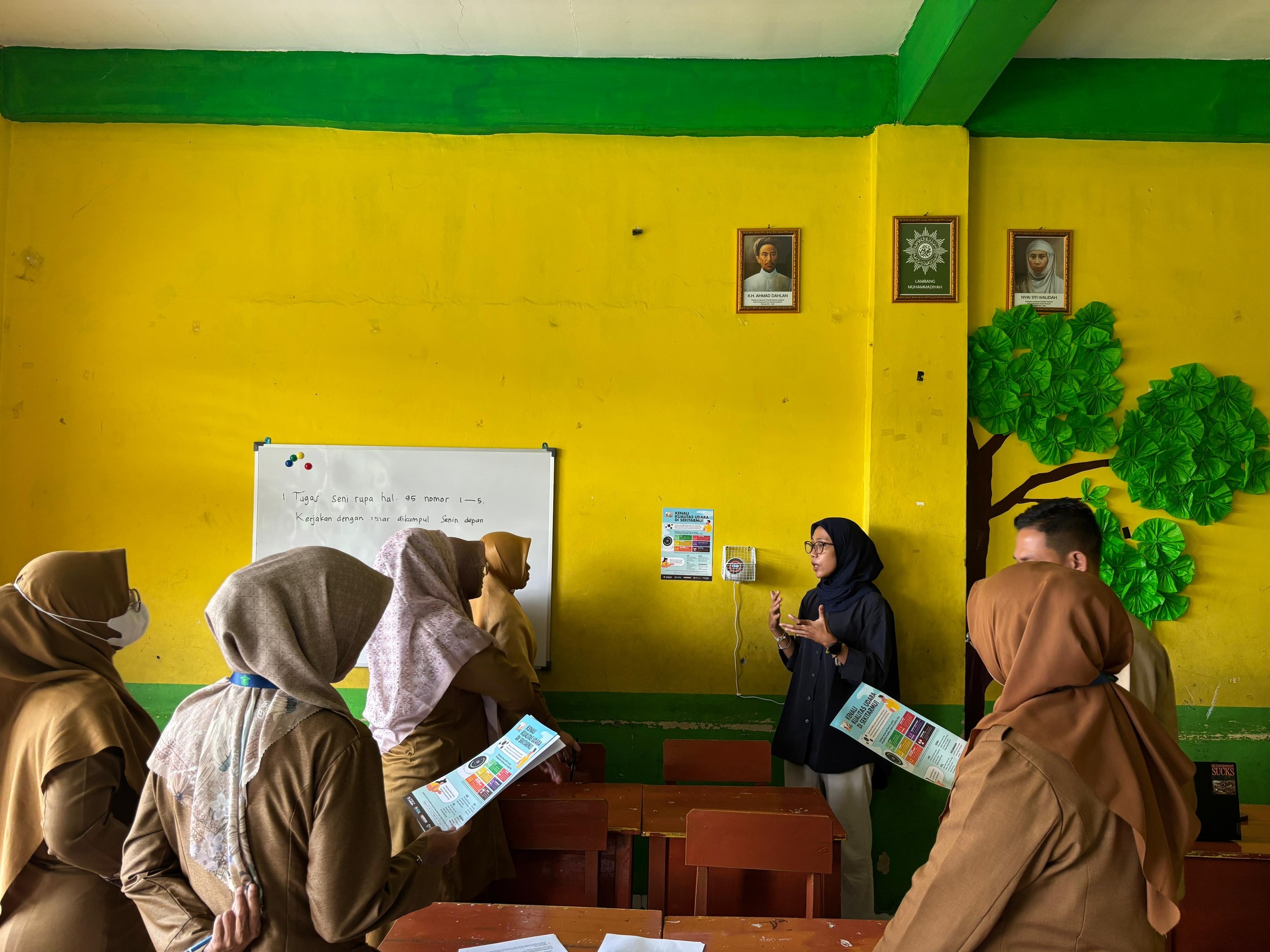
A woman in a black hijab addresses schoolgirls holding handouts in a yellow-and-green classroom in Palembang

Test potential solutions 54

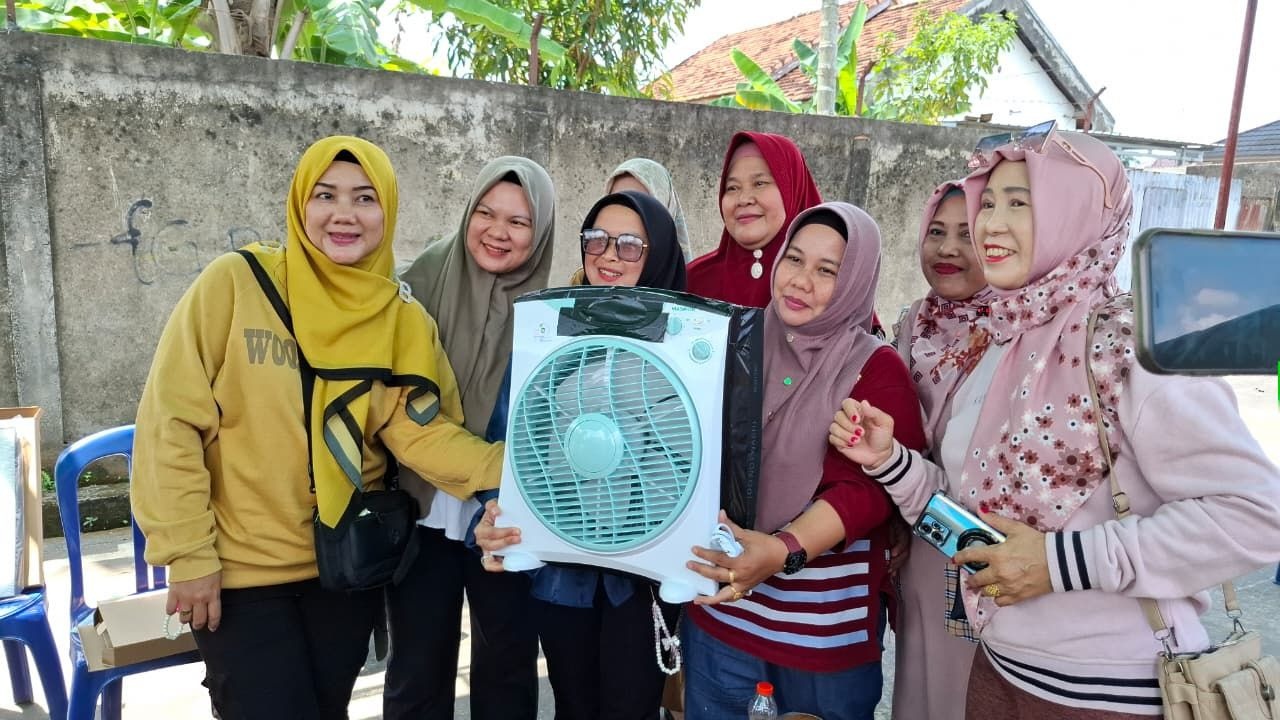
Women in headscarves outdoors in Palembang hold up a box fan-style air purifier and hold small air quality sensors

CANBREATHE

Climate attribution of wildfire smoke impacts on priority population health in Southeast Asia and Australia

Climate change is increasing the frequency, intensity, and duration of extreme wildfires across Southeast Asia and Australia, exposing millions of people to hazardous smoke pollution. In Palembang, South Sumatra, recurring haze events have severe consequences for public health, particularly for pregnant women, infants, older adults, and people with pre-existing health conditions.

Test potential solutions 55

Through the CANBREATHE (Climate Attribution of Wildfire Smoke Impacts on Priority Population Health in Southeast Asia and Australia) initiative, Kopernik is working with communities to strengthen resilience in areas affected by wildfire smoke while generating evidence on climate-related health impacts.

The project brings together community discussions to identify locally relevant adaptation strategies, citizen science through household air quality monitoring, and training on building low-cost DIY air purifiers from locally sourced materials. By combining research with community action, CANBREATHE seeks to improve preparedness for future haze events while contributing to a stronger evidence base for climate adaptation and public health across the region.

This project is initiated by CANBREATHE and implemented by Kopernik’s Solutions Lab Team.

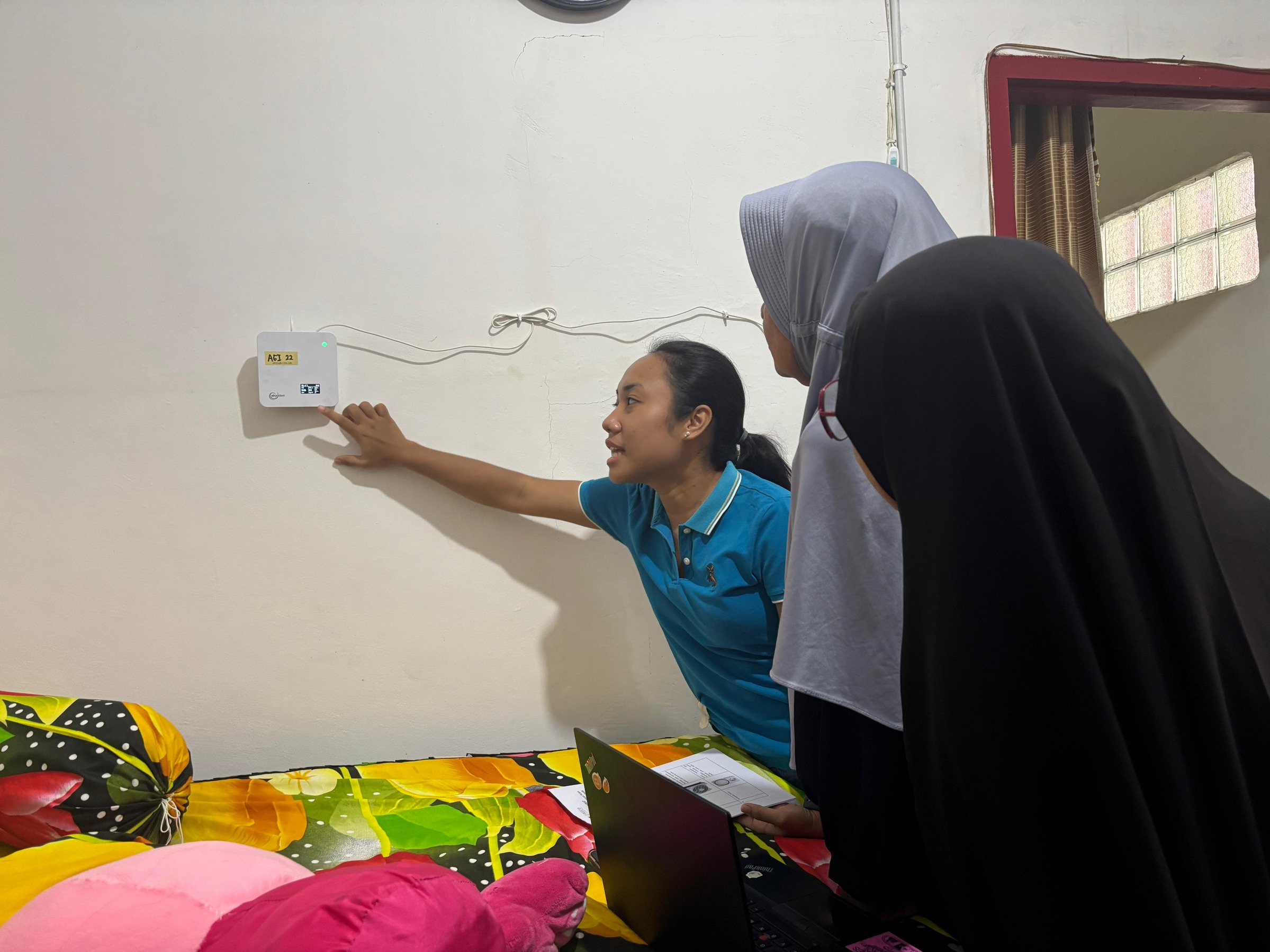
A resident reaches up to a wall-mounted air quality monitor while another watches beside a laptop on a bed

Test potential solutions 56

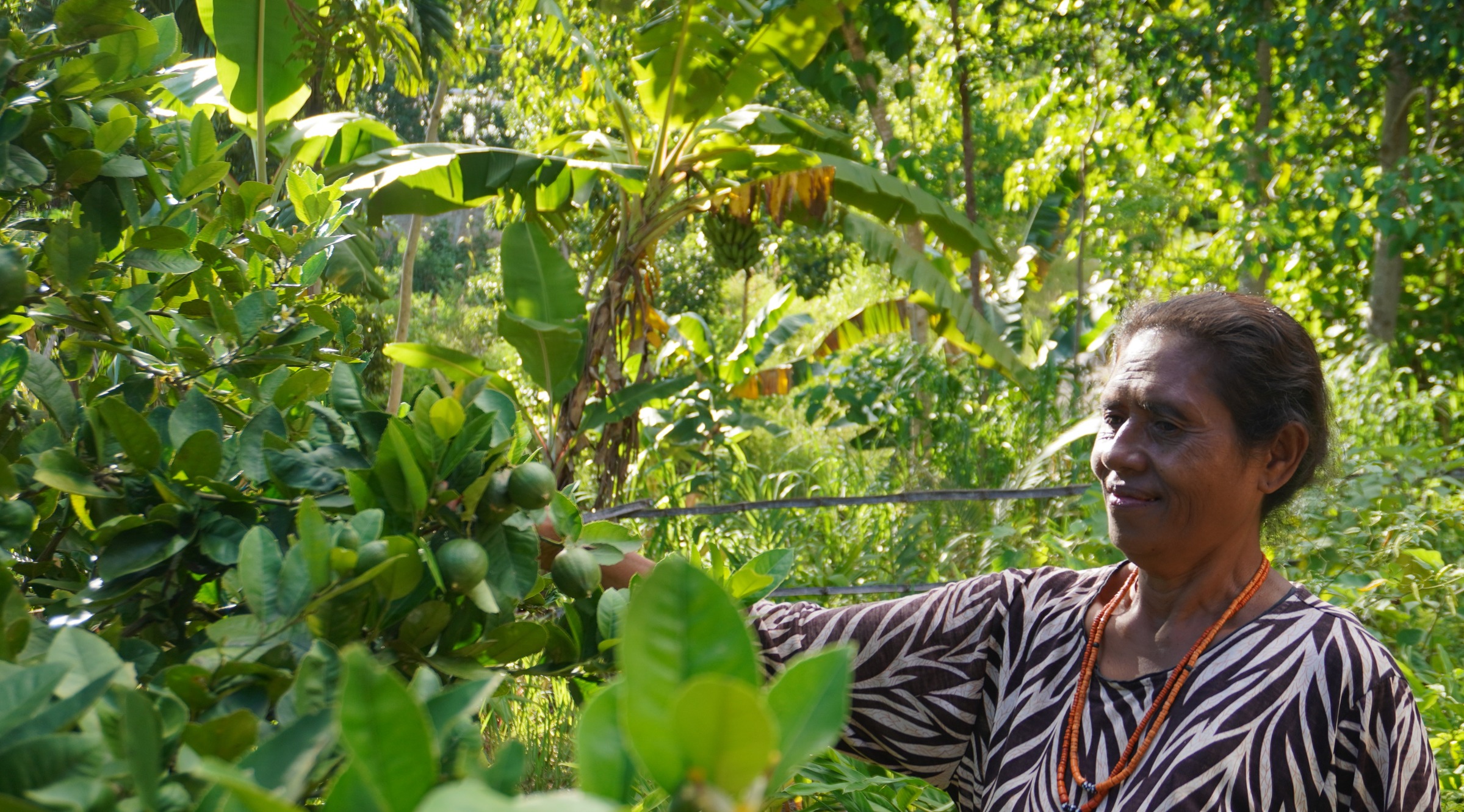
A woman in a striped top reaches into the branches of a leafy plant in a West Timor garden

PANGAN

Addressing food insecurity in West Timor

In South Central Timor, West Timor, food insecurity is not the result of a single problem. Longer droughts, heavier flooding, repeated crop failures, and post-harvest losses are interconnected challenges faced by communities, contributing to malnutrition and stunting, especially among children.

Implemented from October 2023 to January 2026, the PANGAN initiative addressed this by combining indigenous food knowledge with practical innovations across three areas: revitalizing regenerative farming practices, experimenting with post-harvest technologies, and strengthening micro-agribusinesses that process and promote local food.

Amplify impact 57

Farmers crouching in a freshly dug red-soil field, with several more standing behind them among young trees

Regenerative Indigenous Farming

PANGAN worked with 135 farmers across 11 villages in South Central Timor through capacity sharing on climate change, indigenous farming, and post-harvest practices.

By the end of the program, 100% of participating farmers had applied climate-resilient indigenous farming practices. 11 farmer champions spread this learning further, reaching an additional 1,151 smallholder farmers through peer learning across villages.

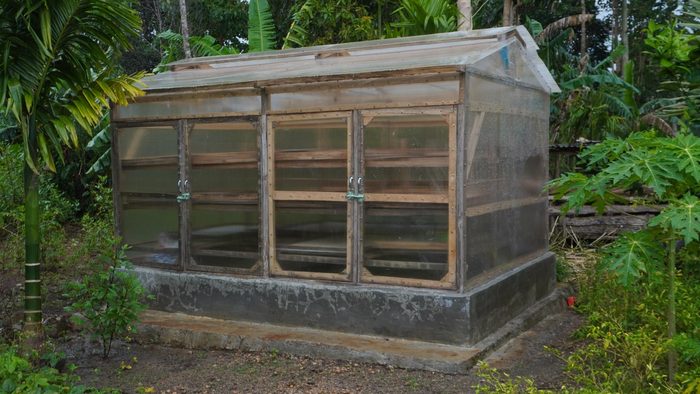
A wooden solar dryer cabinet with screened mesh panels and internal drying racks, standing on a concrete base in dense vegetation

Technology Experimentation

The program tested a solar dryer adapted to local corn-drying practices: adding hanging racks for vertical drying.

Trials showed it reduced drying time by 39-62%, saving 30-48 hours compared to open-air drying. 92 farmers across four villages used it, and all of them found it useful.

Interest spread organically: by mid-2025, 13 solar dryers had been built across West Timor, including units built by farmers and micro-agribusinesses themselves. A Black Soldier Fly (BSF) facility was also piloted, processing 108 kg of organic waste per month and producing 27 kg of larvae as an alternative animal feed.

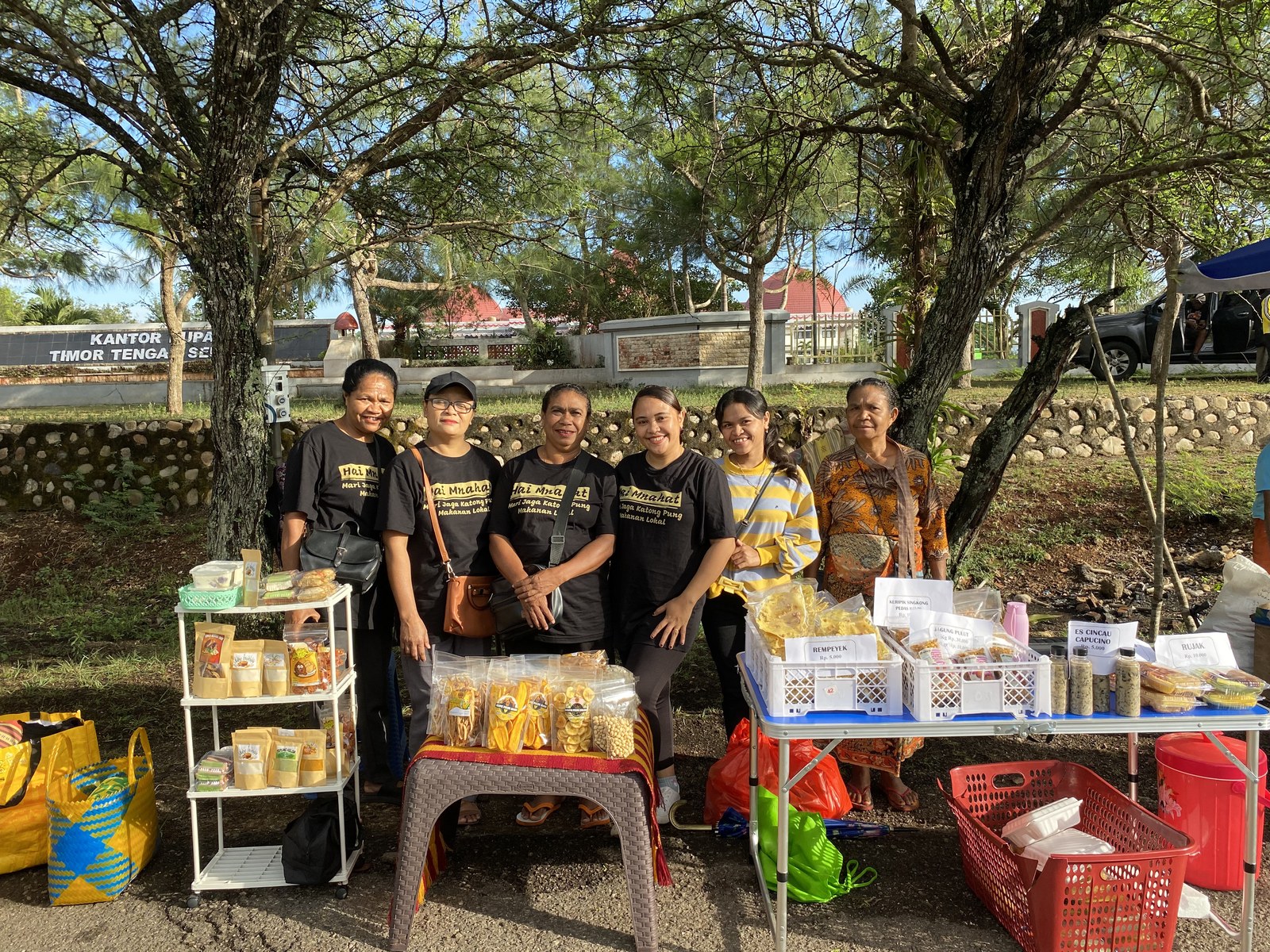
A group of people standing behind two tables of packaged goods at an outdoor market stall under a tree

Micro-agribusiness Support

PANGAN worked with 50 micro-agribusinesses through capacity sharing in business planning, financial literacy, eco-friendly packaging, and digital marketing.

NIB (business registration) ownership rose from 22% to 100%, Halal certification from 12% to 64%.

By the end of the program, 90% of participants increased their income by at least 30%, which is an average 113% increase from the baseline, and supported businesses created 70 paid part-time jobs in the community.

Amplify impact 58

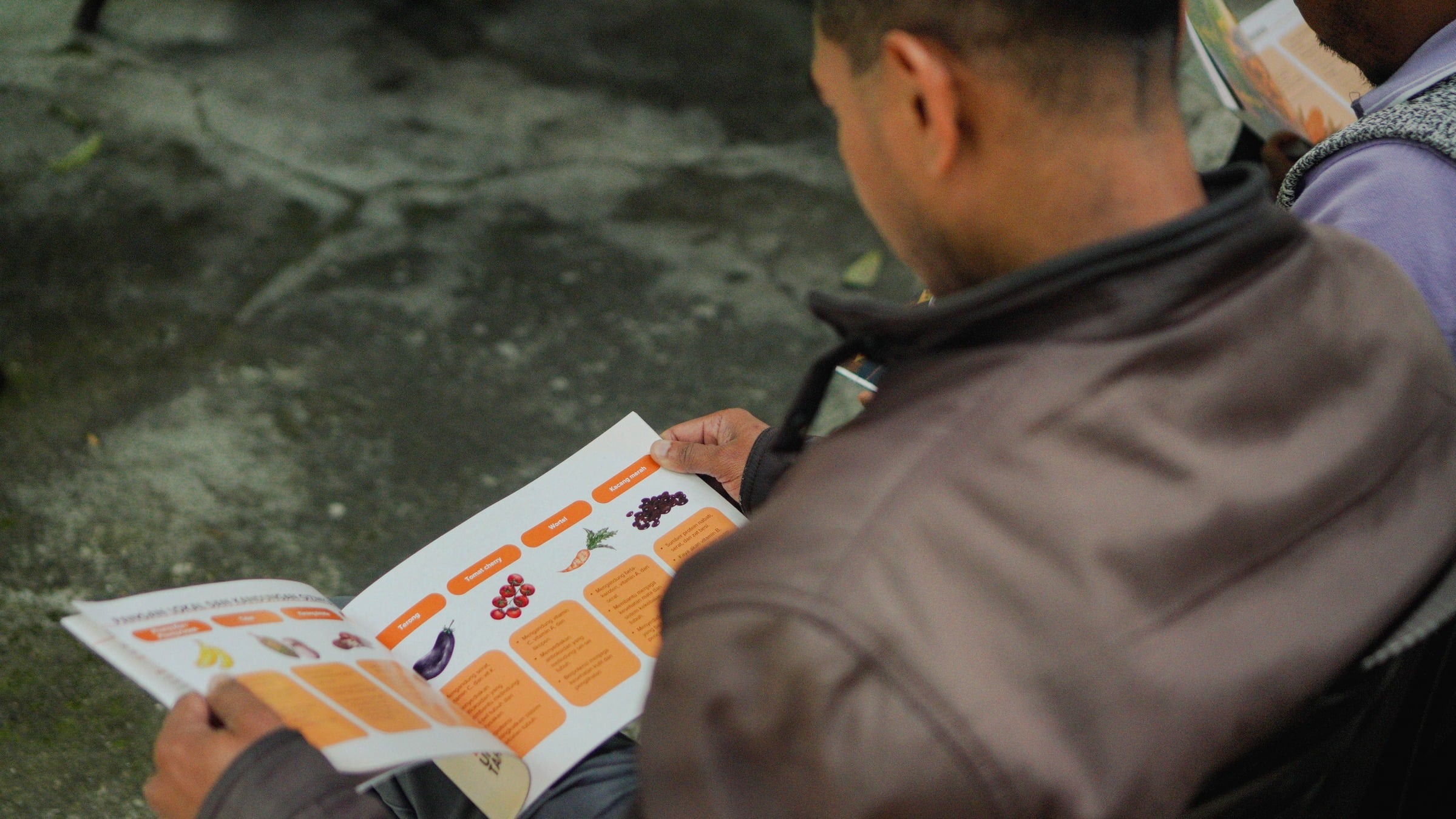
A Timorese cookbook held open to a spread of illustrated local ingredients and recipes, read outdoors by two people
Farmers across 11 villages
135
Farmers across 11 villages
Micro-agribusinesses supported
50
Micro-agribusinesses supported
Average income increase
113%
Average income increase
People reached through campaigns
8.8M+
People reached through campaigns

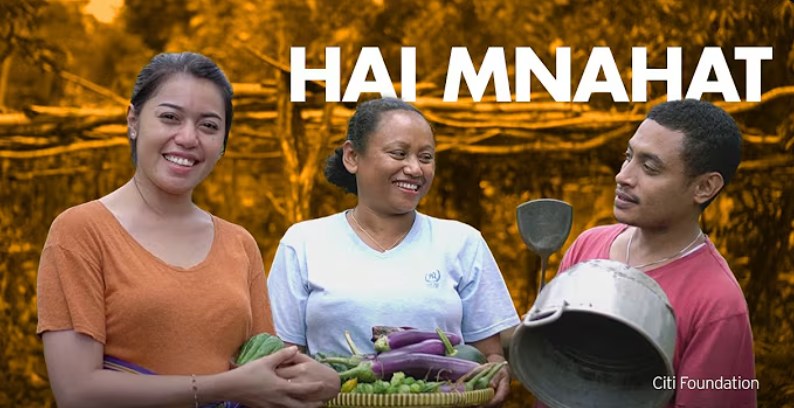
Through Hai Mnahat - meaning ’our food’ in the Dawan language - PANGAN brought information on local food systems and climate-resilient farming to wider audiences. Ten comedians and content creators produced more than 145 pieces of digital content, reaching 8,871,097 people. The campaign culminated in the Hai Mnahat Festival in SoE in September 2025, which featured a range of activities including local food cooking demos, a local food market, and the launch of the Hai Mnahat cookbook.

The cookbook brings together 70 local recipes with community health cadres, distributing 550 printed copies of a Timorese cookbook to more than 1,650 families. Health cadres in at least five villages are now using the cookbook during feeding sessions at Posyandu (integrated community health posts).

This initiative is implemented by the Community Initiatives Team and supported by the Citi Foundation and Institute of Food Technologists.

Amplify impact 59

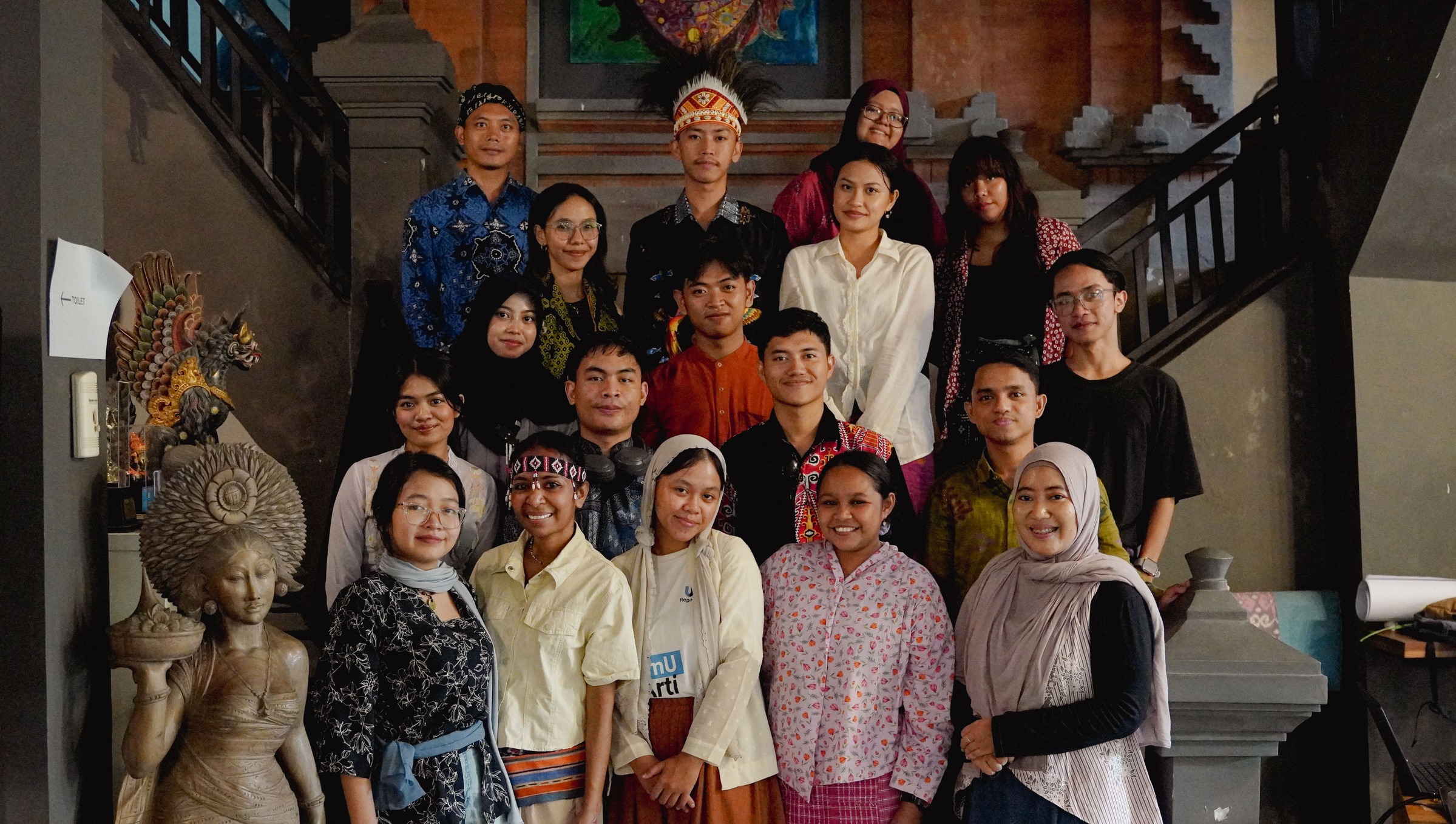
A large group of Indonesian Rutgers villagers and partners in batik and hijab pose together for a group photograph indoors

Generasi Setara

Generasi Setara (GenSet) is an initiative challenging gender norms around care work and economic roles in Indonesia. Its name is a deliberate play on words: genset, the Indonesian term for a generator set, reflects the initiative’s ambition to become a driving force for gender equality.

As the initiative enters its later stages, GenSet has evolved beyond campaigns and public events into something more enduring: Komunitas Setara, a community of practice that equips local advocates to continue advancing gender equality long after the project concludes.

Komunitas Setara works through two interlocking activities. Members participate in a year-long program of expert-facilitated and peer-to-peer learning sessions, covering foundational gender concepts, intersectional perspectives linking gender with climate, the economy, and the arts, as well as practical skills for gender-sensitive advocacy. Members also have the opportunity to apply for small grants to implement initiatives within their own communities.

Amplify impact 60

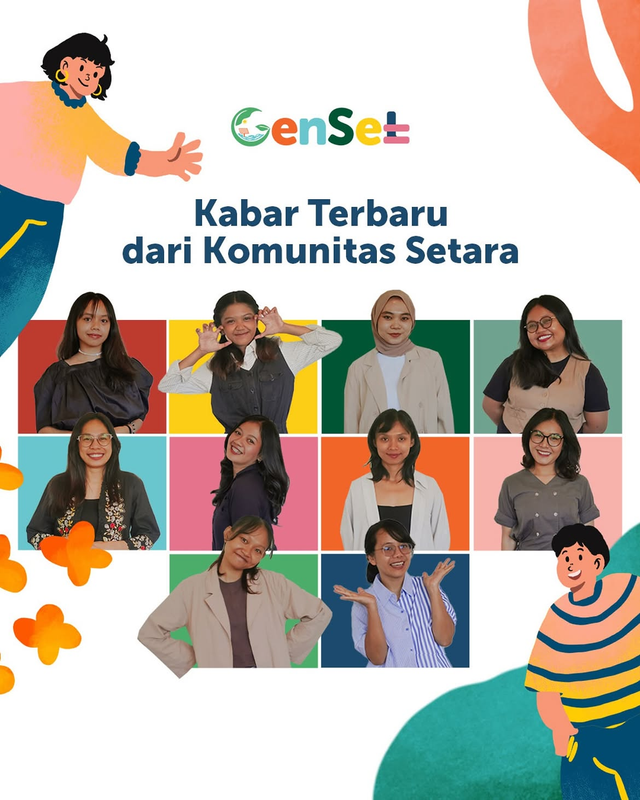
By mid-2025, Komunitas Setara had grown to 51 members across 19 provinces, from Sumatera Utara to Papua Selatan, with Cohort 2 welcoming 20 new members from 11 provinces, four represented for the first time. Beyond expanding the network, members independently launched nine community-led initiatives: Setara Berdaya, Shesterhood, Tenggok, Rangkai Saudari, Jukok, Modul Selaras, Saimbang, Sekolah Setara, and Keluarga Setara. Meanwhile, GenSet’s Instagram community grew to more than 12,000 followers, extending conversations on gender equality to an even wider audience.

Building on this growing community, GenSet expanded its public engagement through collaborations with creators, media platforms, community leaders, and cultural figures to spark conversations about gender equality through formats that resonate with wider audiences.

A GenSet graphic reading Kabar Terbaru dari Komunitas Setara above a grid of member portraits on coloured squares

Amplify impact 61

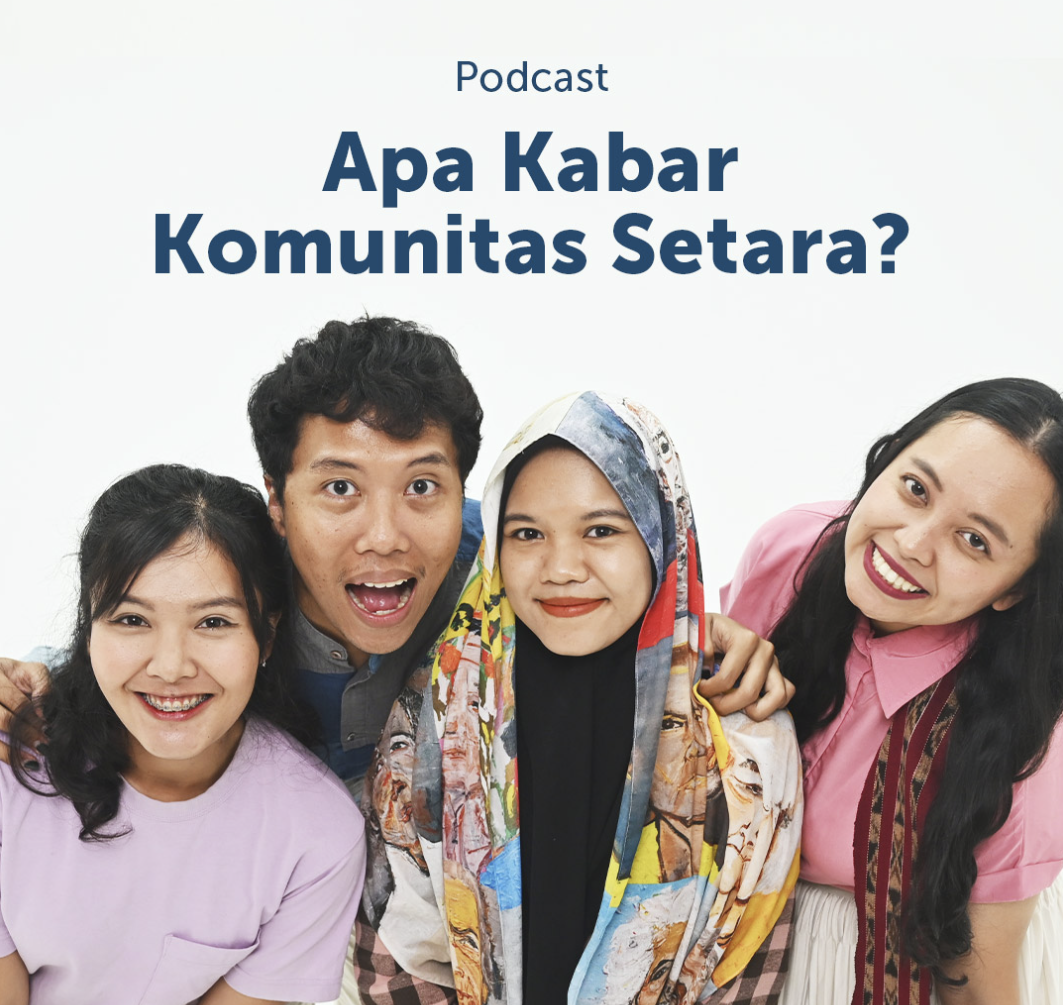
Podcast cover art reading Apa Kabar Komunitas Setara above three smiling hosts

Throughout the year, GenSet produced five podcast episodes in collaboration with partners including Magdalene, The Maple Media, Ubud Food Festival, In Our Twenties, and members of the Community of Practice (CoP). Together, these conversations explored topics ranging from the unequal burden of unpaid care work and economic pressures on families to inclusive masculinity, community leadership, and everyday actions that foster more equal relationships. Guests included Voice of Baceprot (VoB), Samuel Ray, and members of the GenSet Community of Practice, each bringing unique perspectives and lived experiences to the discussion.

Beyond digital content, GenSet also collaborated with Gilang Propagila to host a zine-making workshop, zine talk, and mini exhibition, creating an interactive space for participants to reflect on and express their ideas about gender equality through art and storytelling.

These collaborations reflect GenSet’s commitment to highlighting real people and real stories that challenge stereotypes and demonstrate that more equitable ways of living, working, and caring for one another are already taking shape across Indonesia.

Amplify impact 62

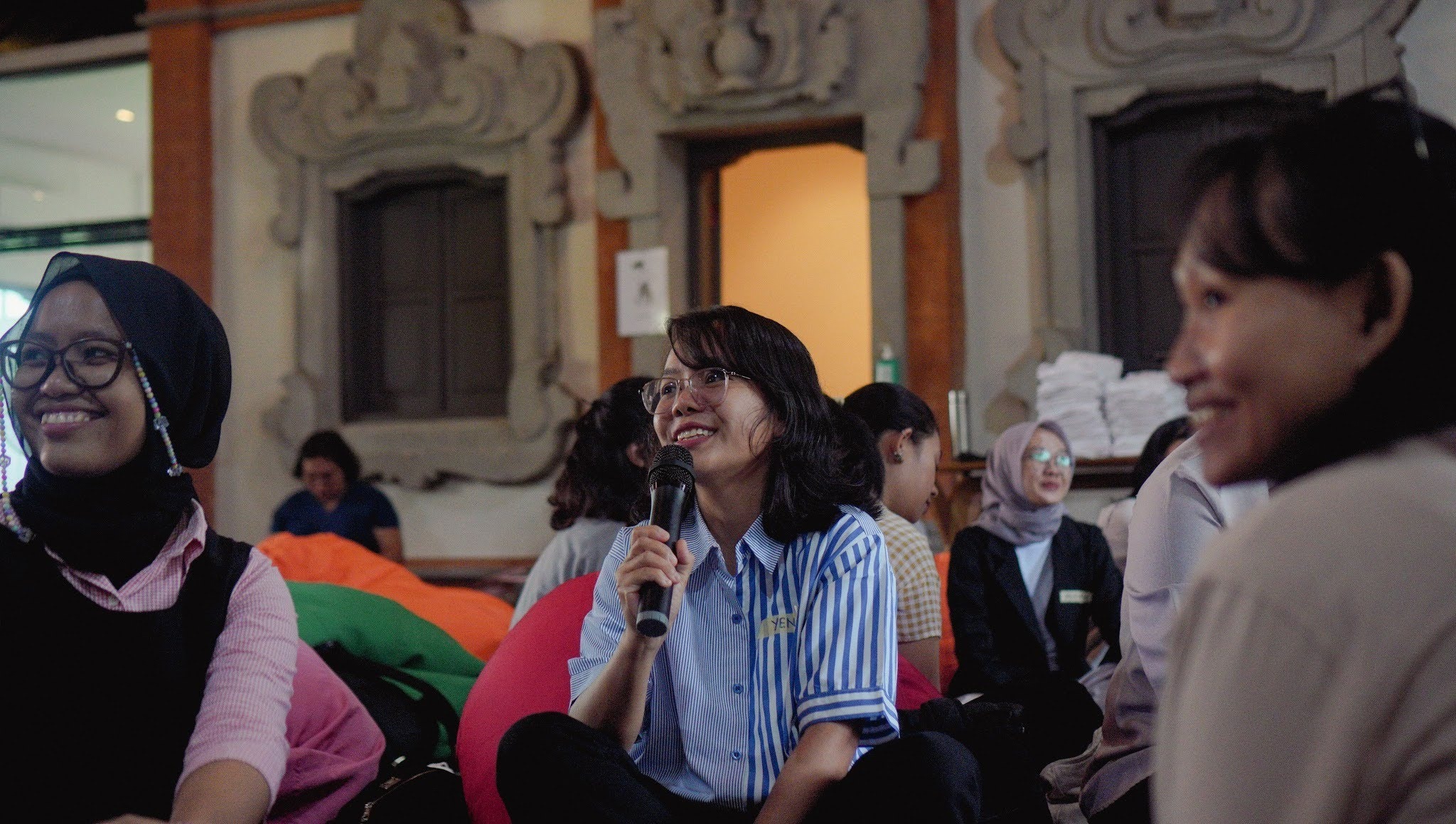
A woman in a striped shirt holds a microphone and speaks, seated among other workshop participants

The impact is perhaps best captured by the members themselves:

“The most significant change has been becoming the initiator of Sekolah Setara—bringing it to two villages as an informal learning space for young people. It has been a very important learning process, one that has helped me grow as a person. Meeting friends in Komunitas Setara has also meant a great deal to me. I realized I am not alone on this long journey toward gender equality. There are people with diverse skills and creativity who are always there to support each other in building a more just and inclusive life.”

— Dwi Preti Natalia Tara’u, Komunitas Setara Member

Amplify impact 63

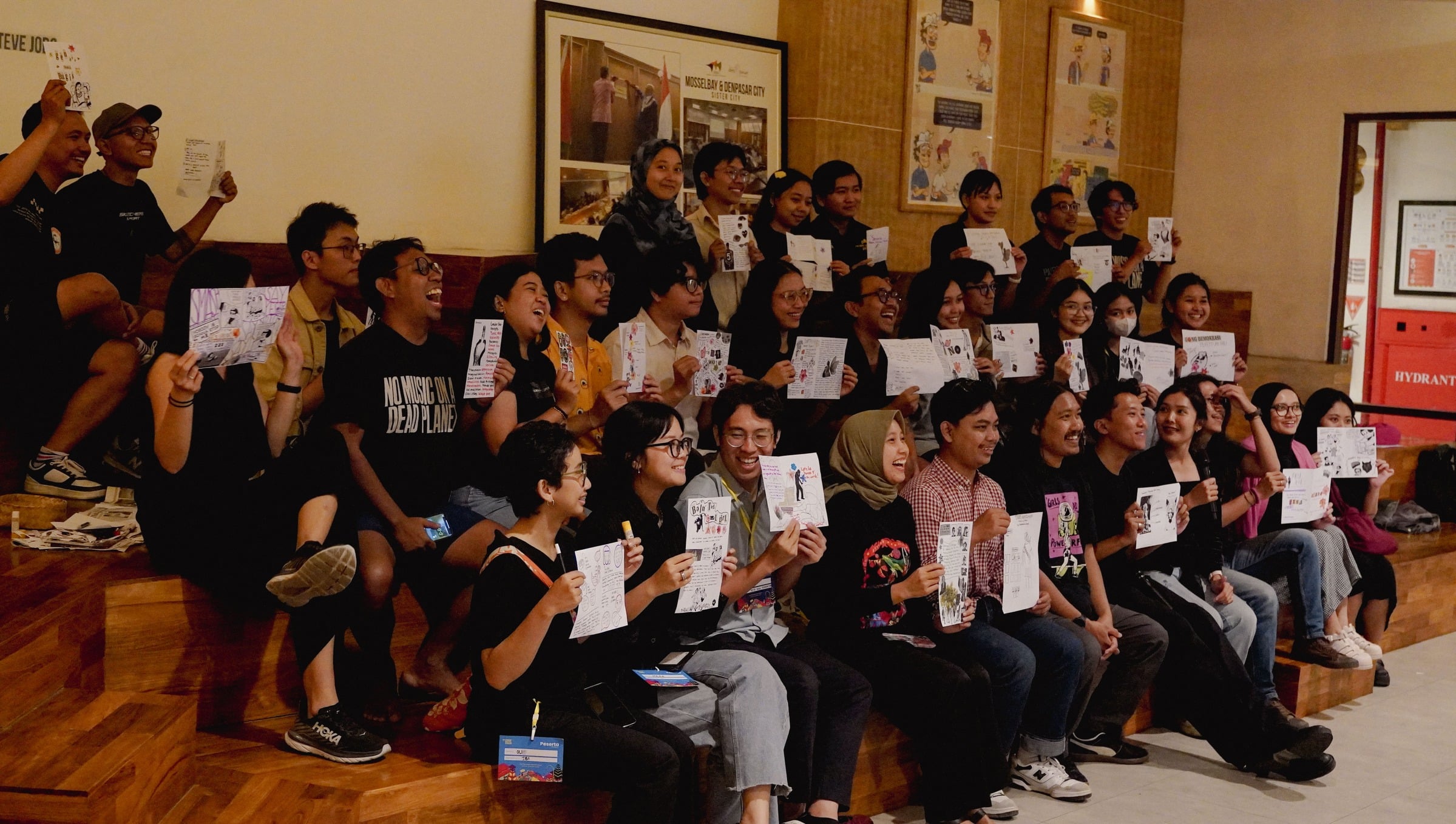
A large audience of GenSet participants seated in a lecture room hold up printed materials and smile

As GenSet matures, so does Kopernik’s understanding of what meaningful change looks like. Rather than asking “Did GenSet cause this change?” the team increasingly asks “How did GenSet contribute to change within a broader ecosystem?” This shift—from attribution to contribution—reflects the reality that lasting social change is collective and context-dependent.

Kopernik’s role is evolving as well. Increasingly, the organization is moving from campaign organizer to enabler, supporting locally led initiatives through community building, capacity strengthening, and small grants rather than direct implementation. How this role continues to evolve will shape the initiative’s next chapter.

This initiative is implemented by Kopernik’s Communications and Community Initiatives Teams and is supported by Investing in Women, an initiative of the Australian Government.

Amplify impact 64

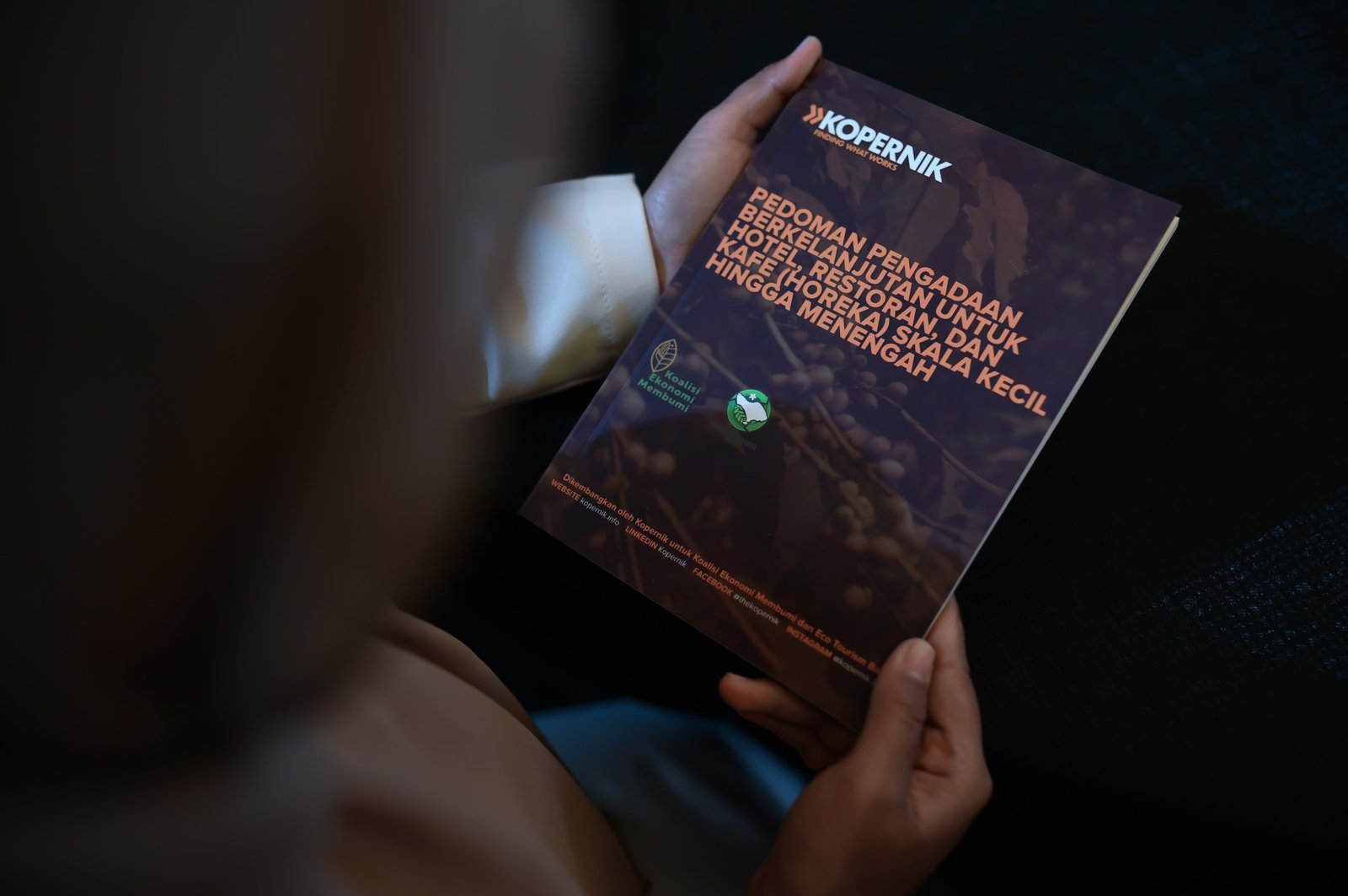
Two hands hold the Kopernik sustainability procurement guideline booklet, its title set in orange over a dark map

Sustainability procurement guidelines for the hospitality sector

Hotels, restaurants, and cafes in Bali source an enormous volume of produce, supplies, and packaging every day. But sustainability is rarely built into how those purchasing decisions get made. Most businesses lack the tools to evaluate whether a product is genuinely sustainable, who produced it, and how it traveled from source to kitchen or table.

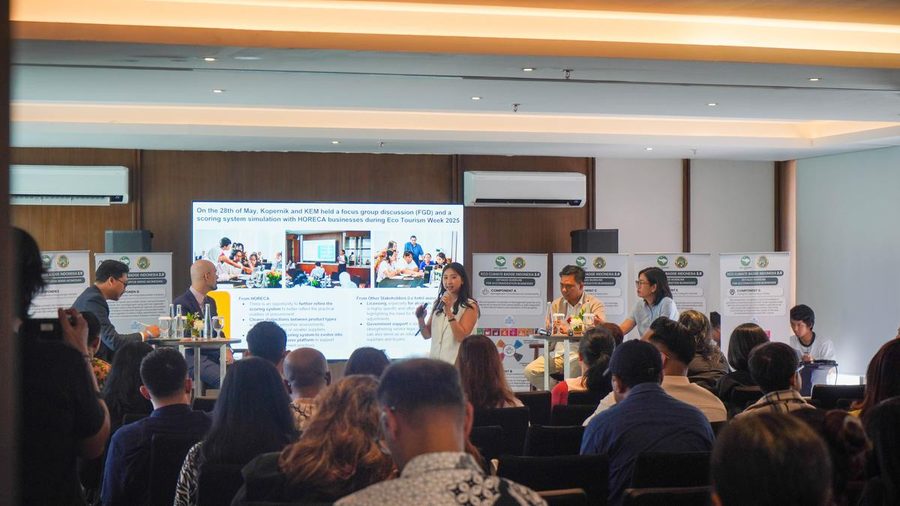
Through a consulting engagement with Koalisi Ekonomi Membumi (KEM) – a collective movement of 35 member organizations working to accelerate sustainable investment in Indonesia – Kopernik developed a practical sustainability procurement guideline tailored for small and medium-sized hospitality businesses (HoReCa: Hotels, Restaurants, and Cafes).

Amplify impact 65

The guideline is structured around three core questions:

What?

The product criteria for sustainable sourcing (organic, locally grown, minimal packaging, certified).

Who?

How to identify and evaluate suppliers committed to sustainability.

How?

The logistics of sustainable procurement, from ordering frequency and quantities to storage and waste reduction.

Rather than prescribing a rigid framework, the guideline is designed to be practical and adaptable and usable by a boutique hotel buying local vegetables as readily as a mid-size restaurant sourcing certified seafood. It reflects Kopernik’s consulting approach – helping organisations apply sustainability principles within their own operations.

This project is implemented by Kopernik’s Advisory Services Team in partnership with Koalisi Ekonomi Membumi.

Amplify impact 66

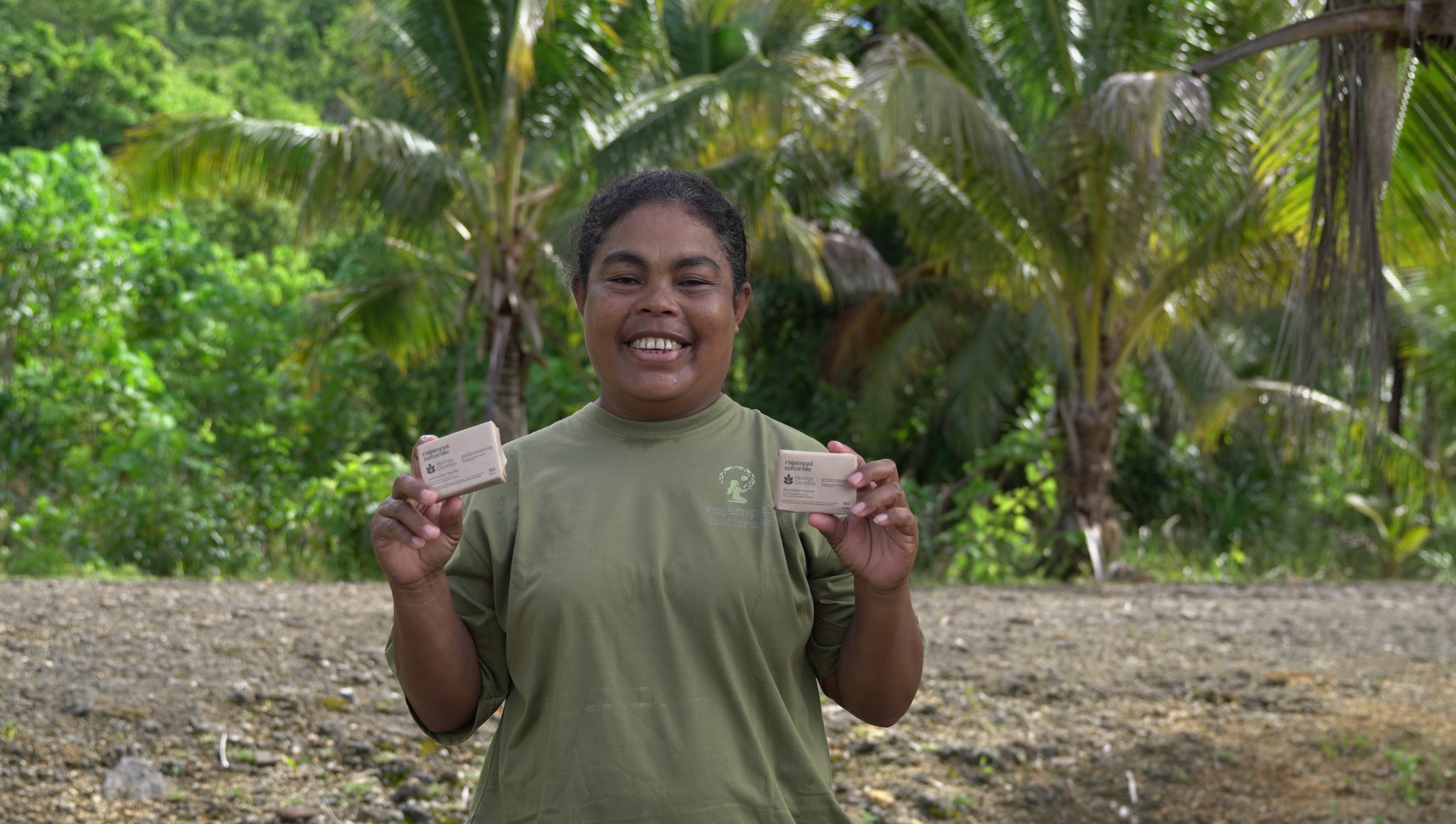
A woman in a green shirt stands among palm trees holding up two small jars of product in both hands

From forest to market

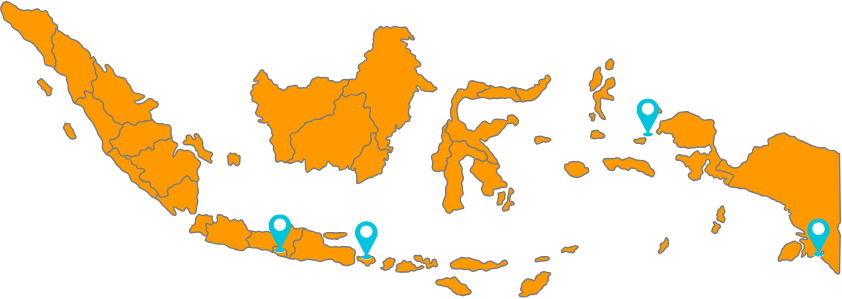
The Forest to Market program strengthens the capacity, agency, and economic resilience of women-led cooperatives in remote regions of Indonesia, connecting sustainably harvested products to markets that value them.

The program spans four locations across Indonesia, working closely with local organizations and social enterprises as Kopernik’s implementation partners.

Amplify impact 67

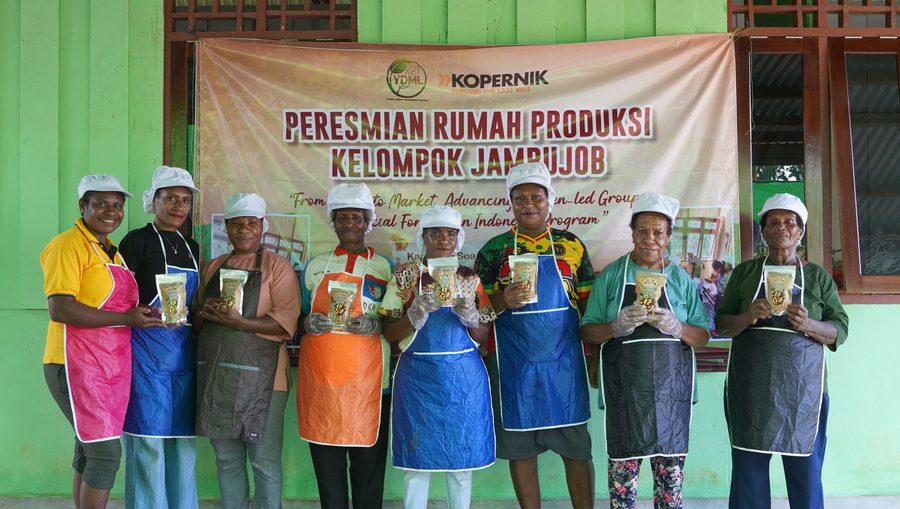
Women in colourful aprons stand beneath a PERESMIAN RUMAH PRODUKSI KELOMPOK JAWA JAGO banner

Merauke, Papua

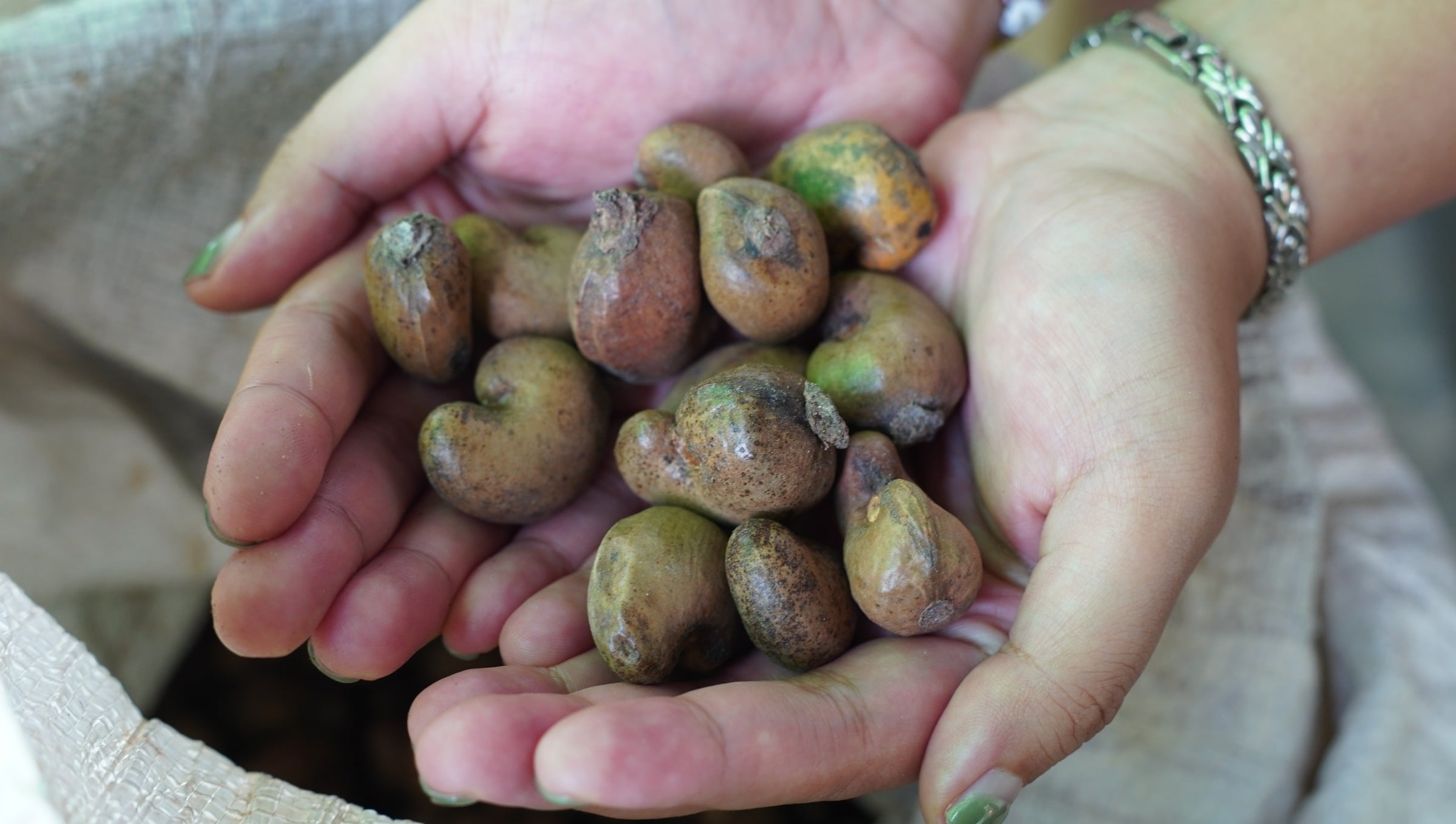
In Soa Village, women process wild-grown cashews from surrounding forests into healthy snack products, assisted by local CSO Yayasan Dahetok Milah.

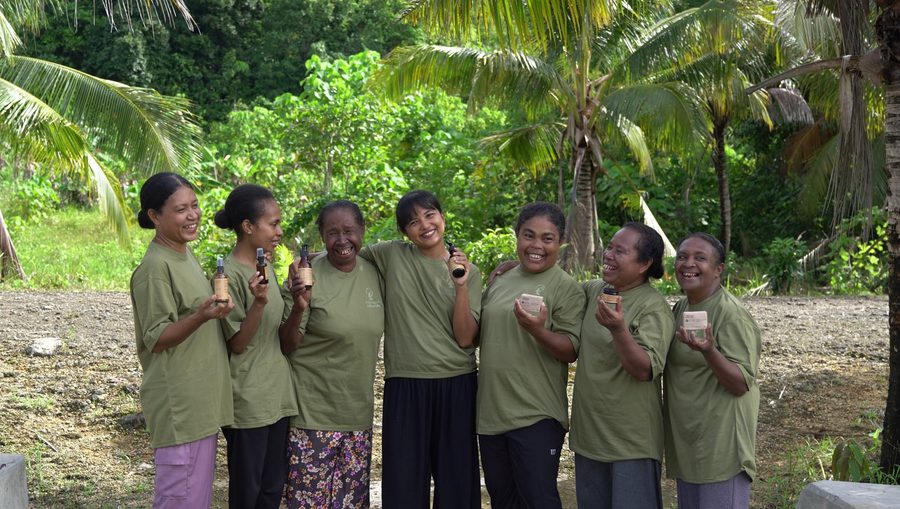
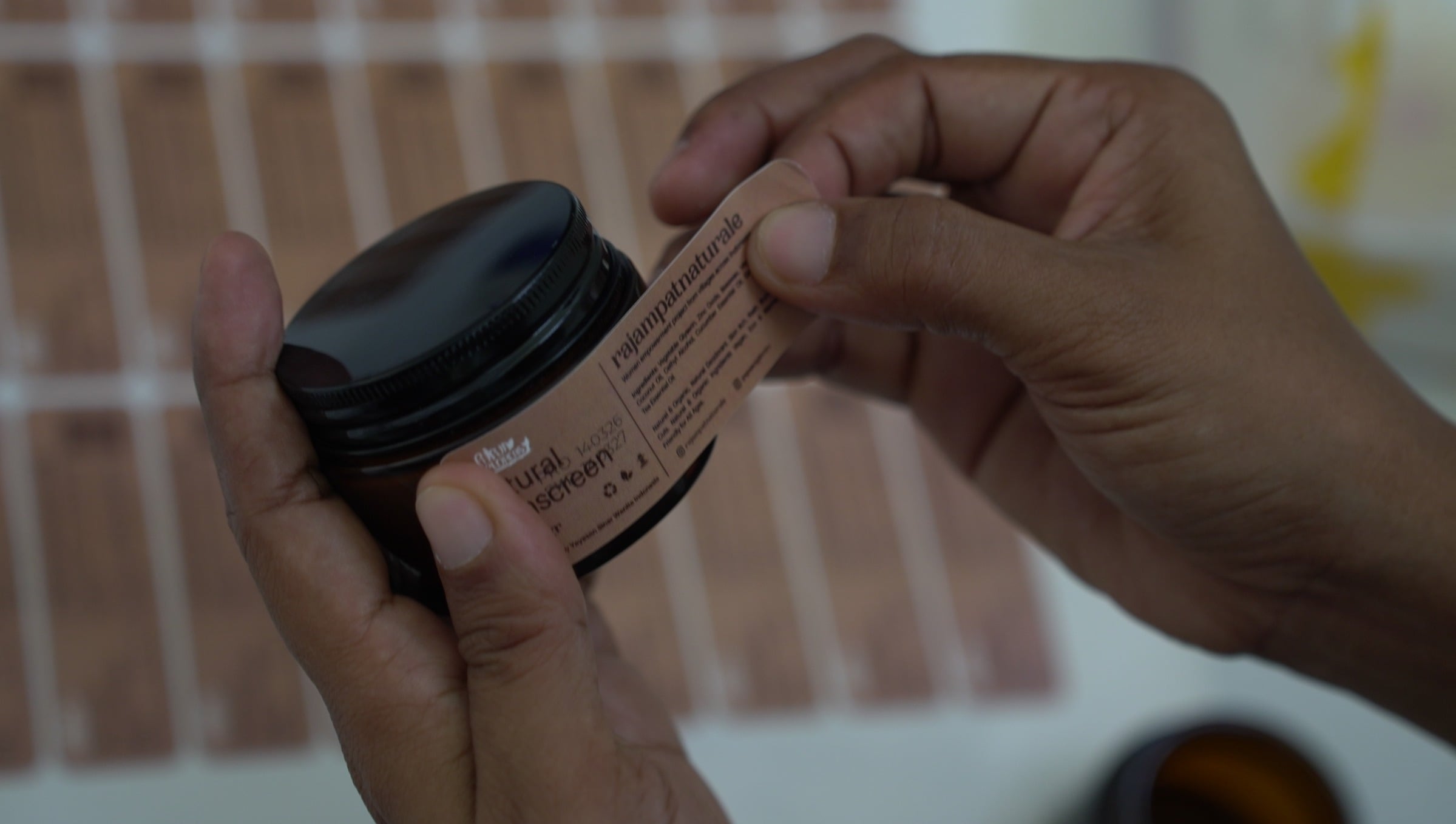
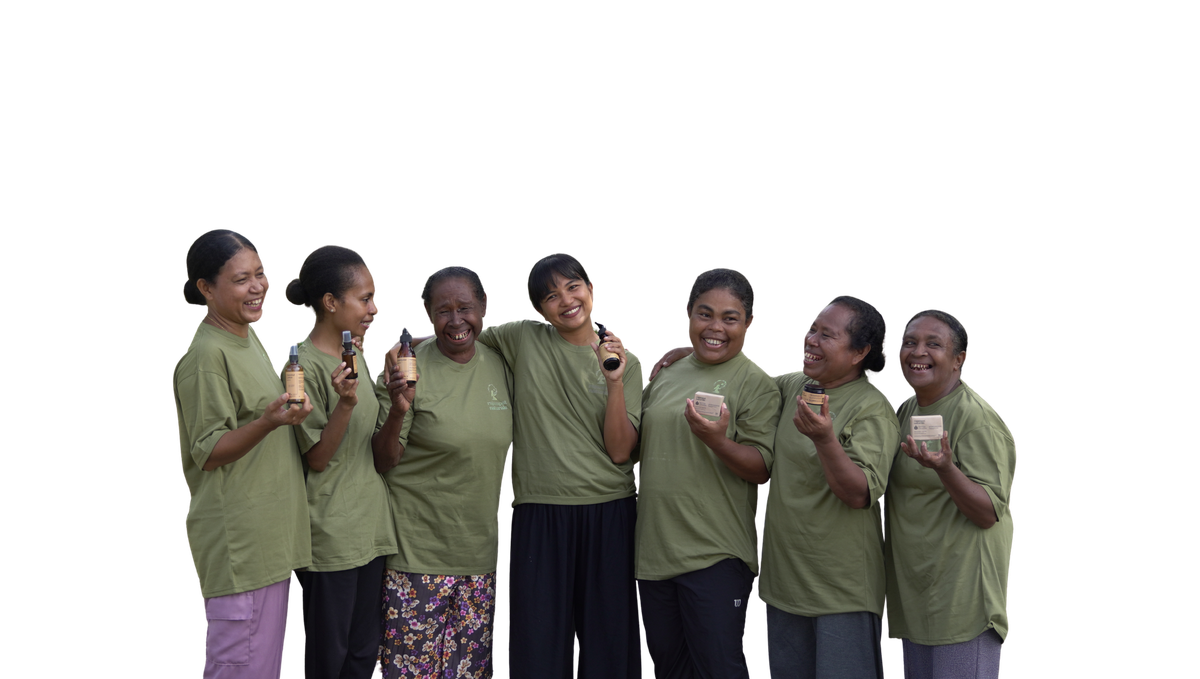
A group of women in matching green shirts stand together in a clearing holding up their produce

Raja Ampat, Papua

In Saupapir Village and Fam Island, women work with Raja Ampat Naturale, a local social enterprise, to turn coconuts grown on their indigenous lands into personal care products.

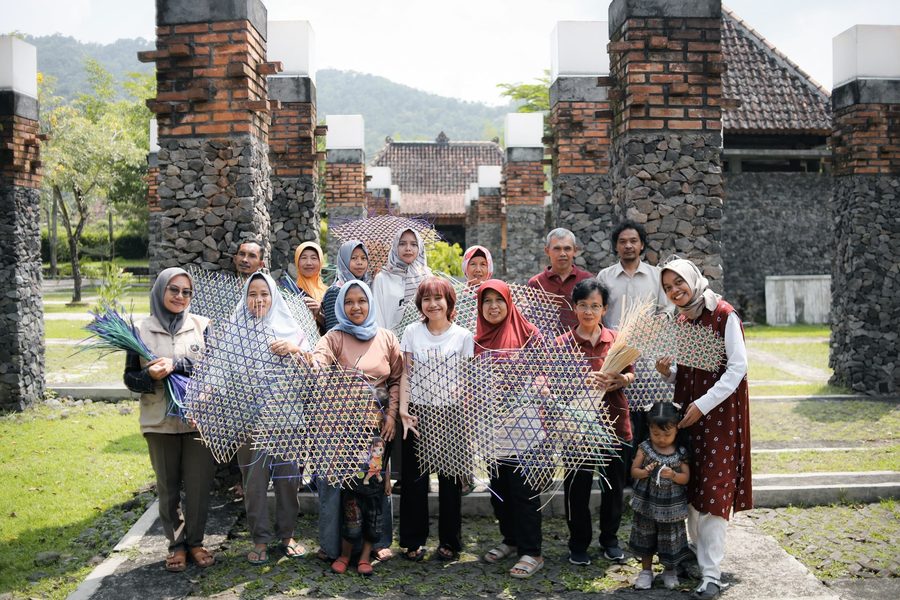
Women hold up a wide sheet of woven bamboo matting in front of the stone ruins of a Magelang temple

Magelang, Central Java

Women bamboo weavers, working with Kraosan, are adapting their craft as climate change reshapes the materials they depend on.

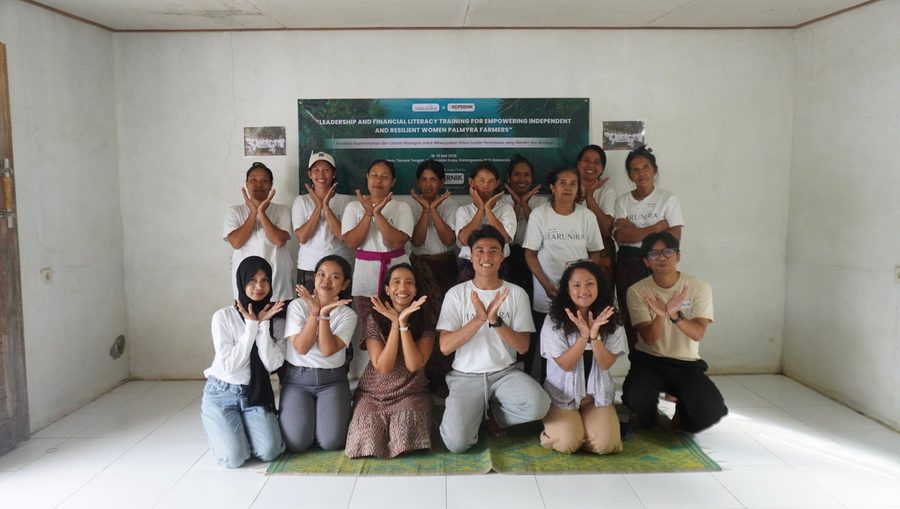
A group of women in white blouses pose together inside a room beneath a green banner

Karangasem, Bali

Women process palmyra (lontar) sugar harvested from the forests behind their homes, working with Tarunira.

Amplify impact 68

Women in remote Indonesia are central to forest-based economies, yet they remain largely excluded from the markets their products supply. This program works directly with women-led cooperatives to close that gap: building business skills, securing product certifications, and linking sustainably produced goods to buyers, without compromising the natural ecosystems communities depend on.

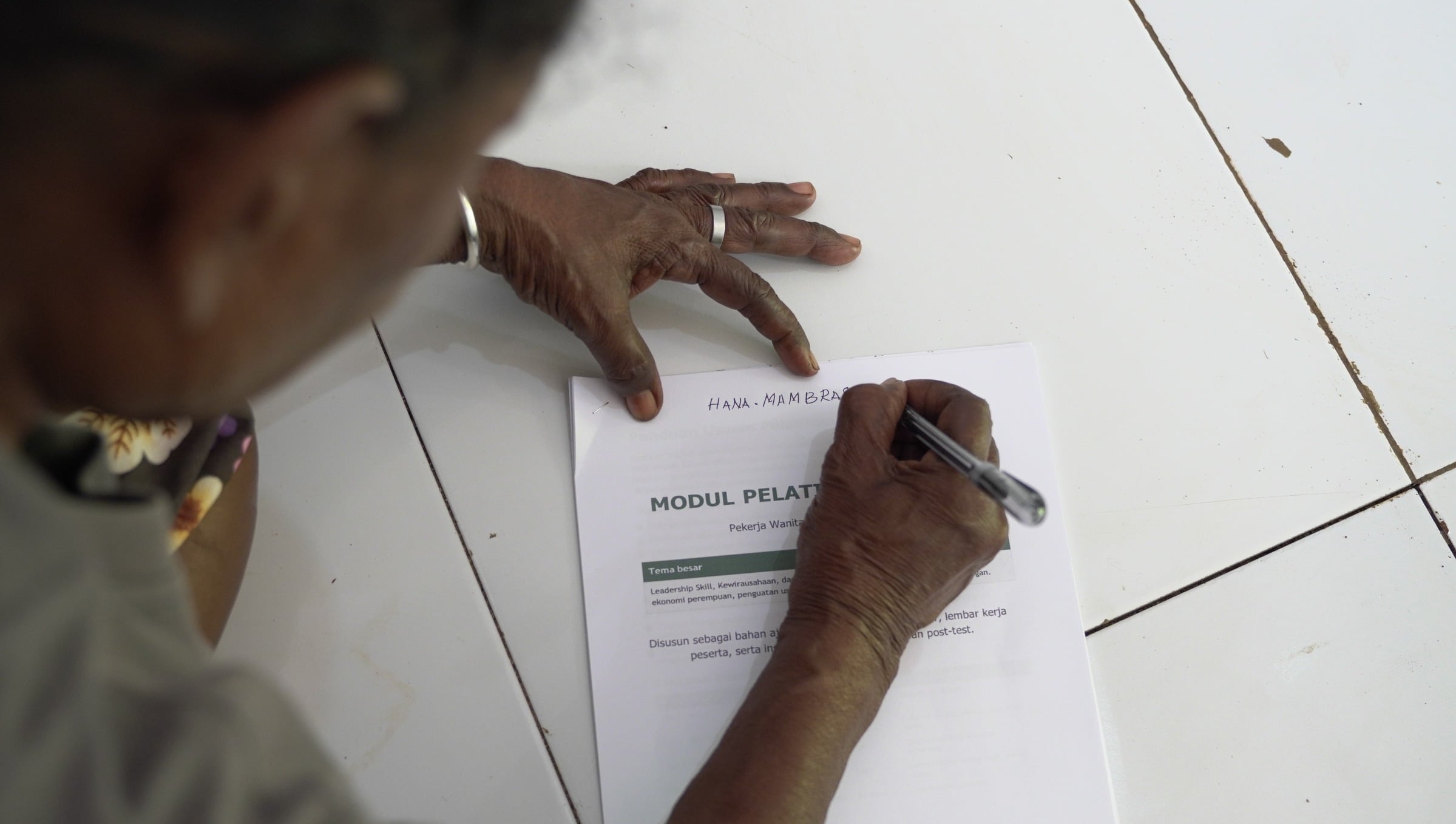
Women seated around a table sign a document during a business planning workshop

Leadership and enterprise development

Women strengthen their business acumen, confidence, and decision-making through capacity-sharing workshops covering financial literacy, branding, and product development, equipping them to lead their cooperatives independently.

A hand holding up a labelled coffee jar against a background of drying coffee beans

Market access and certification

Women-led cooperatives secure product certifications that meet regulatory requirements, then connect directly with B2B and B2C buyers, pitching products, initiating sales agreements, and entering new markets on their own terms.

Two cupped hands holding a handful of harvested forest nuts, showing their green and brown husks

Sustainable agroforestry practices

Cooperatives adopt low-impact harvesting techniques and agroforestry methods that reduce deforestation risks and maintain forest biodiversity, ensuring livelihood improvements do not come at the cost of the ecosystems communities depend on.

Women in white aprons and hairnets stir a large pan of product in a clean processing room

Energy-efficient processing

Women adopt energy-efficient drying, fermentation, and waste reduction practices, minimizing environmental impact while improving product quality and operational efficiency.

Amplify impact 69

Through this program, we are building evidence on what it takes to create lasting change for women and forests alike.

Key learnings so far include:

Women as stewards of regenerative economies

Women play a central role in managing natural resources and are often key drivers of restorative practices. When empowered, they actively shape economic models that prioritize long-term environmental and community well-being over short-term gains.

When women lead, sustainable practices stick

Strengthening women’s leadership, confidence, and decision-making power leads to more consistent adoption of sustainable and regenerative practices at both household and enterprise levels.

Market access is about shaping demand, not just increasing sales

Enabling access to markets is not only about helping women sell more products, but also about influencing buyers to make more conscious and responsible purchasing decisions, shifting value toward sustainably produced goods and reinforcing regenerative practices across the value chain.

This project is implemented by the Advisory Services Team and is supported by the Chanel Foundation.

Amplify impact 70

Farmers crouching in a group to plant seedlings by hand in a field of freshly turned red soil

Amplify impact

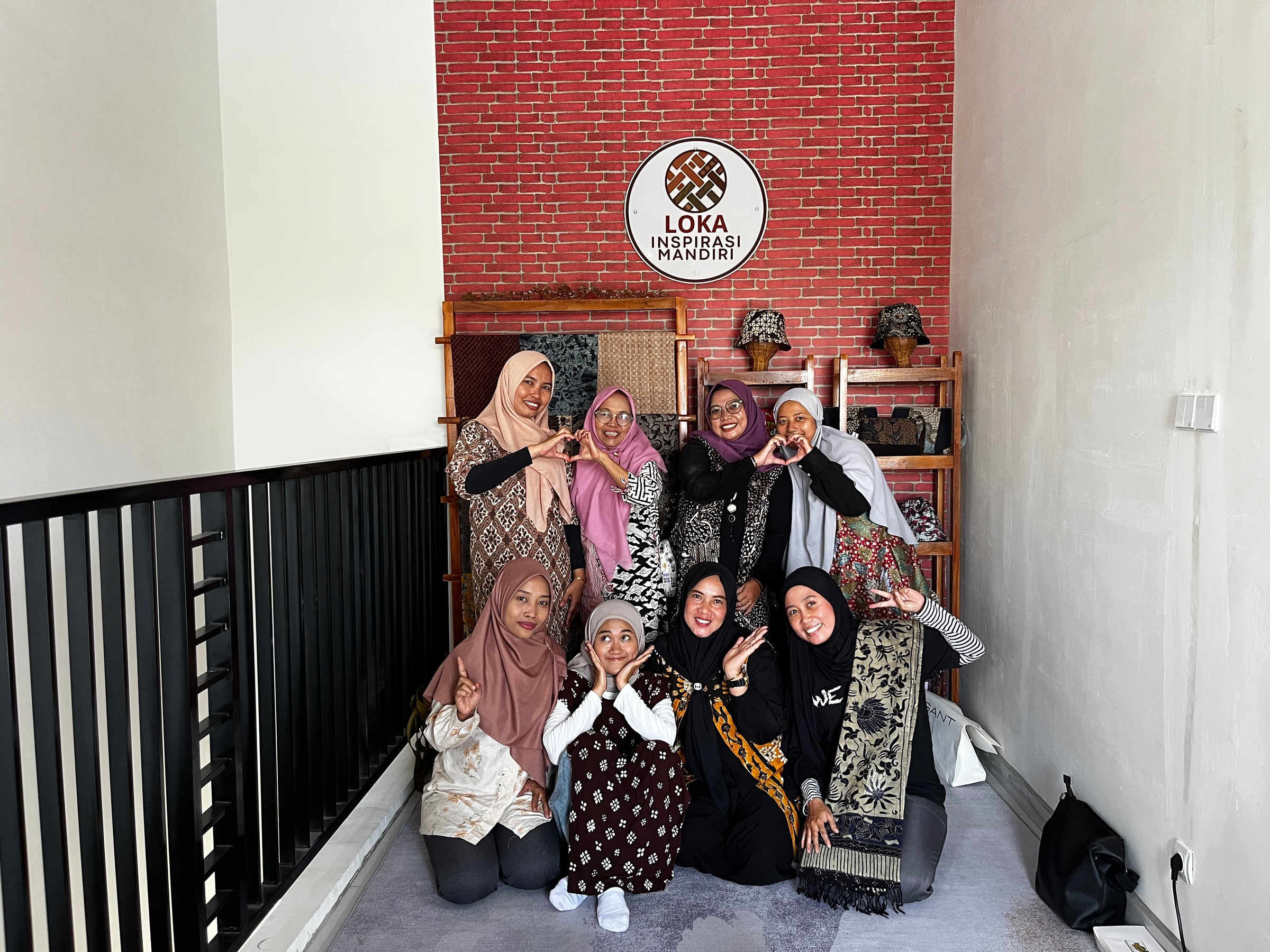
Eight women in hijabs and patterned batik clothing pose together in a room, in front of a red brick wall hung with a round Loka Inspirasi Mandiri sign and woven textiles on a wooden rack

Next CEO Program

Next CEO is Kopernik’s internal program for testing and incubating promising initiatives into independent entities. It has three pathways, depending on how mature an idea is: micro experiment (testing the feasibility of an early-stage idea), sprint (testing product-market fit with an interim CEO), and spin-off (becoming fully independent after twelve months).

Four initiatives are moving through the Next CEO pipeline in 2025.

Amplify impact 72

Four initiatives are moving through the Next CEO pipeline in 2025.

Kopernik Harvest logo: two green leaves above the name, on a yellow rounded square

Kopernik Harvest

Kopernik Harvest builds on Kopernik’s experience in agriculture and fisheries, offering farmers essential intermediary services: quality control, branding, aggregation, product development, and market connections.

The initiative works with smallholder farmers across Indonesia, aggregating and processing their produce into higher-value products for both business-to-business and direct-to-consumer markets, in Indonesia and overseas.

NOL logo: a geometric monogram set inside a squared-off frame, in dark grey on white

NOL

NOL is a zero-alcohol botanical distillate, made in Bali and distilled from ten botanicals sourced from Indonesian farmers. Designed for adults seeking a complex, non-alcoholic alternative,

NOL responds to growing demand, both in Indonesia and globally, for zero alcohol drinks.

Loka Inspirasi Mandiri logo: a circular woven-batik motif above the name, in brown on cream

Loka Inspirasi Mandiri (LIM)

Loka Inspirasi Mandiri, or LIM, is a cooperative and collaborative space supporting the empowerment of micro-entrepreneurs in Tuban, East Java.

Through marketing support, business consulting, and access to shared resources, LIM helps women-led micro-enterprises grow into sustainable, independently managed businesses.

IKLIM logo: the four letters in dark red on cream, the I drawn as concentric rings

IKLIM

IKLIM, the Indonesian Climate Communications, Arts, and Music Lab, unites musicians, artists, and climate experts across Indonesia to bring climate action into everyday cultural life—through music, events, and media.

As part of the Next CEO pipeline, IKLIM is moving toward independence, as a standalone institution built around its music label, creative agency, and advocacy work.

Amplify impact 73

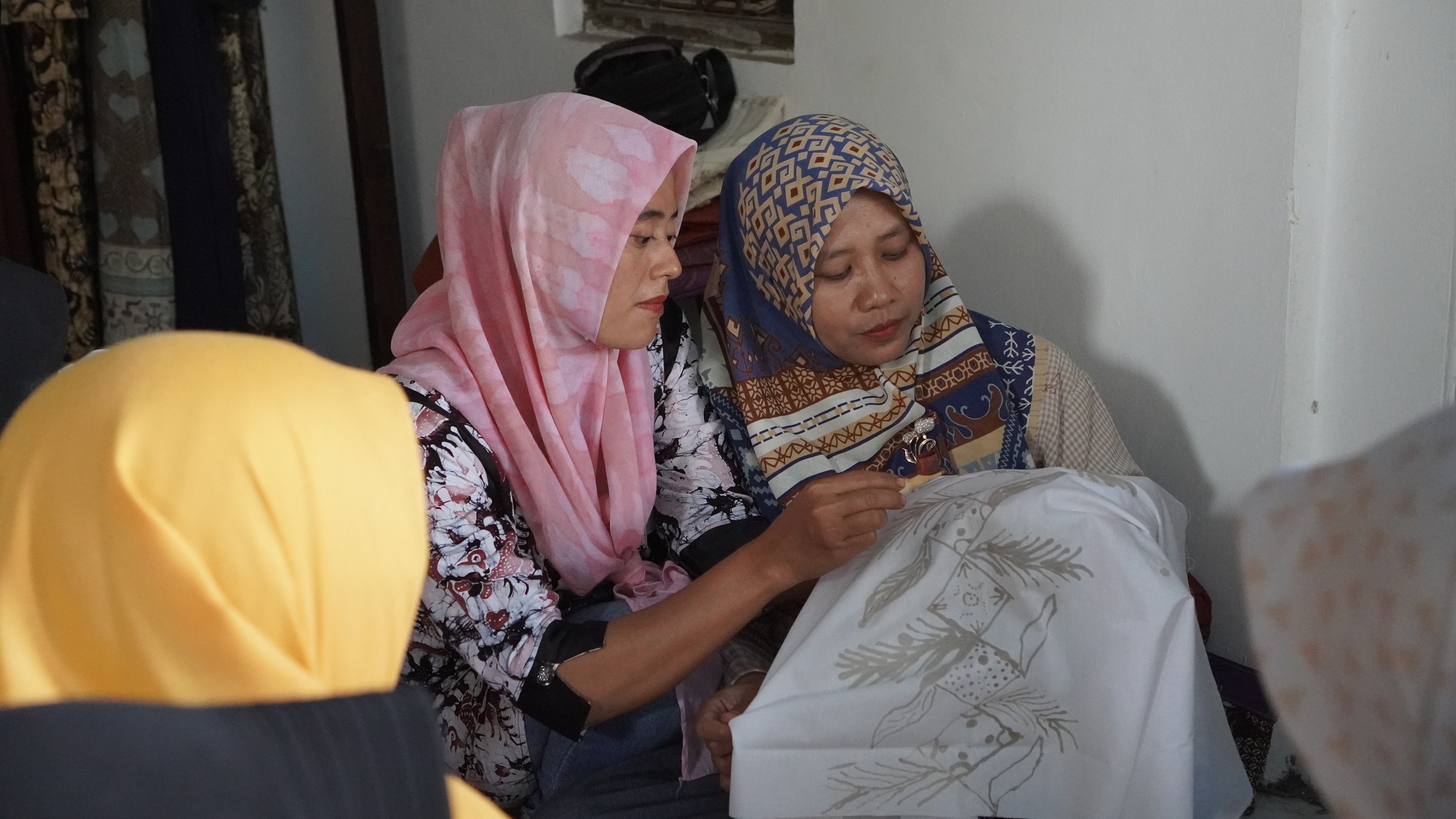
Two women in patterned batik and headscarves sit together over a length of white batik cloth printed with grey floral motifs, working on it with a needle

Loka Inspirasi Mandiri (LIM)

Most women in Indonesia’s informal economy work as self-employed, casual, or unpaid workers. Compared to men, they have lower workforce participation, higher unemployment, and limited access to financial resources and market opportunities. As climate change intensifies, threatening land fertility, food security, and farming in climate-sensitive sectors, women micro-entrepreneurs bear a disproportionate share of the burden.

Loka Inspirasi Mandiri (LIM), previously known as the Wonder Women initiative, works directly with these women. In 2025, the program supported 67 active ’wonder women’ across Tuban, East Java, and SoE, West Timor, including weavers, batik artisans, and traditional food producers building and running businesses under real pressure.

Among them, 36 were generating profit, with an average revenue of USD 417.53 and average profit of USD 220.37 per entrepreneur per year, where entrepreneurs saw median monthly revenue increase by 128 percent and median monthly profit by 120 percent compared to their 2023 baseline.

Amplify impact 74

Active women-led businesses
67
ACTIVE WOMEN-LED BUSINESSES

Tuban, East Java

Six women in hijabs at a workshop, one holding a microphone and pointing to a hand-drawn business process diagram pinned to a large sheet

In Tuban, the program shifted to a lighter-touch approach in 2025, supporting group gatherings, peer learning, and shared digital marketing channels including TikTok Shop and Tokopedia.

A significant development was the emergence of Loka Inspirasi Mandiri (LIM), a cooperative spun off from the Wonder Women network. LIM was born out of Kopernik’s Next CEO program, and is now formally registered with a nine-member management team.

LIM builds on years of program relationships and is testing revenue-generating activities in product marketing, peer learning, and business services developing a model that can sustain support to women entrepreneurs.

SoE, West Timor

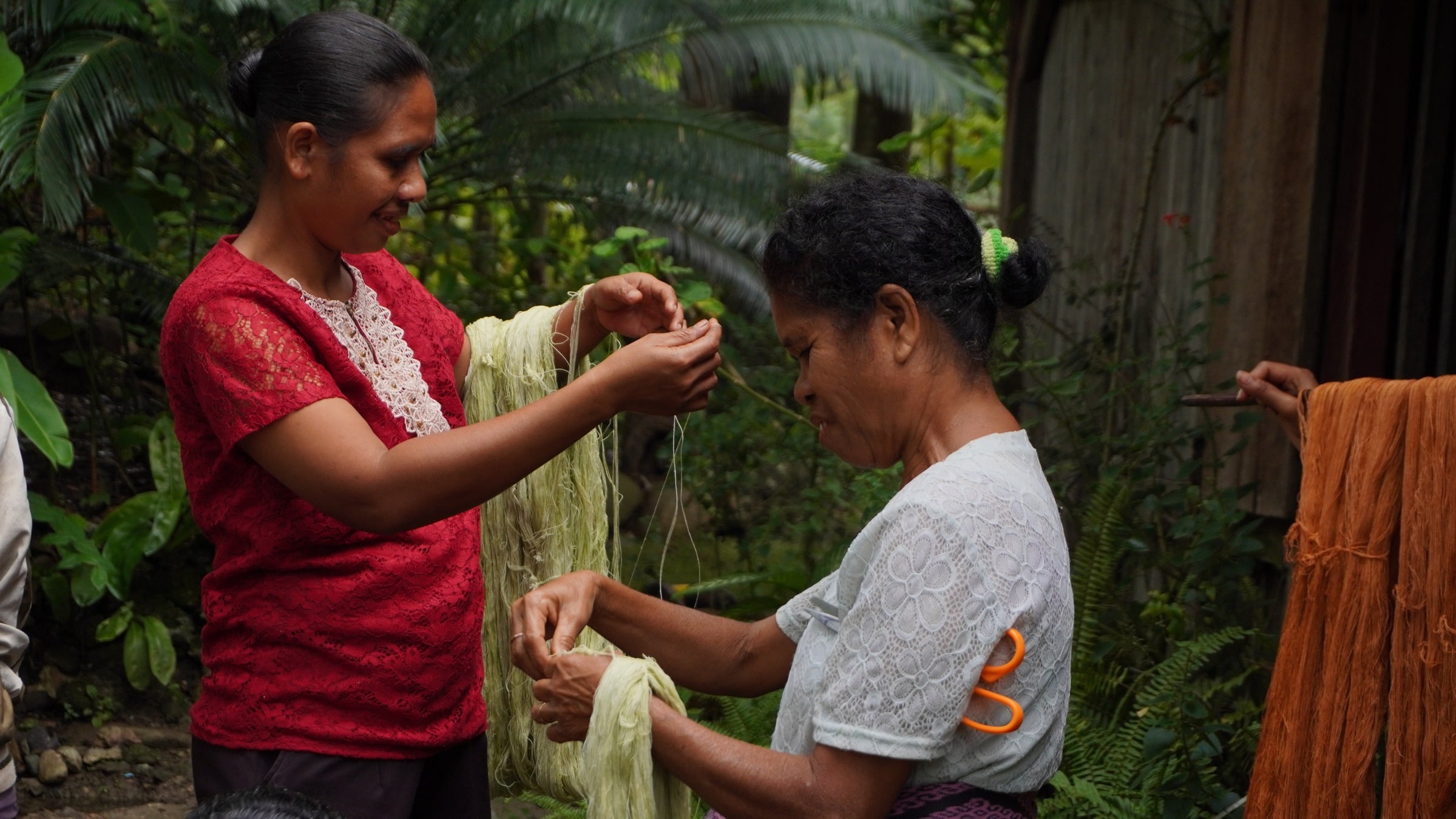
Two Timorese women outdoors handling a hank of pale green tenun yarn, one in a red top and one in white lace with orange scissors at her waist

In SoE, ten women weavers deepened their work on preserving traditional Timorese tenun while building more sustainable production practices. They participated in natural dye workshops, conducted independent experiments using locally sourced plant-based materials, and began using a solar dryer prototype adapted for drying yarn and dye ingredients, directly tackling weather-dependent drying as a production bottleneck.

The results are beginning to show: median monthly income increased by 100% and average monthly income by 112.68% compared to baseline. All participating weavers were running revenue-generating businesses and began actively marketing naturally dyed woven fabrics.

Amplify impact 75

Our initiative in SoE extended beyond individual skill-building. The women later facilitated a Natural Dye Workshop at the Hai Mnahat Festival alongside Ka Ney from Rumah Tenun Baku Peduli Flores, with more than 40 participants, turning personal learning into community-level knowledge sharing on environmentally responsible weaving practices.

Early discussions with a fashion brand about producing woven fabrics suggest momentum toward fairer and more expansive market access.

This initiative is implemented by the Community Initiatives Team and supported by the Women’s Earth Alliance.

A group of women at a market stall holding up skeins of yarn in yellow, orange, red and brown, with woven cloth hung behind them

Amplify impact 77

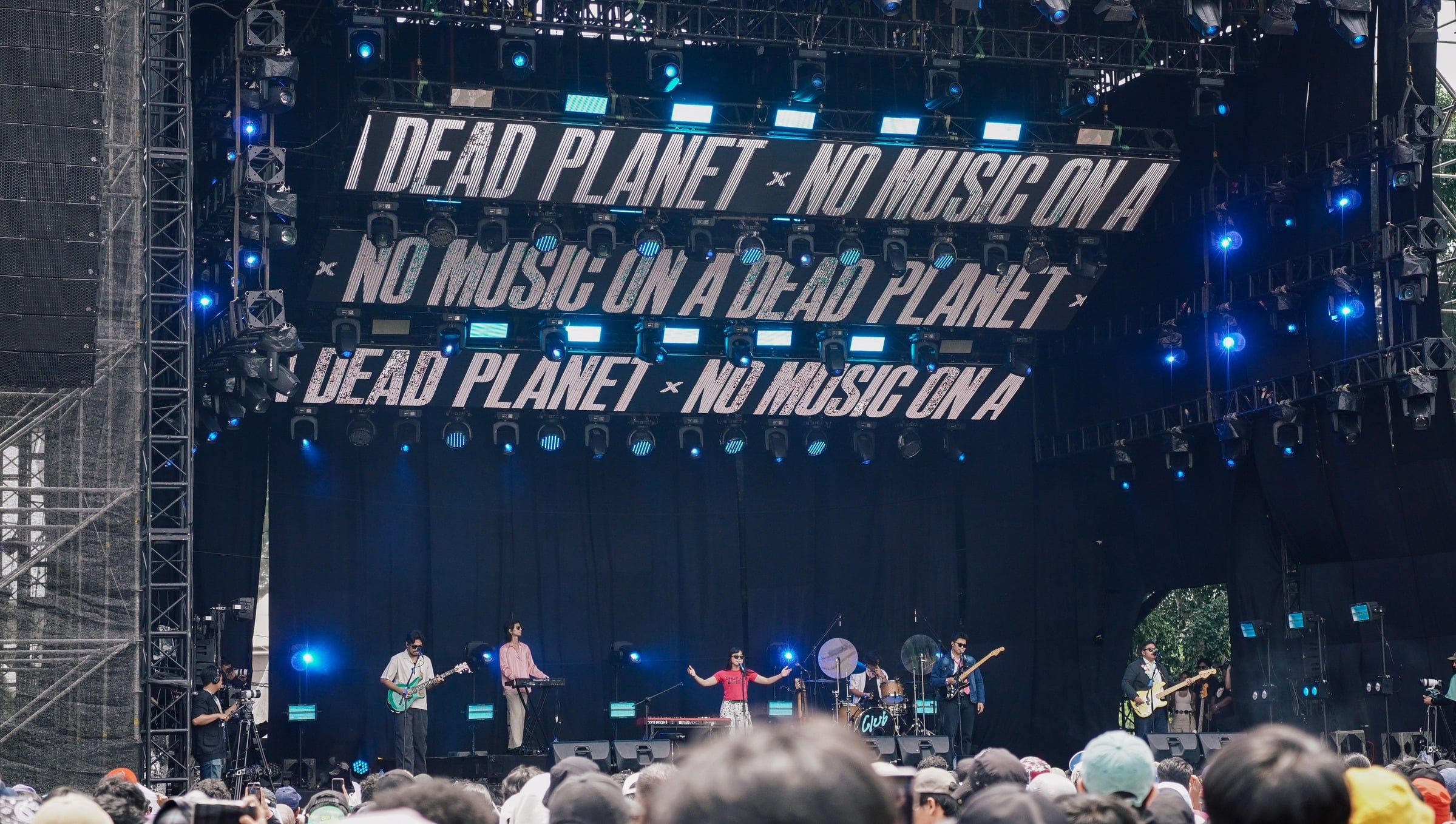
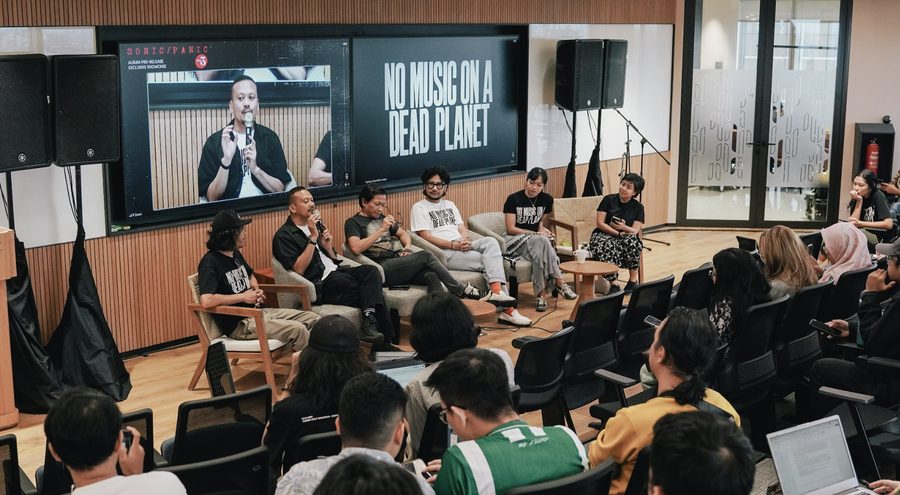
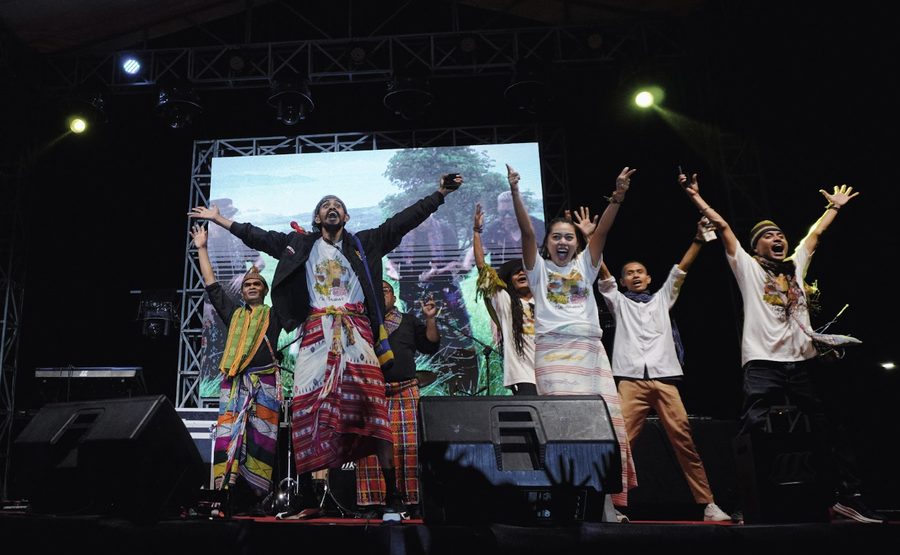
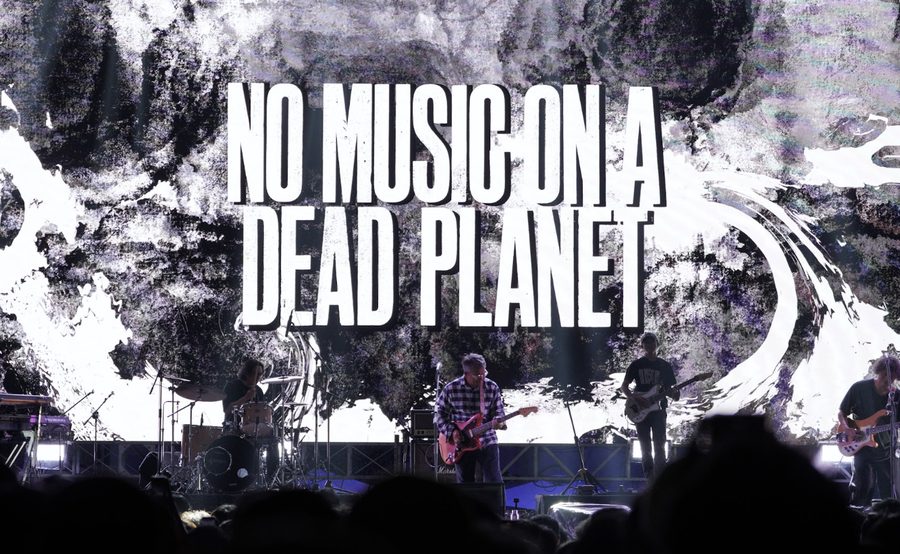
A festival stage at night under blue lights, three stacked banners reading DEAD PLANET x NO MUSIC ON A DEAD PLANET above a band playing to a crowd

IKLIM

The Indonesian Climate Communications, Arts, and Music Lab

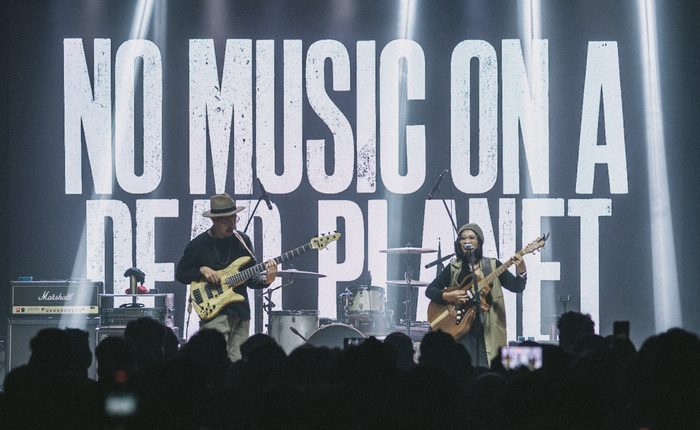
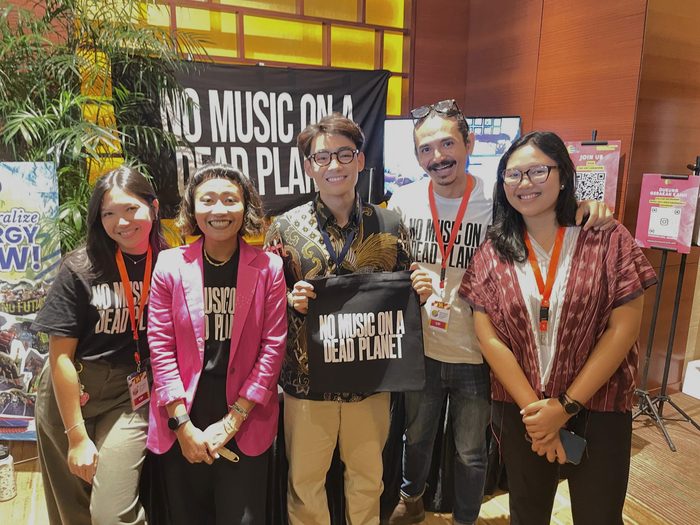
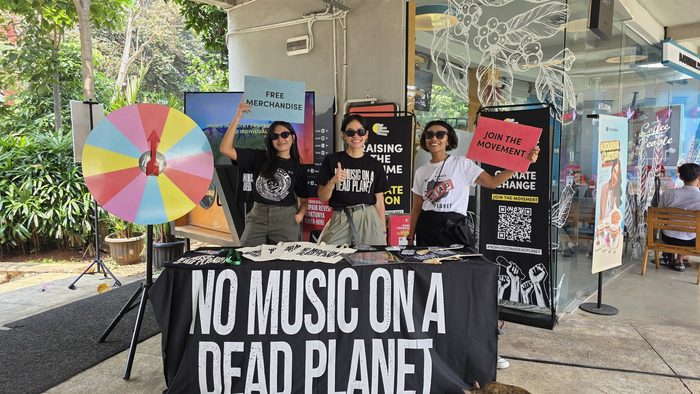
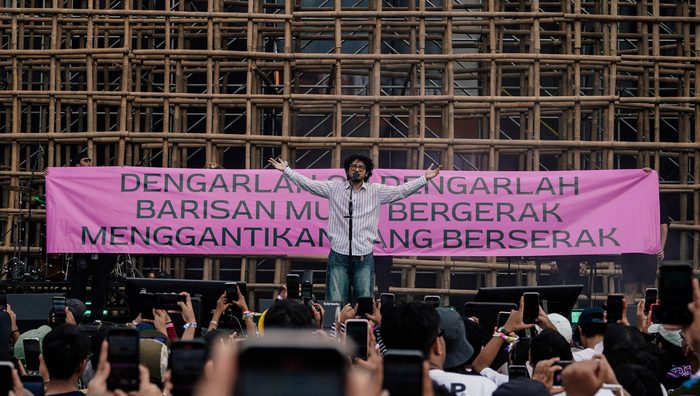
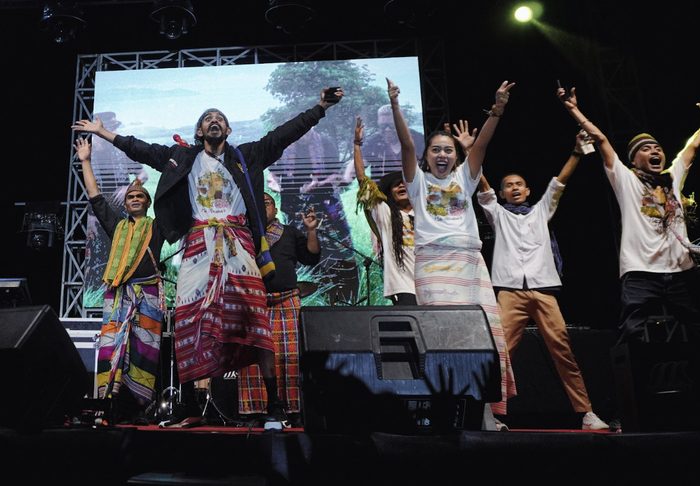
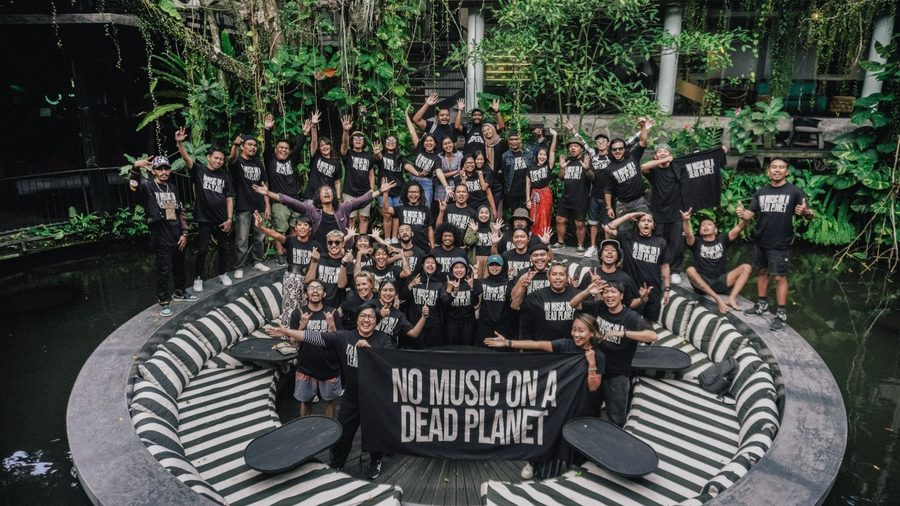
IKLIM (The Indonesian Climate Communications, Arts, and Music Lab) unites musicians, artists, environmental organizations, and climate experts in Indonesia to amplify the climate conversation, increase public engagement, and drive climate action.

IKLIM recognizes the immense power of music and the influential role that musicians can play in shaping public opinion and driving action on the climate crisis. Musicians can effectively convey urgent climate messages through their music, performances, and engagement on social media platforms, encouraging and mobilizing their fan base to take action.

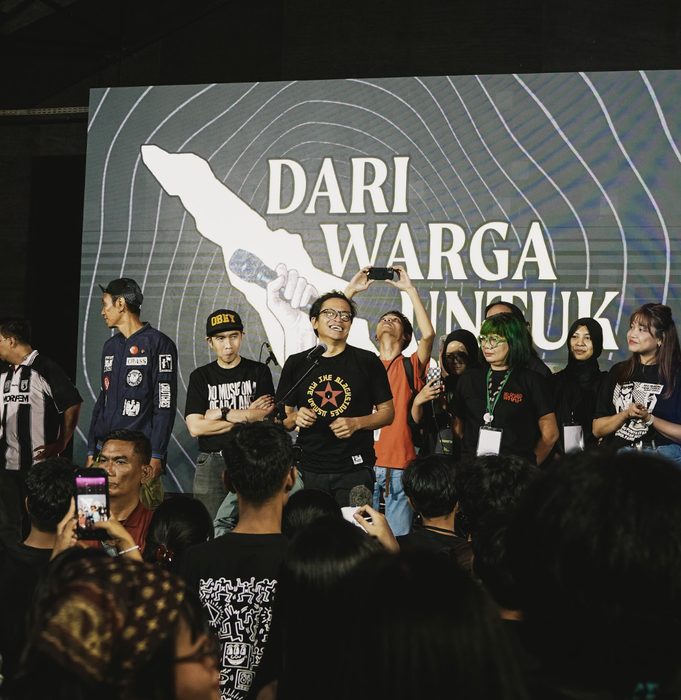
Entering its third year in 2025, IKLIM deepened its commitment to culture-based climate communication, bringing together musicians, artists, activists, and festival organizers to build an ecosystem where creativity and accountability go hand in hand.

Amplify impact 78

IKLIM’s achievements

Climate-themed songs released through Alarm Records
43
Climate-themed songs released through Alarm Records
Streams on digital platforms
1 M+
Streams on digital platforms
People reached through festivals, media, and social media campaigns since 2023
29 M
People reached through festivals, media, and social media campaigns since 2023
Attendees across three major festival partnerships
50,000+
Attendees across three major festival partnerships
Events and collaborations - from national policy summits to grassroots cultural festivals
6
Events and collaborations - from national policy summits to grassroots cultural festivals
Festival partnerships with climate advocacy integration
3
Festival partnerships with climate advocacy integration

Amplify impact 79

Albums released by Alarm Records in 2025
3 ALBUMS
Tracks released by Alarm Records in 2025
43 TRACKS
Streams of all three sonic/panic volumes on digital platforms
> 1 MILLION STREAMS

In 2025, Alarm Records, IKLIM’s climate-conscious music label, released sonic/panic Vol. 3, featuring 14 newly recruited musicians who, through climate workshops, were equipped to integrate climate messages into their work and public platforms. Along with a series of additional releases: Seven Nusa Fantasma remixes, Andai Aku Jadi Gubernur Bali, and four tracks from Menenun Suara Timur.

Alarm Records produced 43 climate-themed songs in 2025 alone. Together, all three volumes of sonic/panic have surpassed 1 million streams on various digital platforms.

Amplify impact 80

Events and Collaborations

In 2025, IKLIM was present at, and contributed to, a diverse range of events across Indonesia, from national summits to grassroots cultural festivals.

A band playing on a stage beneath a large banner reading NO MUSIC ON A DEAD PLANET
Hutan Punah Kota Musnah
Four delegates in red event lanyards standing together at a summit
Indonesia Net Zero Summit 2025
Two presenters standing behind an outdoor booth, holding a NO MUSIC ON A DEAD PLANET banner beside a multicoloured parasol
Katadata Green
A festival stage under a pink banner reading PENGARLAH ARISAN MUSIK GERBERA SANTIKAN
Pestapora
A performer in a white T-shirt with both arms raised in front of a crowd
Festival Hai Mnahat
A group of women holding a DARI WARGA UNTUK banner in a hall
Dari Warga untuk Sumatera

Amplify impact 81

16th Rock in Celebes IKLIM Fest 2025

IKLIM-affiliated artists who performed
26
IKLIM-affiliated artists
Visitors over the two festival days
>10,000
Visitors

On 1–2 November 2025, IKLIM partnered with Rock In Celebes for the 16th Rock In Celebes IKLIM Fest 2025, held at Fort Rotterdam, Makassar, South Sulawesi. Drawing more than 5,000 visitors per day, the festival brought together music, art, film, traditional cultural performances, and cross-sector dialogue, all grounded in a shared commitment to climate action.

More than 40 musicians performed across the two days, including 26 IKLIM-affiliated artists. Five cross-disciplinary talk show sessions brought together journalists, academics, environmental activists, and festival organizers. Film screenings examined plastic pollution, local wisdom, and the politics of resource governance.

The festival also hosted Resonansi, a cross-disciplinary art exhibition in collaboration with Penahitam Arts Collective, Indonesia Corruption Watch, and Greenpeace Indonesia, exploring the relationship between humans, nature, and the consequences of unchecked consumption.

Amplify impact 82

Sustainable Festival Practice

This year’s festival demonstrated that large-scale cultural events can be run responsibly. The festival eliminated single-use packaging and cups across all booths, introduced a reusable cup rental system, and provided water refill stations throughout the venue. A Green Rider initiative, establishing sustainability standards for artists, was also piloted at Festival Hai Mnahat and Rock In Celebes IKLIM Fest.

Total waste decreased by 84%, from 2,750 kg in 2024 to 440 kg in 2025

Plastic waste dropped by 95%, from 1,372.9 kg to 67.7 kg

These outcomes show that reuse-based policies, applied consistently across an entire event, can drive systemic change, not just individual behavioral adjustments.

Amplify impact 83

The band and a large group of volunteers and crew on the amphitheatre steps, holding a NO MUSIC ON A DEAD PLANET banner
The Aksi Iklim app screen: the prompt CATAT APA YANG KAMU seberanya LAKUKAN above a counter reading 947 AKSI TELAH TERCATAT

Through the “NO MUSIC ON A DEAD PLANET” campaign, IKLIM continues to lead Music Declares Emergency (MDE) Indonesia - the first Asian chapter of the global movement calling for an urgent response to the climate crisis.

The Aksi Iklim action-tracking app moved into beta testing in 2025, giving audiences a direct way to translate awareness into action.

Amplify impact 84

In 2026, IKLIM will continue involving new musicians and bands from diverse genres and regions across Indonesia, while strengthening cross-sector collaboration between the music industry, media, and climate organizations, and scaling the Aksi Iklim (Climate Action) platform to convert public awareness into measurable climate action.

Having grown into a recognized force in Indonesia’s climate movement, IKLIM is on track to become an independent initiative - as part of Kopernik’s commitment to incubating community-led efforts that can stand and grow on their own.

This project is implemented by the Communications and Community Initiatives Teams.

A dense crowd at a night-time IKLIM show, many with their hands raised, in front of a NO MUSIC ON A DEAD PLANET banner

Amplify impact 85

An elderly Namblong farmer in a blue vest kneeling in forest undergrowth beside a sack filled with harvested pods

Kopernik Harvest

Connecting Indonesian
farmers to sustainable
markets

In Namblong, Papua, Indigenous farmers grow vanilla the way their land has always allowed — among standing forest trees, with no clearing and few inputs. They focus on quality over volume. In 2025, they produced around 80 kg of dried vanilla, and 25 kg of it was gourmet grade, with pods longer than 17 cm. Yet this vanilla had almost nowhere to go. With no link to buyers, most of it was sold locally or given out as samples.

It’s a common story across Indonesia. Farmers rarely receive fair prices — or any reward — for protecting the forests, watersheds, and coastlines their crops grow in. And commodity supply chains remain fragmented and disconnected from environmental outcomes.

In 2025, Kopernik laid the groundwork for Kopernik Harvest — a social enterprise that draws on Kopernik’s 15 years of experience and its networks of farmers and partner organizations to source traceable, responsibly produced ingredients for buyers in Indonesia and overseas. Its mission is to challenge the extractive trade model by proving that community prosperity and ecosystem regeneration can grow together.

Amplify impact 86

Kopernik Harvest’s Focus Commodities

Each linked to a specific ecosystem, from upstream watersheds to mangroves and peatland, with unique livelihood and environmental impacts

Dried cacao beans filling a wooden tray beside a metal scoop, on weathered planks
Cacao
Long brown vanilla pods laid out on a slatted rack to dry
Vanilla
Dark roasted coffee beans filling the frame
Coffee Beans
A pile of freshly harvested oranges
Orange
A green avocado hanging on its branch with sunlight through the leaves
Avocado
A pile of washed seaweed drying on the sand, with palm trees and the sea beyond
Seaweed
Brown lumps of palm sugar on a woven bamboo surface
Nipa sugar

and other commodities

Amplify impact 87

5 Provinces

Bali, Lampung, East Kalimantan, Papua, and East Nusa Tenggara

Kopernik Harvest’s model works for both sides. Farmer groups get a guaranteed base price for their harvest. After each sale, part of the profit comes back to them as a bonus, so they earn more per kilogram. Buyers get products they can trace back to the farmer group, plus the environmental, social, and governance (ESG) reports they need.

Each product comes from a landscape that farmers protect. Kopernik Harvest sources cacao from Indigenous Dayak forest gardens in East Kalimantan, from former mining land in Suaran, and from under rubber trees in Lampung. In Bali, it sources shade-grown coffee from Kintamani and Tabanan.

This initiative is implemented by the Advisory Services Team.

Amplify impact 88

Other
activities

A collapsed Balinese house with its contents and a red motorcycle spilled out into floodwater, its rubble reaching the road

Bali flood emergency response

Essential relief items distributed
6,416
Essential relief items distributed
Kiosks and households supported
674
Kiosks and households supported

Between 8 and 10 September 2025, torrential rains triggered severe flooding across Bali, claiming 18 lives, displacing as many as 562 residents at the peak of the emergency, and affecting communities from Jembrana to Karangasem. Flooding was reported at more than 123 locations, with 18 landslide sites, three collapsed bridges, and 16 destroyed homes. Among the hardest hit were the market vendors of Kumbasari and Badung markets in Denpasar, where over 250 traders lost their stalls and livelihoods overnight

(Source: BPBD Bali / BNPB, final toll as of 17 September 2025, following closure of SAR operations on 16 September 2025).

90

Kopernik responded rapidly in coordination with BPBD Bali, mobilizing emergency supplies and shelter kits to the most affected communities. Within two months, the response reached 674 kiosks and households across four districts and Denpasar City, including 36 severely impacted households and 638 market kiosks. A total of 6,416 essential relief items were distributed across three categories: hygiene kits (toothbrushes, towels, shampoo, sarongs, and menstrual hygiene products), shelter kits (tarpaulins, mattresses, blankets, and buckets), and recovery kits (mops, squeegees, and table towels) to help vendors clean and reopen their stalls.

The response was made possible through donor support and fundraising, with a total project cost of USD 21,988, helping households and market vendors restore basic living conditions and reduce health risks in the critical days following the disaster.

This project is implemented by Kopernik in partnership with BPBD Bali.

An orange BNPB relief truck loaded with white sacks under a timber pavilion, uniformed responders and volunteers working around it

91

Two Indonesian men hold up a folded blue tarpaulin shelter kit in a room with rolls of patterned cloth stacked behind them

Sumatra flood
emergency response

Beginning in late November 2025, torrential rain triggered severe flooding and landslides across Aceh, part of a wider disaster that also struck North Sumatra and West Sumatra. By December 29 2025 BNPB (Indonesia’s National Disaster Management Agency) reported 1,140 fatalities across the three provinces, with Aceh Province accounting for the highest number at 513 (BNPB, via Tempo).

Kopernik responded in coordination with Yayasan HAkA, mobilizing emergency supplies, medical aid, and shelter kits to the most affected communities. The response reached around 2,000 people, distributing shelter kits comprising tarpaulins, foldable mattresses, medical aid, food items, Nazava water filters, and solar lights to help families meet their most urgent needs in the aftermath of the disaster.

The response was made possible through individual donors and online donations, raising a total of USD 4,518 to date helping affected households access clean water, shelter, and basic necessities in the critical days following the disaster.

This project is implemented by Kopernik in partnership with Yayasan HAkA.

92

The Harun Namanya film poster: a hand-painted portrait of a man on the side of a red lorry parked on a road, with the title above and credits below

Pulau Plastik

A behavior change campaign
to tackle single-use
plastic pollution

Pulau Plastik is a collaborative campaign tackling single-use plastic in Bali and beyond, using popular culture – social media, educational content, and documentary film – to shift behavior and advocate for systemic change.

In 2025, the campaign’s most significant milestone was the launch of “Harun Namanya”, a new short documentary born from Pulau Plastik. The film tells the story of Pak Harun, a truck driver who traded his livelihood to protect the environment, now running a tree nursery and inspiring communities across Indonesia.

Released in November 2025, the film traveled across the country through the #ResetIndonesia roadshow, with screenings and discussions in multiple cities.

93

Throughout the year, the campaign ran two ongoing behavioral campaigns. #PuasaPlastik challenged audiences to fast from single-use plastic, building a habit of refusal through small, daily commitments. #SolusiLokal shifted the conversation toward homegrown alternatives, spotlighting local solutions and community-driven practices as the foundation of lasting change.

In Bali, the campaign embedded its message into the island’s spiritual calendar. For Nyepi, Bali’s sacred Day of Silence, when the entire island goes dark and quiet, the campaign connected the spirit of stillness and restraint with the practice of refusing plastic. For Galungan and Kuningan, two of Bali’s most significant Hindu ceremonies, the campaign promoted plastic-free preparations and offerings, meeting communities where their values already live.

This project is implemented by Kopernik’s Communications Team.

The Galungan dan Kuningan Bebas Plastik campaign poster: fruit, a palm-leaf offering, flowers and temple stonework under hand-lettered Indonesian captions and arrows

94

A presenter in a khaki uniform beside a projected screen at the front of a lecture room, red stage curtain behind and students at their desks in the foreground

Immersive Learning

Since 2020, Kopernik has been collaborating with the University of Melbourne and Universitas Gadjah Mada (UGM) to provide immersive online learning sessions for master’s students in Development and Social Policy.

Starting 2023 onwards, the Immersive Learning program has been held in person. It was great to meet face-to-face again with both students and faculty members at UGM in Yogyakarta in 2025.

95

In 2025, we facilitated two sessions:

Four people presenting at the front of a lecture theatre in front of a red stage curtain, one holding a flipchart, with students' heads in the foreground
A facilitator in a hijab holding up a yellow poster to a seated group in a seminar room, two colleagues standing beside her

Agriculture and the Lived Reality of Smallholder Farmers

Women’s Economic Empowerment

Each module was designed to be as interactive as possible, allowing students to explore the existing challenges and identify solutions to overcome them.

We created various multimedia learning content, including videos on social and environmental challenges, as well as the solutions we have developed through our lean experimentation processes. The content also included case studies, VR/360-degree videos, reading materials, and explored the role of popular culture in addressing social and environmental challenges.

This program served as a great platform for us to share our experiences in tackling the social and environmental challenges faced by underserved communities in Indonesia. It also provided an opportunity for us to learn from and engage with students from diverse backgrounds and countries, gaining insights from their unique perspectives.

This project was implemented by the Community Initiatives Teams.

96

A young woman in a Kopernik lanyard holding a virtual-reality headset to her eyes inside a bamboo-walled pavilion

VR for SDGs

VR for SDGs is a digital platform that helps articulate challenges that need to be solved to achieve the Sustainable Development Goals (SDGs), through 360-degree and virtual reality videos.

The platform serves development organizations, companies, academic institutions, and governments as a ready-to-use reference for understanding the unmet social and environmental needs of underserved communities, with the goal of inspiring innovative, effective solutions.

97

The platform continued growing with new additions:

With 44 videos now published, VR for SDGs continues to serve as one of the pioneering applications of immersive technology in the development sector, building a growing library of lived realities that stakeholders can draw on when developing solutions for underserved communities.

This project is implemented by Kopernik’s Communications Team.

98

Events

Kopernik conducted and participated in 58 events throughout the year, where we shared our work and explored new collaboration opportunities.

A band performing on a floodlit stage at night with the audience's arms raised
Festival Hai Mnahat
A large group posing for a photograph in a blue-carpeted conference hall
The World Food Forum (WFF) 2025
A speaker at a lectern on a stage in front of a large blue screen for the Galeka Global Forum
Circular Economy Forum
A large group of delegates standing in a wood-panelled hall with stained-glass windows
The HEAL 2025 International Conference
A black-and-white poster for NO MUSIC ON A DEAD PLANET over a crowd at an outdoor stage
IKLIM Fest x RIC 2025
A workshop room with a carved wooden mural on the back wall and people seated at tables
The Indigenous Technology Innovators in Residence and Hackathon

100

Kopernik's team and partners crowded together on a lawn in front of a building, many with their arms raised

The Kopernik Team

59 K-Team
Members

Behind every innovation, partnership, and community-led solution is a team committed to creating lasting social and environmental impact. In 2025, Kopernik’s 59 team members worked across disciplines to co-create practical solutions with communities and drive meaningful change through collaboration.

Together, our teams bring diverse expertise to advance Kopernik’s mission.

Solutions Lab

The Solutions Lab researches, prototypes, and tests innovative solutions to social and environmental challenges, generating evidence that helps promising ideas scale.

Community Initiatives

The Community Initiatives Team works with local communities to implement and scale solutions that strengthen livelihoods, address gender equality and build climate resilience.

Advisory Services

Advisory Services partner with corporations, governments, and development organizations to design evidence-based strategies, products, and programs that create lasting positive impact.

Partnerships

The Partnerships Team builds strategic collaborations that mobilize resources, knowledge and networks to expand the reach and impact of Kopernik’s work.

Communications

The Communications Team transforms research, data, and stories into compelling narratives that amplify community voices and inspire action for people and the planet.

Finance and Operations

Finance and Operations provides the systems, governance, and operational support that enable Kopernik to work efficiently, responsibly, and effectively.

HR and People Services

HR and People Services cultivates an inclusive and supportive workplace, strengthening the people and culture that drive Kopernik’s impact.

Kopernik Japan

Kopernik Japan develops partnerships and advisory opportunities with Japanese organizations, connecting expertise and resources to locally driven solutions across the region.

101

A pair of hands holding up a phone showing the Kopernik Instagram profile, cut out against the page
Social media following
88,750+
Social media following
Subscribers to Kopernik News
8,700+
Subscribers to Kopernik News

102

The United Nations Sustainable Development Goals wheel: seventeen coloured segments, each carrying an icon and its goal number

Kopernik’s contribution to the Sustainable Development Goals

GOAL 17: Partnerships to Achieve the Goal

  • Immersive Learning ▸
  • Capacity Building Needs Assessment of Nonprofit Organizations in Indonesia ▸
  • Mapping Digital Infrastructure for Bali’s Environment ▸
  • Evaluating Landscape Change in West Kalimantan ▸
  • Ministry of Foreign Affairs NGO AI Research ▸
  • Sustainable Rubber Farming Training and Yield Intervention in Lampung ▸
  • Climate Change Adaptation to Smoke Haze for Improved Child Health in Southeast Asia ▸
  • Climate Attribution of Wildfire Smoke Impacts on Priority Population Health in Southeast Asia and Australia ▸
  • The Indonesian Climate Communications, Arts, and Music Lab ▸
  • Sustainability Procurement Guideline for the Hospitality Sector ▸
  • VR for SDGs ▸
  • Next CEO Program ▸

GOAL 16: Peace, Justice and Strong Institutions

  • Capacity Building Needs Assessment of Nonprofit Organizations in Indonesia ▸

GOAL 15: Life on Land

  • A Behavior Change Campaign to Tackle Single-Use Plastic Pollution ▸
  • Bio-Restorative Economy Mapping in Papua ▸
  • Mapping Digital Infrastructure for Bali’s Environment ▸
  • Evaluating Landscape Change in West Kalimantan ▸
  • Developing Community Entrepreneurship of Non-Timber Forest Products in Kapuas Hulu and the Surrounding Danau Sentarum National Park Area ▸
  • From Forest to Market ▸

GOAL 14: Life Below Water

  • A Behavior Change Campaign to Tackle Single-Use Plastic Pollution ▸
  • Value Chain Analysis of Fisheries and Coffee Commodities in Ketapang, West Kalimantan ▸
  • Mapping Digital Infrastructure for Bali’s Environment ▸
  • Community Development Through Seaweed-Based Product Innovation in Bali ▸
  • Building Blue Economy to Empower Osi Island Seaweed Farmers ▸

GOAL 13: Climate Action

  • Bio-Restorative Economy Mapping in Papua ▸
  • Mapping Digital Infrastructure for Bali’s Environment ▸
  • Evaluating Landscape Change in West Kalimantan ▸
  • Building Blue Economy to Empower Osi Island Seaweed Farmers ▸
  • Enhancing Urban Heat Resilience With Affordable Passive Cooling Solutions ▸
  • Upcycling E-Waste Into Agri-Tech Solutions ▸
  • Climate Change Adaptation to Smoke Haze for Improved Child Health in Southeast Asia ▸
  • Climate Attribution of Wildfire Smoke Impacts on Priority Population Health in Southeast Asia and Australia ▸
  • Addressing Food Insecurity in West Timor ▸
  • Wonder Women ▸
  • The Indonesian Climate Communications, Arts, and Music Lab ▸
  • From Forest to Market ▸
  • Sustainability Procurement Guideline for the Hospitality Sector ▸
  • Bali Flood Emergency Response ▸
  • Sumatra Flood Emergency Response ▸

GOAL 12: Responsible Consumption and Production

  • A Behavior Change Campaign to Tackle Single-Use Plastic Pollution ▸
  • VR for SDGs ▸
  • Sustainable Rubber Farming Training and Yield Intervention in Lampung ▸
  • Community Development Through Seaweed-Based Product Innovation in Bali ▸
  • Developing Community Entrepreneurship of Non-Timber Forest Products in Kapuas Hulu and the Surrounding Danau Sentarum National Park Area ▸
  • Pre-Feasibility Study on Waste-to-Energy From Coffee Husk to Increase Value and Energy Efficiency in Coffee Production in Aceh ▸
  • Building Blue Economy to Empower Osi Island Seaweed Farmers ▸
  • Upcycling E-Waste Into Agri-Tech Solutions ▸
  • Addressing Food Insecurity in West Timor ▸
  • Wonder Women ▸
  • From Forest to Market ▸
  • Sustainability Procurement Guideline for the Hospitality Sector ▸

GOAL 11: Sustainable Cities and Communities

  • VR for SDGs ▸
  • Enhancing Urban Heat Resilience With Affordable Passive Cooling Solutions ▸
  • Climate Change Adaptation to Smoke Haze for Improved Child Health in Southeast Asia ▸
  • Climate Attribution of Wildfire Smoke Impacts on Priority Population Health in Southeast Asia and Australia ▸
  • A Behavior Change Campaign to Tackle Single-Use Plastic Pollution ▸
  • Next CEO Program ▸
  • Bali Flood Emergency Response ▸
  • Sumatra Flood Emergency Response ▸

GOAL 1: No Poverty

  • ▸ VR for SDGs
  • ▸ Value Chain Analysis of Fisheries and Coffee Commodities in Ketapang, West Kalimantan
  • ▸ Sustainable Rubber Farming Training and Yield Intervention in Lampung
  • ▸ Community Development Through Seaweed-Based Product Innovation in Bali
  • ▸ Developing Community Entrepreneurship of Non-Timber Forest Products in Kapuas Hulu and the Surrounding Danau Sentarum National Park Area
  • ▸ Feasibility Study of a Financial Scheme to Support Micro and Small Social Businesses in Palu
  • ▸ Building Blue Economy to Empower Osi Island Seaweed Farmers
  • ▸ Addressing Food Insecurity in West Timor
  • ▸ Wonder Women
  • ▸ Bali Flood Emergency Response
  • ▸ Sumatra Flood Emergency Response

GOAL 2: Zero Hunger

  • ▸ VR for SDGs
  • ▸ Value Chain Analysis of Fisheries and Coffee Commodities in Ketapang, West Kalimantan
  • ▸ Enhancing Food Security for the Elderly With Accessible Aquaponic Systems in Yogyakarta
  • ▸ Addressing Food Insecurity in West Timor

GOAL 3: Good Health and Well-being

  • ▸ VR for SDGs
  • ▸ Enhancing Food Security for the Elderly With Accessible Aquaponic Systems in Yogyakarta
  • ▸ Enhancing Urban Heat Resilience With Affordable Passive Cooling Solutions
  • ▸ Climate Change Adaptation to Smoke Haze for Improved Child Health in Southeast Asia
  • ▸ Climate Attribution of Wildfire Smoke Impacts on Priority Population Health in Southeast Asia and Australia

GOAL 4: Quality Education

  • ▸ VR for SDGs
  • ▸ Science Kit Sandbox Experiment
  • ▸ Immersive Learning

GOAL 5: Gender Equality

  • ▸ Generasi Setara
  • ▸ Building Durable Responses to Gender Inequality in Indonesia
  • ▸ Building Blue Economy to Empower Osi Island Seaweed Farmers
  • ▸ Wonder Women
  • ▸ From Forest to Market
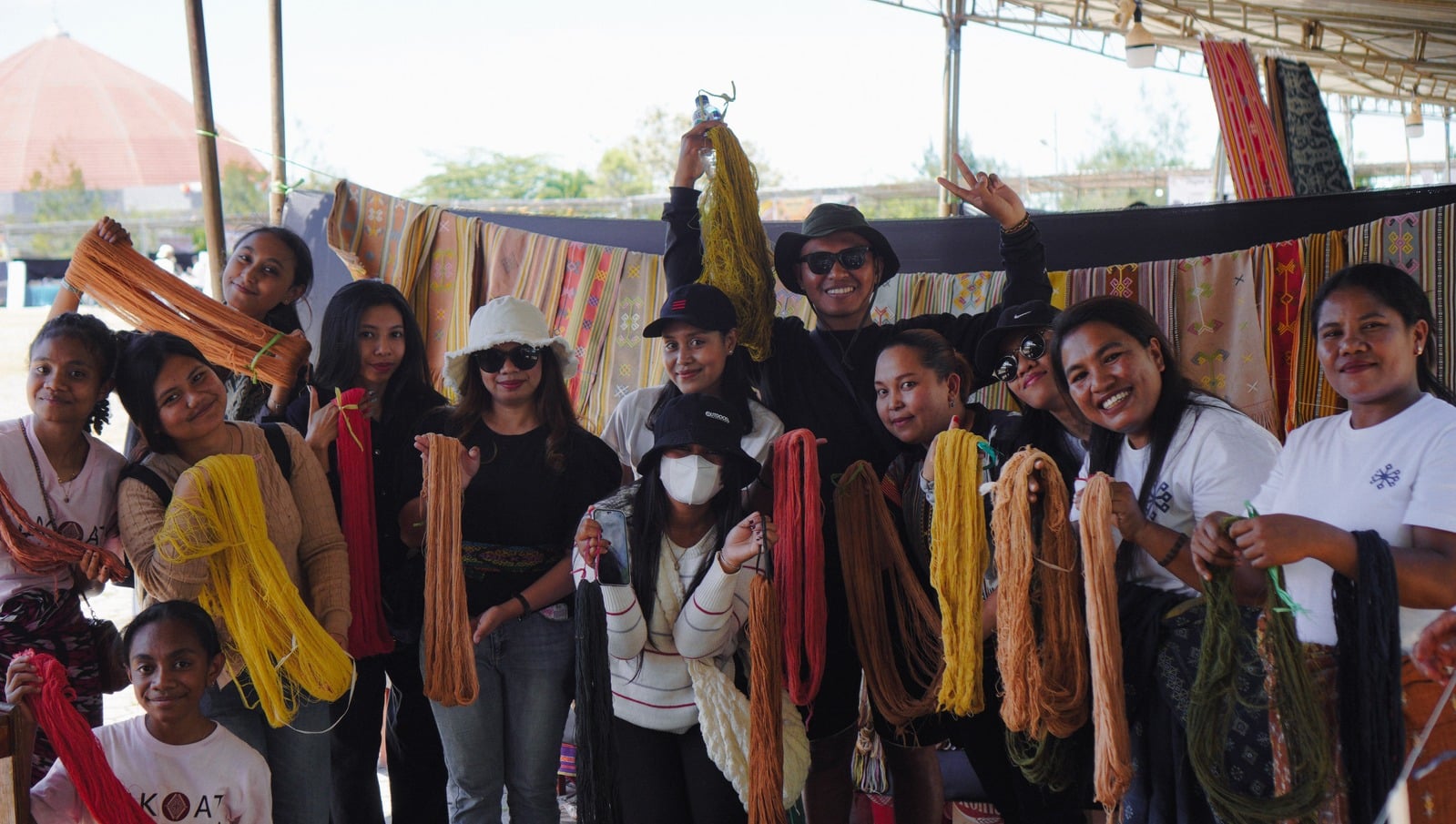
GOAL 6: Clean Water and Sanitation

  • ▸ VR for SDGs
  • ▸ Mapping Digital Infrastructure for Bali’s Environment

GOAL 7: Affordable and Clean Energy

  • ▸ VR for SDGs
  • ▸ Pre-Feasibility Study on Waste-to-Energy From Coffee Husk to Increase Value and Energy Efficiency in Coffee Production in Aceh

GOAL 8: Decent Work and Economic Growth

  • ▸ VR for SDGs
  • ▸ Value Chain Analysis of Fisheries and Coffee Commodities in Ketapang, West Kalimantan
  • ▸ Bio-Restorative Economy Mapping in Papua
  • ▸ Building Blue Economy to Empower Osi Island Seaweed Farmers
  • ▸ Evaluating Landscape Change in West Kalimantan
  • ▸ Sustainable Rubber Farming Training and Yield Intervention in Lampung
  • ▸ Community Development Through Seaweed-Based Product Innovation in Bali
  • ▸ Developing Community Entrepreneurship of Non-Timber Forest Products in Kapuas Hulu and the Surrounding Danau Sentarum National Park Area
  • ▸ Feasibility Study of a Financial Scheme to Support Micro and Small Social Businesses in Palu
  • ▸ Addressing Food Insecurity in West Timor
  • ▸ Wonder Women
  • ▸ From Forest to Market
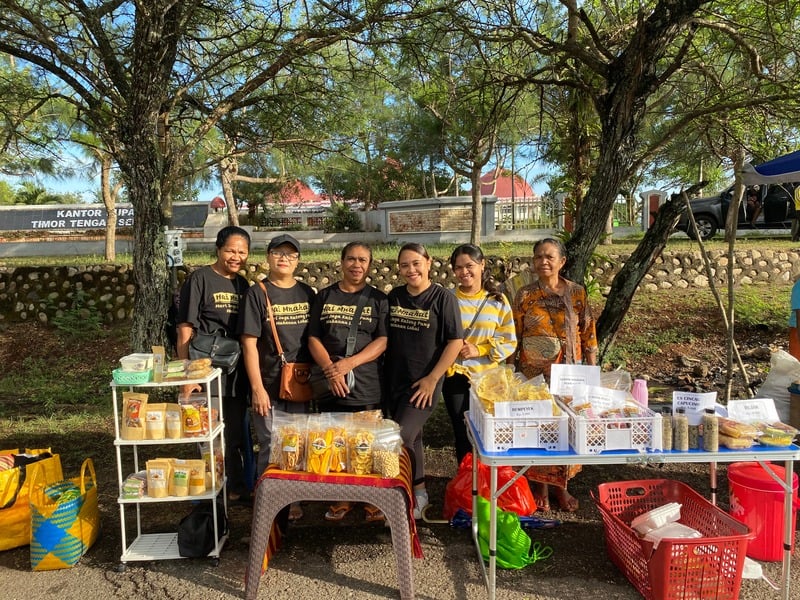
  • ▸ Next CEO Program

GOAL 9: Industry, Innovation, and Infrastructure

  • ▸ VR for SDGs
  • ▸ Building Blue Economy to Empower Osi Island Seaweed Farmers
  • ▸ AI Usage Research for Organizations in Japan
  • ▸ Pre-Feasibility Study on Waste-to-Energy From Coffee Husk to Increase Value and Energy Efficiency in Coffee Production in Aceh
  • ▸ Feasibility Study of a Financial Scheme to Support Micro and Small Social Businesses in Palu
  • ▸ Science Kit Sandbox Experiment
  • ▸ Upcycling E-Waste Into Agri-Tech Solutions
  • ▸ Next CEO Program

GOAL 10: Reduced Inequality

  • ▸ VR for SDGs
  • ▸ Generasi Setara
  • ▸ Building Durable Responses to Gender Inequality in Indonesia
  • ▸ Building Blue Economy to Empower Osi Island Seaweed Farmers
  • ▸ Bio-Restorative Economy Mapping in Papua
  • ▸ Capacity Building Needs Assessment of Nonprofit Organizations in Indonesia
  • ▸ Climate Change Adaptation to Smoke Haze for Improved Child Health in Southeast Asia
  • ▸ Climate Attribution of Wildfire Smoke Impacts on Priority Population Health in Southeast Asia and Australia
  • ▸ From Forest to Market
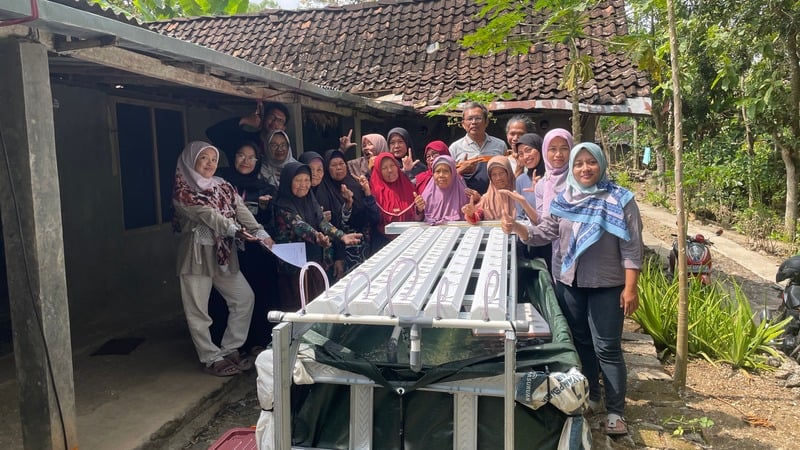
103

2025 Consolidated Activity Statement

Includes Yayasan Kopernik, PT Kopernik, Kopernik Japan, and Kopernik Solutions *

IN USD
Income by source, 2025 and 2024, in US dollars
Income 2025 2024
Grants and Donations
Corporate Contributions 65,146 13,022
Government Grants 573,598 529,502
Non-profit and Foundation Grants 1,401,335 1,082,044
Individual Donations 48,433 11,346
Total Grants and Donations 2,088,512 1,635,914
Service/Fee Income
Consultancy/Honorarium 499,988 744,734
Total Service/Fee Income 499,988 744,734
Other Income
Technology Distribution 12,808 9,360
Non-Operating Income 59,346 84,921
Total Other Income 72,154 94,281
Total Income Received 2,660,654 2,474,929
Expenditures by category, 2025 and 2024, in US dollars
Expenses 2025 2024
Operational Costs
Staff Related Costs 210,386 239,387
Office & General Administrative Expenses 166,301 187,131
Total Operational Costs 376,687 426,518
Program Costs
Program support costs 847,727 870,768
Program related Technology & Supplies 53,836 49,723
Project Shipping and Delivery Costs 11,172 1,608
Field Support 348,243 269,108
Consultants and professional fees 267,388 202,537
Awards and Grants 151,329 36,274
Project Travel 155,983 198,154
Conference, Conventions, Meetings 206,303 191,486
Total Program Costs 2,041,980 1,819,657
Total Expenditures 2,418,667 2,246,175
Change in net assets, 2025 and 2024, in US dollars
Line 2025 2024
Change in Net Assets 241,987 228,754
Net Assets at Beginning of Year** 2,925,295 2,696,541
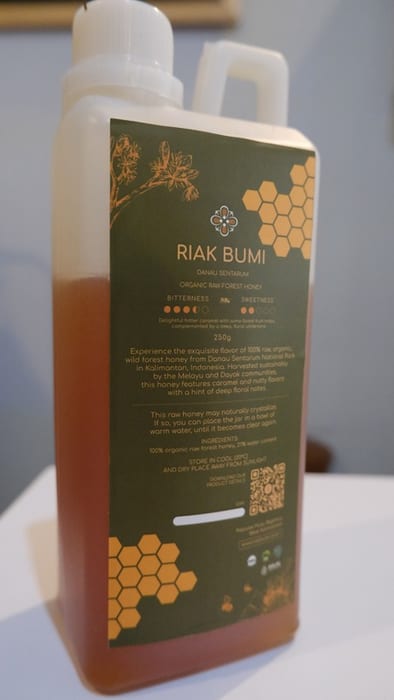
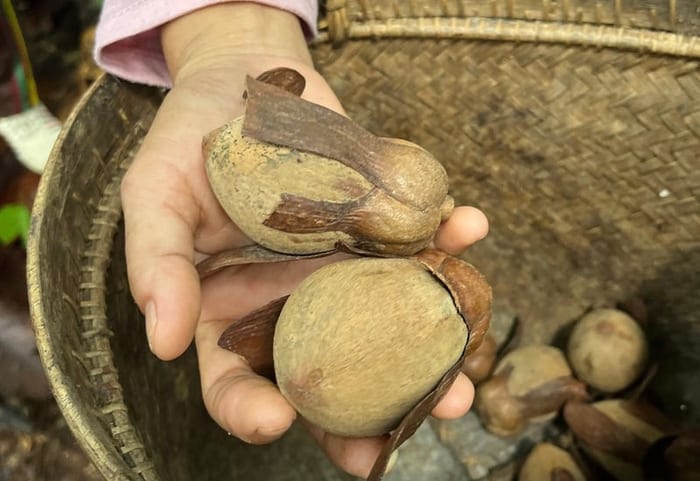
Net Assets at End of the Year 3,167,282 2,925,295

* This is an unofficial consolidated activity statement of four Kopernik entities. Official financial statements of the entities can be accessed here.

** Includes unrestricted funds and funding received in previous years, for activities in the reporting year.

104

Partners & Supporters

  • 350.org Indonesia
  • Aisyiyah
  • Akvo
  • Alarm Records
  • AEPW
  • Amed Salt Center
  • AVPN (Asian Venture Philanthropy Network)
  • Badan Penanggulangan Bencana Daerah Bali (BPBD Bali)
  • Badan Riset dan Inovasi Nasional (BRIN)
  • Bali Youth Parliament for Water
  • Beta Bank Sampah
  • Blue Shift
  • Bali Institute
  • Bali Watershed Management Coordination Forum (Forum DAS Bali)
  • Balimoon
  • Bappenas RI
  • Bina Tani
  • BLESS Foundation
  • BNP Paribas Asset Management
  • Chiang Mai University
  • Citi Foundation
  • Coaction Indonesia
  • CSIRO (Commonwealth Scientific and Industrial Research Organisation)
  • Dahetok Milah
  • Daiwa Securities Group and Russell Investments
  • David & Lucile Packard Foundation
  • Eco Tourism Bali
  • EcoNusa Foundation
  • Ekuatorial
  • Fab Lab Bali
  • FabLab KandaNishikicho
  • Feminis Themis
  • Fondation CHANEL
  • German Ministry for Economic Cooperation and Development (BMZ)
  • Gigs Bali
  • Greenpeace
  • GIZ
  • Hai Online
  • Hutan Itu Data Lestari (HDL)
  • HEAL Global Research Centre, University of Canberra
  • IDH (Initiatief Duurzame Handel)
  • IMAJI Papua
  • Indonesia Corruption Watch
  • Info Gigs
  • Institute of Food Technologists (IFT)
  • International Trade Center
  • Investing in Women
  • Japan International Cooperation Agency (JICA)
  • Katadata
  • Keidanren Nature Conservation Fund (KNCF)
  • Koalisi Ekonomi Membumi (KEM)
  • Kompas
  • Kompasiana
  • Komunitas Mahima
  • Koperasi Bahtera
  • KUB Bina Karya (Bali)
  • KUB Lembongan (Bali)
  • KUB Pangkep (Sulawesi)
  • Kraosan
  • Magdalene
  • Magi Farm
  • Mahidol University
  • Maple Media
  • Modalku
  • Musikeras
  • National University of Laos
  • Ocean Fresh
  • Olam Agri
  • P4G
  • Papua Mandiri
  • Perempuan Mahima
  • Pophariini
  • Purpose
  • Reservoair
  • Riak Bumi
  • SAFE (Sustainable Agriculture for Forest Ecosystems)
  • SAGU Foundation
  • Sasakawa Peace Foundation
  • Saya Pilih Bumi
  • Seeding the Future Foundation
  • Sikolah Mombine
  • Sobean
  • Sony CSL
  • SpudnikLab
  • Stewart Investors
  • Tanah Air Lestari
  • Tempo
  • The Ministry of Foreign Affairs of Japan
  • Perfect Fit
  • Raja Ampat Naturale
  • Tarunira
  • Think Policy
  • Trend Asia
  • UNDP
  • UNCRD (United Nations Centre for Regional Development)
  • Universitas Gadjah Mada
  • Universitas Indonesia
  • Universitas Nusa Cendana
  • Universitas Pendidikan Ganesha (Undiksha)
  • University of Melbourne
  • UOB Indonesia
  • Whiteboard Journal
  • Wellcome (Wellcome Trust)
  • Women’s Earth Alliance
  • World Bank
  • World Resources Institute (WRI) Indonesia
  • Yayasan CERAH
  • Yayasan ERAT Indonesia
  • Yayasan HaKa
  • Yayasan IAR Indonesia (YIARI)
  • Yayasan Rusmram
  • Yayasan Sasi Alam Indonesia
  • Yayasan Save Generation Center
  • Yayasan Tunas Bahari Maluku

105

2025 reaffirmed something we believe deeply: real impact is not something Kopernik creates alone. It’s built with communities, partners, and supporters who bring knowledge, expertise, and commitment – and every item in this report carries their fingerprints as much as ours.

This was also a year defined by letting go on purpose. Through the Next CEO Program, initiatives took real steps toward standing on their own, because we do not measure our success by how long a program stays with us. We measure it by how far it goes without us.

The road ahead isn’t getting easier. But our approach remains to stay curious, collaborate honestly, and keep building toward a world where people and the planet can thrive.

Toshi Nakamura and Ewa Wojkowska Co-Founders

Seven women in matching green shirts, each holding up a small product, cut out against the page
A woman in a hijab and glasses smiling and holding up a white prototype box with a corrugated green roof, cut out against the page

106